ENEnglish
 LTLietuviškai
 DEDeutsch
 FRFrançais
 RUРусский
 ESEspañol
 PLPolski
 ITItaliano
 UKУкраїнська
 CSČeština
 PTPortuguês
 JA日本語
JA日本語 LVLatviešu valoda
 ETEesti
 HUMagyar
 IDBahasa Indonesia
 TRTürkçe
 HIहिन्दी
 ELΕλληνικά
 ARالعربية
 THไทย
THไทย VITiếng Việt
 RORomână
 MSBahasa Melayu
 BNবাংলা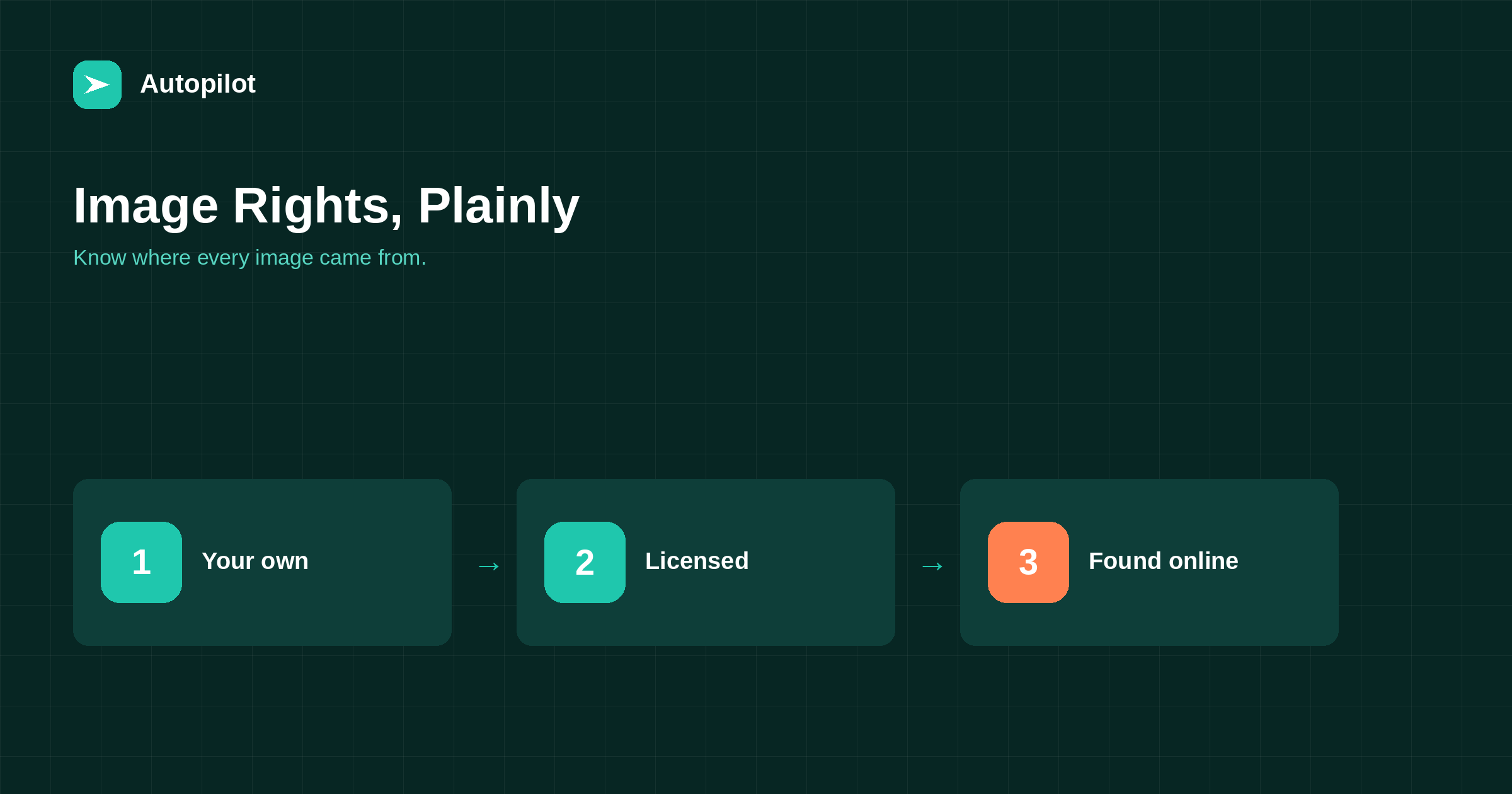
Short answer: assume any image found online is protected unless its licence says otherwise. The safest images are ones you create yourself: your own photographs, screenshots of your own product, and designed graphics. Stock images are fine within their licence terms, which vary. Screenshots of other products are often used for commentary, but rules differ by country. For generated images, check the tool’s terms and your jurisdiction, avoid imitating identifiable people, brands or artists, and never present them as photographs of real events. Keep a record of where each image came from.
Images are where many small blogs run into copyright trouble. An image found through search looked perfect, the article was published, and months later a letter arrived asking for a licence fee.
Avoiding that is mostly about knowing where each image came from. This is a practical overview, not legal advice; rules differ by country, and a qualified adviser should answer specific questions.
The default assumption
Images published online are generally protected by copyright from the moment they are created, whether or not they carry a notice. Being findable in search does not make an image free to use.
Start from the assumption that you may not use an image unless you created it, have a licence for it, or its licence explicitly permits your use.
Sources, from safest
Different sources carry different levels of certainty.
| Source | Certainty | What to check |
|---|---|---|
| Your own photos and graphics | High | People in photos have agreed |
| Screenshots of your own product | High | No customer data visible |
| Paid stock with a licence | High within terms | Permitted uses, attribution |
| Free stock sites | Varies | Each image’s licence, not the site’s slogan |
| Openly licensed images | Varies | Attribution and any restrictions |
| Found through search | Low | Assume not permitted |
Keep a note of each image’s source and licence. If a question ever comes, the record answers it.
Your own images are the best option
For a business blog, images you create are usually more useful as well as safer: a featured image carrying the article’s headline, screenshots of your own product, photographs of your team and your work, simple diagrams and charts.
They also say something specific about your business, which stock images cannot. featured images for automated posts covers producing a consistent featured image for every post; every featured image on this blog is created that way.
Screenshots of other products
Screenshots of other companies’ software or websites are common in reviews, comparisons and tutorials. Many jurisdictions allow limited use for commentary, criticism or review, but the rules and their limits differ.
Keep such screenshots relevant and limited to what the commentary needs, credit the source, avoid suggesting endorsement, and remove personal data. When in doubt, describe rather than show, or ask permission.
Generated images
Image generation tools raise questions that are still developing: who owns the output, what the tool’s terms permit, and how the law in your country treats such images.
Practical precautions: read the tool’s terms for commercial use; avoid prompts that imitate identifiable people, brands, logos or a named artist’s style; never present a generated image as a photograph of a real person, product or event; and do not use generated images where a real photograph is the point, such as a team page. disclosing how content is produced covers disclosure more generally.
People and property
Photographs of identifiable people generally need their consent for commercial use, and some places and objects have their own restrictions. For your own team photos, get agreement and respect requests to remove images later.
For customer photos in case studies, written permission is the norm — writing a case study covers consent more broadly.
If you receive a claim
If you receive a copyright claim about an image, check your records. If you have a valid licence, reply with it. If you do not, remove the image promptly and consider whether the claim is legitimate; some claims are automated and some are not genuine.
For significant claims, take advice. Removing the image quickly is usually the first sensible step.
Icons, fonts and design elements
Icons, illustrations and fonts have licences too. Icon sets and illustration libraries often permit use on websites with attribution, or require a paid licence for commercial use. Fonts licensed for printing may not cover web use.
Check these when choosing a theme or design system rather than article by article. Most reputable themes include properly licensed assets, but additions made later by different people are where problems creep in.
Embedding rather than copying
Some platforms let you embed a post, video or image directly, which displays it from the original source rather than copying it to your site. Embedding is often permitted by the platform’s terms and keeps attribution intact.
Embedded content can disappear if the original is removed, and it may slow the page or add tracking. Use it where it adds real value, and check the page still makes sense if the embed fails.
Recording sources
A simple record is enough: for each image, the article it appears in, where it came from, the licence, and the date added. For your own images, note who created them. It takes seconds when adding an image and saves hours if a question ever arises.
A simple routine
Use your own images wherever possible. For anything else, record the source and licence at the moment you add it. Never use an image found through search without finding its licence first. Review older articles occasionally for images added before you had a routine.
A few minutes per article prevents the letters that take hours to deal with.
Related reading
If this was useful, these cover the questions that usually come next.
- Featured images for automated posts — producing your own images
- Writing alt text — the other half of using images well
- Originality and plagiarism — the text side of the same issue
The bottom line
Assume images found online are protected. Prefer images you create, use stock within its licence, keep screenshots of other products limited and relevant, and treat generated images carefully: check terms, avoid imitating real people or brands, and never present them as photographs of real events. Record the source of every image, and take advice on specific legal questions.
DUK
Can I use images I find on the internet?
Assume not, unless the licence explicitly permits your use. Being findable in search does not make an image free to use.
Are free stock images safe to use?
Usually, within each image’s licence. Check the specific licence for commercial use and attribution requirements.
Can I use screenshots of other websites?
Limited use for commentary or review is allowed in many places, but rules differ. Keep them relevant, credit the source, and remove personal data.
Can I use generated images on my blog?
Check the tool’s terms and your jurisdiction, avoid imitating real people, brands or artists, and never present them as real photographs.
What is the safest image source?
Images you create yourself: your own photos, screenshots of your own product, and designed graphics.
What should I do if I receive a copyright claim?
Check your records, reply with a licence if you have one, otherwise remove the image promptly and take advice for significant claims.