ENEnglish
 LTLietuviškai
 DEDeutsch
 FRFrançais
 RUРусский
 ESEspañol
 PLPolski
 ITItaliano
 UKУкраїнська
 CSČeština
 PTPortuguês
 JA日本語
 LVLatviešu valoda
 ETEesti
 HUMagyar
 IDBahasa Indonesia
 TRTürkçe
 HIहिन्दी
 ELΕλληνικά
 ARالعربية
 THไทย
 VITiếng Việt
 RORomână
 MSBahasa Melayu
 BNবাংলা
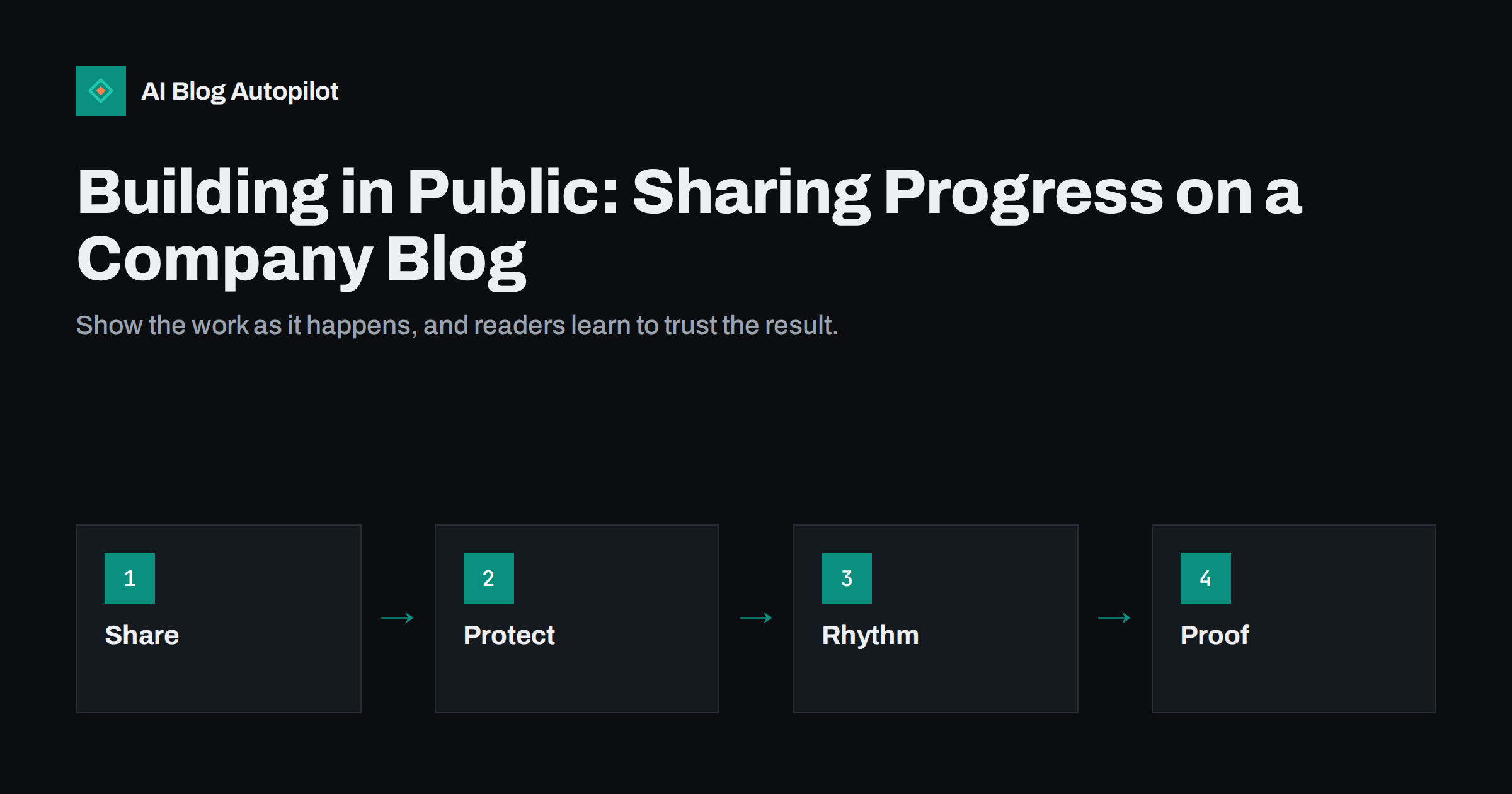
Short answer: building in public means sharing the real progress of a product or business while it happens: what you are making, what you decided, what went wrong and what you learned. On a company blog it works when the updates are regular, specific and honest, and when you decide in advance what stays private, such as customer data, security details and other people’s stories.
The idea comes from founders who shared their work openly on social networks and found that readers, early customers and helpful strangers gathered around them. A company blog can use the same principle at a calmer pace, with posts that stay findable for years. Done well, it builds trust and a loyal audience. Done badly, it becomes a stream of boasts or an unguarded confession. The difference lies in the choices you make before you publish.
Decide why you are doing it
Before the first post, write down your reasons. Some companies want feedback on early ideas, some want to attract customers who like transparency, some want to recruit and some simply want a record of their own decisions. Each goal suggests a different style. A feedback-seeking post asks a clear question and tells readers how to answer. A recruiting post shows how the team works. A record-keeping post can be plain and factual.
Be honest about the cost. Writing about the work takes time away from the work, and an audience that expects regular updates will notice when they stop. If you cannot sustain a rhythm, a smaller version is better than an ambitious one that fades. Decide who writes, how long each post may take and how you will know it was worth the effort.
Choose what to share
The most useful posts describe decisions rather than announcements: why you chose one approach, what you rejected, what the numbers showed and what you will try next. Readers learn more from a clear account of a difficult choice than from a list of features. Share the stage you are at, such as an early idea, a prototype, a launch or a redesign, and give enough detail for a reader in a similar position to learn something.
Mistakes are valuable if you tell them well. A short post on a wrong assumption, a failed launch or a bug that annoyed customers, with what you changed, shows maturity and invites sympathy. Avoid blaming others, avoid drama and avoid making the post about your feelings. The reader should finish with a lesson, not with a wish to comfort you.
Share numbers when they help the story and when you can explain them. A figure without context, such as a growth rate from a tiny base, can mislead. If you publish revenue, users or traffic, say how you count them, over what period and what they do not include. Our guide to claims you can back up sets out the same discipline for marketing content.
Decide what stays private
Openness has limits, and these should be agreed before anyone writes. Customer information, including names and any details that identify them, stays private unless a customer agrees in writing to be mentioned. Security details, such as weaknesses, infrastructure and credentials, must never appear in a post, even after a problem is fixed, unless a security professional has reviewed the wording. Contracts, supplier terms and negotiations often have confidentiality obligations that you must honour.
The same applies to people. Do not write about colleagues’ performance, health or private lives without their consent, and think about the effect on the person before you describe a disagreement. If you share salaries or equity, agree it with everyone affected. Check any legal duties that apply to your sector, such as rules on investor communications, before you share financial figures.
Write the rules in a short document, share it with the team and review a post against it before it goes out. A clear boundary makes it easier to be open about everything else, because nobody worries about what might slip.
Keep a simple notes file during the month. Write down decisions as you make them, with the reasons, the alternatives and the date. When it is time to write, most of the material is already there, and the account is more accurate than one reconstructed from memory. A line or two per decision is enough, and the habit has value for the team even if you never publish a word.
Find a format and a rhythm
Pick a format that you can repeat. A monthly update with a few headings, such as what we did, what we learned, what we will do next and what we need, is easy to write and easy to follow. A short weekly note works for a fast-moving product. A longer essay can follow a major decision. Keep a consistent structure and title style so that readers know what to expect and can find older posts.
Our guide to product update posts and changelogs people actually read shows how to describe changes clearly, and our article on linking multi-part posts helps if you publish a numbered series. Put the date at the top and link each update to the previous one. Keep the tone consistent with your brand and decide whether the voice is “we” or a named person, as discussed in our piece on choosing the narrative voice for a business blog.
Write plainly and avoid hype
Readers who follow a company’s progress have a keen sense of exaggeration. Write in the plain words you would use to explain the week to a friend. Say what you did, what happened and what you think it means, and keep adjectives to a minimum. If a launch went badly, say that it went badly. If a number is small, say that it is small.
Avoid promising dates, features or results that you cannot guarantee. A public promise is remembered, and a missed one is quoted back to you. Use phrases such as “we plan to” and “we are testing” and give the reason for any change of direction. Our article on writing about your own product without sounding like an advert has more advice on tone.
Consider a regular “what we got wrong” section in the update. It makes honesty routine instead of exceptional, it shows readers that you review your own work and it gives you a natural place for corrections. Keep it short and specific, with a clear change attached to each item, and let the tone stay matter-of-fact. Over a year, this single habit can do more for your reputation than any announcement.
Invite useful feedback and handle criticism
An open blog attracts opinions. Ask a specific question at the end of a post, for instance which of two options readers prefer or what they would want to see next, and say where to reply. Read the answers, thank people and say what you will do with them. If you reject a suggestion, explain why, politely and briefly.
Prepare for criticism, some of it unfair. Respond calmly, correct factual errors without defensiveness and do not engage with abuse. Our guide to handling negative comments on your blog’s social posts offers a framework. If a reader finds a real mistake in a post, correct it openly, following the approach in how to handle corrections on a blog.
Think about the people who might use the posts later: customers deciding whether to trust you, candidates deciding whether to apply, journalists and partners checking your history. Keep a short page that lists the main updates in order, with a line about each and the date, so that a newcomer can read the story from the start. Update the page when you publish, and make sure old links keep working as the site changes.
Spread the posts without spamming
A post that nobody sees builds nothing, but a flood of promotion irritates people. Share each update where your audience already is, once or twice, with a line that says what the reader will learn. Professional networks suit business and product topics, as described in our guide to using LinkedIn to distribute a business blog, while other networks may suit more personal updates. Add a sign-up for email, so that interested readers can follow without depending on an algorithm.
Do not copy the same text everywhere. Adapt the opening line to each place and link back to the full post on your site. Over time, a regular archive of honest posts becomes an asset that new readers, customers and recruits can read to understand how you work.
Know what success looks like
Decide in advance what you will measure. Useful signs include subscribers to the update, replies that help you make a decision, customers who say they found you through a post and applicants who mention the blog. Visits alone say little. After a quarter, review what you have learned and whether the effort was worth it. Be willing to change the format, reduce the frequency or stop.
The strongest result of building in public is not attention but better decisions, because explaining your thinking forces you to examine it. If the practice does that for your team, it is working, even if the audience is small.
How AI Blog Autopilot helps
AI Blog Autopilot writes full SEO articles for your WordPress blog from the topics, keywords, audience and tone you set, with FAQ sections, tags and SEO meta included, and it shares each one to your social networks. It can keep the guides and explainers around your updates flowing while you write the personal posts yourself. Approval mode lets you read each article first, which matters whenever a post touches on facts about your company. See the pricing page for plans.
Related reading
- Product Update Posts: Writing Changelogs People Actually Read
- Writing About Your Own Product Without Sounding Like an Advert
- How to Handle Corrections on a Blog
- Blog Strategy for a Software Business
The bottom line
Building in public works when you know why you do it, share decisions and honest numbers, protect customers, security and people, keep a steady format and answer feedback calmly. Aim for better decisions and lasting trust, not attention.
FAQ
What is building in public?
It is sharing the real progress of a product or company as it happens, including decisions, numbers and mistakes, usually in regular posts.
What should I never share?
Customer data, security details, confidential contracts and private information about colleagues, unless the people involved have agreed.
How often should I post updates?
Monthly works for most teams, weekly for fast-moving products. Choose a rhythm you can keep, because irregular updates lose readers.
Should I publish revenue figures?
Only if it helps your story and you can explain how you count them. Check any legal or investor obligations first.
Is it risky to admit mistakes?
A factual account of a mistake and what you changed usually builds trust. Avoid blaming others or exposing customers.