ENEnglish
 LTLietuviškai
 DEDeutsch
 FRFrançais
 RUРусский
 ESEspañol
 PLPolski
 ITItaliano
 UKУкраїнська
 CSČeština
 PTPortuguês
 JA日本語
JA日本語 LVLatviešu valoda
 ETEesti
 HUMagyar
 IDBahasa Indonesia
 TRTürkçe
 HIहिन्दी
 ELΕλληνικά
 ARالعربية
 THไทย
THไทย VITiếng Việt
 RORomână
 MSBahasa Melayu
 BNবাংলা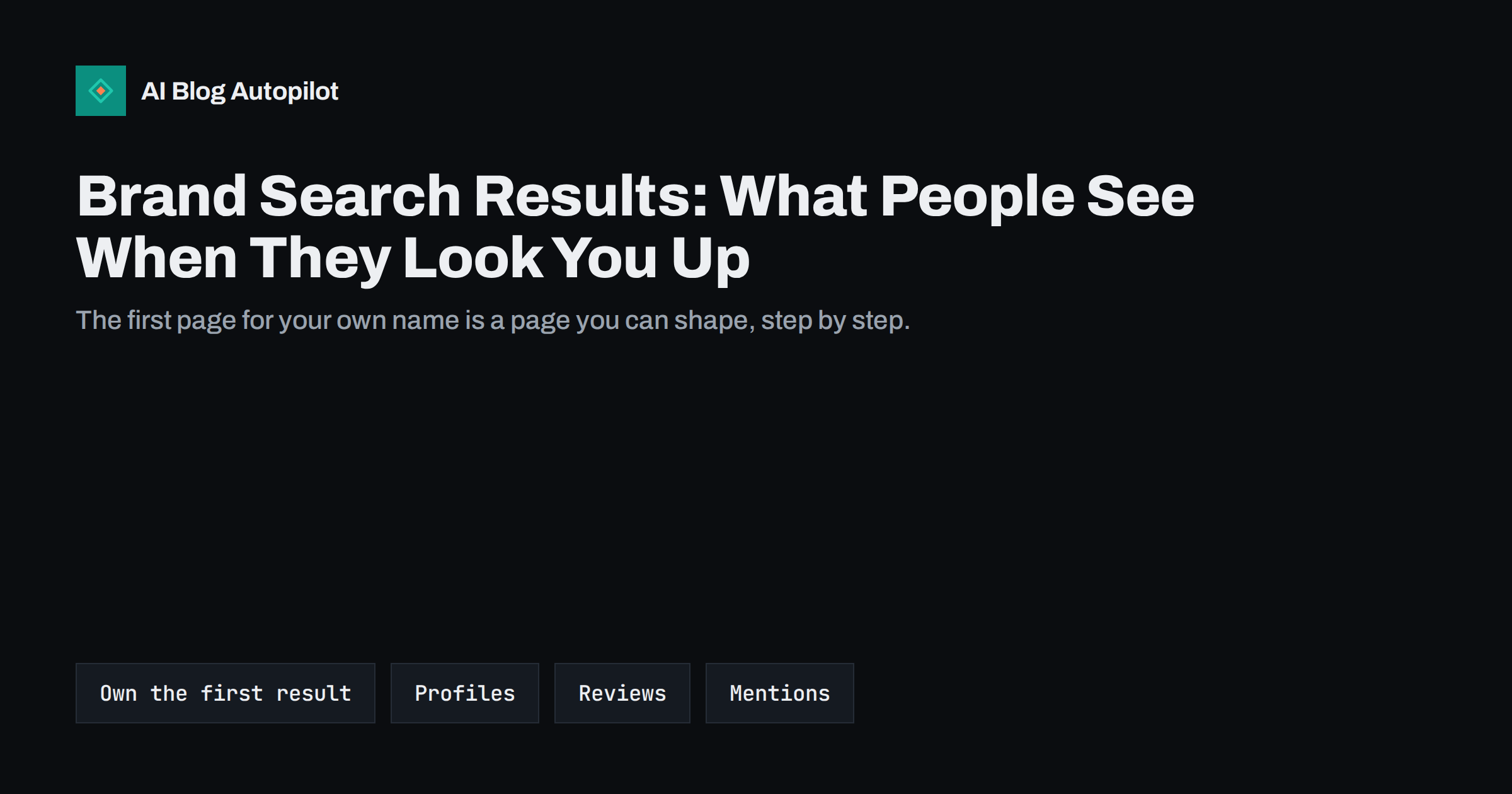
Short answer: your brand search results are the page people see when they type your business name into a search engine. It usually shows your website with sitelinks, your business profile, social accounts, review sites, news or articles that mention you and, increasingly, an AI summary. You cannot control it fully, but you can shape it: make your home page clearly named and structured, keep profiles complete and consistent, earn and answer reviews, publish useful content, and get mentioned on other trustworthy sites.
Brand searches are some of the most valuable searches a business gets. People who type your name already know about you: they saw a social post, got a recommendation, read an article or want to check you before buying. What they find on that page can confirm their decision or make them hesitate. Yet many small businesses never look at their own results. This guide explains what usually appears, why it matters and what you can do about each part.
Why brand searches matter
People search for a business name for a handful of reasons: to find the website, to get contact details or opening hours, to log in, to read reviews, or to see whether the business is legitimate. In every case they are close to acting.
The results page answers questions before anyone clicks. Star ratings, a complaint thread, an outdated address or a competitor’s ad all shape the impression. A clean page with your site at the top, accurate details and reasonable reviews tells people you are real and reliable. A messy page with old information or another company’s name in the results creates doubt.
Brand searches also tend to grow as your marketing works. Blog articles, social posts and AI citations that do not bring a click often lead to a branded search later. The results page is where all that attention lands.
What usually appears on the page
The exact layout varies by search engine, country and business type, but most brand results draw on the same elements:
- あなたのWebサイト, ideally first, often with sitelinks to key pages such as pricing, contact or the blog.
- A site name and favicon next to the result, which identify you visually.
- A business profile or knowledge panel with address, hours, phone, photos and reviews for local businesses, or a summary panel for well-known brands.
- Social media profiles, such as LinkedIn, Facebook, Instagram or X.
- Review and directory sites relevant to your industry.
- Articles and news that mention you, including your own blog posts.
- “People also ask” questions about your business, sometimes revealing what people worry about.
- AI-generated summaries that describe your business using information from your site and others.
- Ads, including competitors bidding on your name.
Competitor ads deserve a quick note. Many search engines allow other businesses to bid on your brand name as a keyword, so their ad may appear above your own result. Whether that is allowed to include your trademark in the ad text depends on the platform and country. If it happens often, some businesses run a small ad on their own name so the first thing searchers see is the real company, with an accurate message.
Make your own site the clear first result
Your home page should rank first for your name, and usually it does. A few details make it stronger and clearer:
- Name the home page properly. The title tag should include your business name and a short description of what you do. Avoid titles like “Home”.
- Set the site name. Search engines choose a site name to show next to results. Google’s documentation on site names explains how to suggest one with WebSite structured data and consistent naming.
- Add a clean favicon. A simple, recognisable icon in the required format helps people find your result quickly.
- Describe the organisation. Organization structured data with your logo, contact details and official social profiles helps search engines connect the pieces.
- Keep key pages easy to reach. Sitelinks are chosen automatically, but a clear menu and good internal links to pricing, contact and the blog make sensible sitelinks more likely.
- Be consistent. Use the same business name, spelling and description across the site, especially if your name is also a common word.
If your name is shared with another company, a place or a common term, you may not rank first, and that is normal. Adding a qualifier that customers use, such as your city or product type, to your titles and descriptions helps search engines show you for the right searches.
Complete and consistent profiles
Profiles on other platforms often fill the rest of the first page. Each one is a chance to show accurate information instead of leaving the space to old or unrelated pages.
- Business profile. For businesses with a location or a service area, a verified business profile is often the most visible element. Keep hours, categories, photos and contact details current, including holiday hours.
- Social accounts. Use the same name and logo, link to your website and post occasionally so the profiles do not look abandoned.
- Industry directories. A few relevant, reputable directories are worth claiming. Hundreds of low-quality listings are not.
- Company registries and partner pages. Make sure the official details match what your site says.
Inconsistency is the most common problem: a different phone number on an old directory, a previous address, an outdated logo. Search engines and AI systems collect information from many places, and conflicting details make them less confident about which is right.
Reviews and how you answer them
Reviews often show up directly on the results page as stars, snippets or separate review site results. They strongly influence first impressions.
You cannot and should not control reviews, but you can manage them well:
- Ask satisfied customers for honest reviews at a natural moment, such as after delivery or a completed project.
- Reply to reviews, especially critical ones, calmly and specifically. Readers judge the response as much as the complaint.
- Fix real problems that reviews point out, and say so when you have.
- Never buy reviews or write fake ones. Platforms remove them, and they can damage trust permanently.
Review platform rules differ, and some forbid offering incentives for reviews. Check the rules of the platforms you use before asking.
Content and mentions that work for your name
When people search your name together with words such as “review”, “pricing”, “alternatives” or “how to”, the results draw on content. Your own blog can answer many of those searches directly: articles that explain how your service works, what it costs in general terms, who it suits and who it does not suit.
Mentions on other sites carry more weight than anything you publish yourself. Interviews, guest articles, podcast appearances, local news, partner case studies and industry lists all add independent sources that talk about you. They also feed the AI summaries that search engines and assistants show for brand queries.
A steady stream of useful articles helps in a quieter way. Each post is another page that can appear for searches combining your name with a topic, and each one gives people a reason to share and mention you.
Handling negative or outdated results
Sometimes the first page contains something unwelcome: an old news story, a complaint thread, a page about a former address or a competitor’s comparison. Options depend on what it is:
- Outdated information on sites you control should be updated or redirected.
- Outdated listings elsewhere can usually be corrected by contacting the site or claiming the listing.
- Legitimate criticism cannot be removed, but a public reply and a fix help, and positive, accurate pages naturally gain ground over time.
- Content that breaks the law or search engine policies, such as personal information or defamation, may qualify for removal through the search engine’s official request processes.
Be wary of services that promise to “push down” results quickly. The durable approach is to create and earn better pages, not to manufacture them.
Check your brand results regularly
Look at your brand results every few months, and after big changes such as a rebrand or a move. Search in a private browser window to reduce personalisation, and check on a phone as well as a computer. Also try your name with common additions such as “reviews”, “pricing”, “login” and your city.
Note what appears, what is wrong or missing and who is advertising on your name. Then work through the list: fix your site first, then profiles, then content and mentions. Search Console shows how many people search for your brand terms over time, which is one of the clearest signs that your marketing is building recognition.
How AI Blog Autopilot helps
AI Blog Autopilot publishes SEO articles to your WordPress blog on a steady schedule and shares each one to your social networks, keeping both your site and your profiles active with useful content. Articles come with FAQ, tags and SEO meta, in up to 25 languages depending on the plan. See the pricing page for details.
Related reading
- Site Name and Favicon in Google Results: Getting Them Right
- Sitelinks in Google Results: What a Blog Can Influence
- Brand Mentions: Why AI Answers Recommend Some Businesses
- The Blog Home Page: What It Should Do for Search
The bottom line
The results page for your business name is often the last thing people see before they contact or buy from you. Make your home page clearly named and structured, keep business and social profiles complete and consistent, handle reviews honestly, and publish content that answers the questions people ask about you. Earn mentions on trusted sites, check the results every few months, and fix what is wrong one item at a time.
FAQ
What are brand search results?
They are the search results people see when they search for your business name. They typically include your website, sitelinks, a business profile, social accounts, reviews, articles that mention you and sometimes an AI summary.
Why is my website not first when I search my business name?
Common reasons include a name shared with other companies or common words, a new or weakly linked site, a poorly titled home page or indexing problems. Clear naming, structured data, consistent profiles and links from other sites help.
Can I remove negative results about my business?
Only in limited cases, such as content that breaks the law or a search engine’s policies. Legitimate criticism usually stays, but replying publicly, fixing problems and earning better pages help balance the results over time.
Does structured data help brand search results?
It helps search engines understand your organisation and choose your site name and logo. Organization and WebSite markup that matches your visible details is worth adding, though it does not guarantee a knowledge panel.
How often should I check my brand search results?
Every few months is enough for most small businesses, plus after major changes such as a rebrand, a move or a new product. Check in a private window, on mobile and with common additions such as reviews or pricing.