ENEnglish
 LTLietuviškai
 DEDeutsch
 FRFrançais
 RUРусский
 ESEspañol
 PLPolski
 ITItaliano
 UKУкраїнська
 CSČeština
 PTPortuguês
 JA日本語
 LVLatviešu valoda
 ETEesti
 HUMagyar
 IDBahasa Indonesia
 TRTürkçe
 HIहिन्दी
 ELΕλληνικά
 ARالعربية
 THไทย
 VITiếng Việt
 RORomână
 MSBahasa Melayu
 BNবাংলা
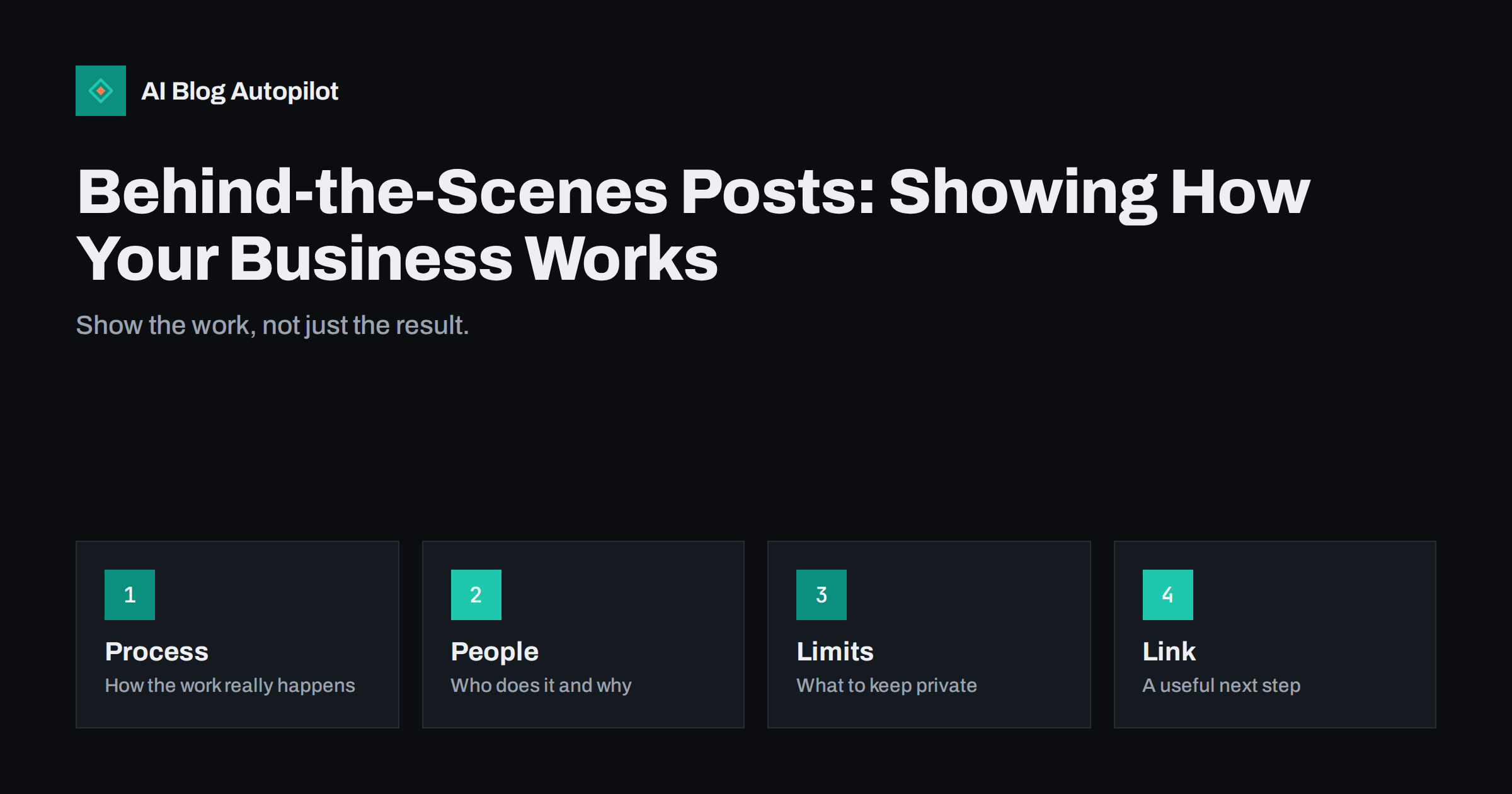
Short answer: a behind-the-scenes post shows how your business actually works: how a product is made, how a project is delivered, how a decision was taken or what a normal day looks like. It builds trust because it replaces claims with evidence, it gives readers something that competitors cannot copy and it supplies real experience, which search engines and AI assistants look for. Good ones are specific, honest and short, protect customers’ privacy and trade secrets, and end with a link to something useful, such as a service page or a related guide.
Most business blogs explain topics. Fewer show the business itself. Readers deciding whom to hire or buy from want to know who they are dealing with, what the work looks like and whether the company does what it says. Behind-the-scenes posts answer that directly. This article explains what to show, what to protect and how to keep the series manageable.
Why these posts work
People trust what they can see. A page that shows how a batch is prepared, how a quote is calculated or how a team handles a difficult day tells the reader more than any adjective. For search, the posts demonstrate first-hand experience, a theme covered in our guide to experience and trust signals. For AI assistants, distinctive, factual content about how you work is more likely to be cited than another generic explainer. And the posts are hard to copy, because they depend on your real processes and people.
There is also a practical benefit inside the company. Writing about how you work forces you to describe your process clearly, and that often exposes gaps, inconsistencies or things you do well but never mention. Staff see their work recognised, which helps morale, and new employees can read the posts to learn how things are done. The same material then supports sales conversations, because a prospect can be sent a post that shows exactly how you handle a problem instead of a generic brochure.
What you can show
Almost every business has material worth sharing. Look for these:
- Process: the steps from request to delivery, the tools you use and the checks you make along the way.
- People: short profiles of team members, how they got into the work and what they care about.
- Decisions: why you chose one supplier, one method or one price structure over another.
- Mistakes and fixes: something that went wrong and what you changed. Used carefully, it is a powerful sign of honesty.
- Places and tools: a tour of the workshop, the office, the studio or the kitchen.
- Events and milestones: a trade show, a first anniversary, a big project finished.
Pick one idea per post and keep it focused. A post called “How we check every order before it ships” is better than “A day in the life of our company”.
Not every business has a workshop to photograph, and a service company can still show its work. A consultant can describe how a typical engagement is structured, a bookkeeper can explain what the monthly routine involves, and an agency can show how a brief becomes a finished campaign, using examples with client permission or invented ones that are clearly marked as such. The aim is to make invisible work visible, so readers understand what they pay for and why it takes the time it does.
What to keep private
Openness has limits. Do not show customer names, addresses, documents or any detail that identifies someone without their written permission. Do not reveal trade secrets, prices agreed under confidentiality, security arrangements or the details of unreleased products. Check backgrounds in photos and screenshots for visible information. Be careful with staff: ask before posting pictures or personal details, and respect a refusal. The principles in our article on interviewing experts and the guide to customer stories and contributions apply equally here, especially about consent and letting people review text before it goes live.
Set a simple approval routine. Before publishing, the author sends the draft and pictures to the person responsible for the area shown, who checks for confidential details, and to any person named or pictured, who confirms they are happy. Keep a record of the approvals with the draft. If a customer or employee later changes their mind, remove their part promptly and politely. This routine takes a few minutes and prevents the kind of mistake that is hard to undo once something has been shared widely.
Choose formats that fit your time
You do not need a film crew. Photo-led posts with short captions work well for physical processes. Interviews with a team member, set out as questions and answers, take little time to write. A short checklist of how you do a job is useful to readers and to your own staff. Video clips can be embedded when they add something; our article on video in blog posts explains when they help. For regular series, such as a monthly “how it is made” feature, set a simple template so each post takes an hour rather than a day. Use the guidance in storytelling in business blog posts to keep the stories concrete and free of filler.
Write them in a real voice
The point of these posts is that a real organisation is speaking. Use plain language, include specific numbers and names where allowed, and avoid corporate phrases that could describe any company. Decide whether the post speaks as “we” or as a named person, and stay consistent. Our article on brand voice guidelines helps you describe the tone you want so everyone writes the same way. Do not exaggerate. If something took three attempts, say so; readers respect candour and notice spin.
A good test is to read the post aloud. If it sounds like something a person would say to a visitor standing in the room, it is probably right. If it sounds like a press release, rewrite it. Use the real names of tools, places and steps, and let small details carry the story: the time the machine is switched on, the check that always catches the same error, the supplier you drive to meet. Specific details are what make a reader believe the rest, and they are what an AI assistant is most likely to quote accurately.
Finally, include one thing the reader can take away: a rule of thumb, a checklist, a tip for choosing between options or a simple explanation of why something costs what it does. A behind-the-scenes post that also teaches something is useful to people who have no intention of buying today, and those are the people who remember you later and recommend you.
Connect each story to a next step
A behind-the-scenes post should lead somewhere. Link it to the product or service it describes, to a related guide or to the page where readers can contact you. Use calls to action that suit the story: “See how this applies to your project” or “Read the full process on our services page”. Our guide to calls to action that fit the post gives examples. Add internal links from relevant older articles, so the new post is discoverable and the series strengthens your site structure.
Plan the internal links when you plan the post. Decide which service page, which guide and which older article it should point to, and which of those should link back to it. Add the post to a category or a series page so readers can find the others. A group of related behind-the-scenes posts, linked together, forms a cluster that tells search engines which subjects you know first-hand, which supports the topical strength we describe in the guide to topical authority.
Share and reuse the material
These posts suit social media very well, because pictures and short stories travel. Turn one post into several: a photo with a caption, a short quote from a team member, a list of the steps, a clip of the process. The articles on repurposing an article and turning posts into social posts show how. You can also reuse the content on your about page, in sales conversations and in recruiting material.
Keep a simple log of ideas. Whenever someone on the team says “we did something interesting today” or “a customer asked us a good question”, note it in a shared document. Within a few weeks you will have more ideas than you need. Assign each idea an owner and a rough date, and take a few photographs at the time, because it is much harder to recreate a moment than to capture it. A small habit of capturing material as it happens does more for this kind of content than any amount of planning.
Mistakes to avoid
- Posting vague tours with no clear point or takeaway.
- Revealing private information by accident in a photo or caption.
- Publishing once and stopping, which leaves a “series” of a single post.
- Staging everything, so the result looks like an advert rather than real work.
- Ignoring the reader’s question, which is always “what does this mean for me?”
How AI Blog Autopilot helps
AI Blog Autopilot writes full SEO articles for your WordPress blog from the topics, keywords, audience and tone you set, with FAQ sections, tags and SEO meta included, and it shares each one to your social networks. Behind-the-scenes content is the part that needs your real material: your photos, your people and your decisions. Let the tool keep the regular articles flowing while you add the occasional first-hand story. Approval mode lets you read each article before it goes live. See the pricing page for plans.
Related reading
- Storytelling in Business Blog Posts Without the Fluff
- E-E-A-T on a Blog That Publishes Automatically
- Interviewing Experts for Your Articles
- How to Put Something Original in an Article You Automated
The bottom line
Behind-the-scenes posts show readers the real business: its process, its people and its decisions. Choose one idea per post, protect privacy and secrets, keep the voice honest, pick formats you can sustain and link every story to a useful next step. They take a little effort, and they give your blog something no competitor can copy.
FAQ
What is a behind-the-scenes blog post?
It is a post that shows how your business works, such as how a product is made, how a project is delivered or who is on the team, using real details instead of claims.
Do these posts help SEO?
They can. They show first-hand experience, they are distinctive and they attract links and shares, though they do not replace helpful explainers.
What should I never show?
Customer details without written permission, trade secrets, security arrangements and personal information about staff who have not agreed.
How often should I publish them?
Once or twice a month is enough for most small businesses, as long as each post has a clear point.
Can I use video instead of text?
Yes, but add a written summary, a transcript or captions so the content is accessible and readable by search engines.