ENEnglish
 LTLietuviškai
 DEDeutsch
 FRFrançais
 RUРусский
 ESEspañol
 PLPolski
 ITItaliano
 UKУкраїнська
 CSČeština
 PTPortuguês
 JA日本語
 LVLatviešu valoda
 ETEesti
 HUMagyar
 IDBahasa Indonesia
 TRTürkçe
 HIहिन्दी
 ELΕλληνικά
 ARالعربية
 THไทย
 VITiếng Việt
 RORomână
 MSBahasa Melayu
 BNবাংলা
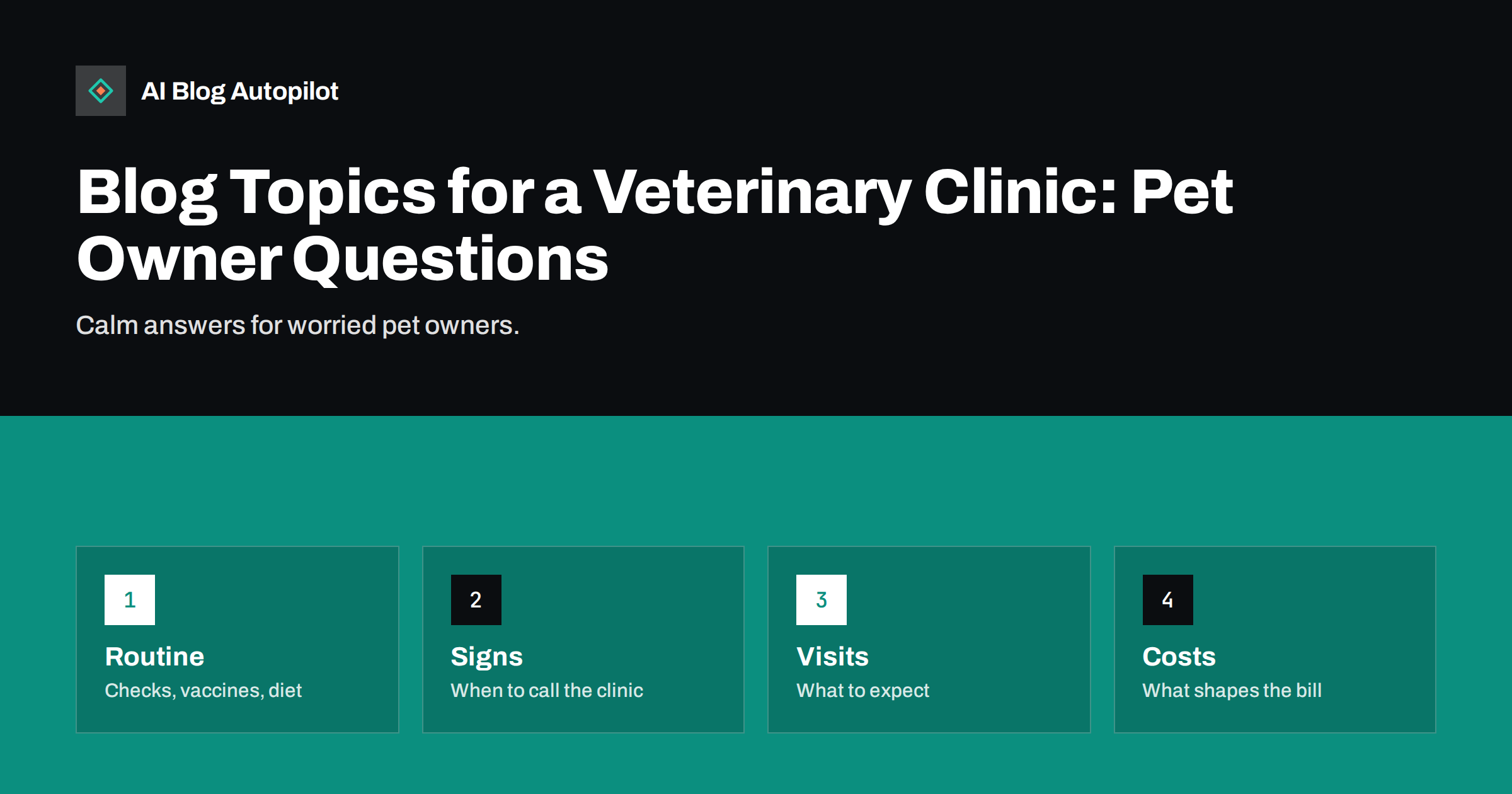
Short answer: a veterinary clinic should blog about what pet owners ask before and after a visit: routine care, preparing for an appointment, signs that need a call, how procedures work, what affects costs and how to look after a pet at home afterwards. Write in calm, plain words, say clearly that the guide cannot replace an examination, tell readers when to ring urgently and keep every page reviewed by a qualified member of the team.
Pet owners search at all hours, often when they are worried. A clear page that explains what is normal, what is not and what to do next can calm a family and send the right cases to the clinic quickly. It also shows the care and knowledge behind your practice before a pet has even been through the door.
This guide lists topic groups for a small animal clinic and explains how to write them responsibly. It covers routine care, warning signs, procedures, costs, local information and the rules of good practice that protect animals and your reputation.
Write about the many kinds of animals you may see beyond dogs and cats, such as rabbits, guinea pigs, birds or reptiles, if your clinic treats them. Owners of small pets often struggle to find reliable information, and a clear guide on diet, housing, handling and common problems can make your clinic the first place they think of. If you do not treat a species, say so and suggest where owners can go.
Routine care and prevention
Start with the questions that every new owner asks: when to vaccinate, how often to check teeth, how to control fleas and worms, what to feed at each age, how much exercise is right, how to keep weight healthy and when to neuter or spay. Write them for the species you treat and say the age and size they refer to, since needs differ.
Create a simple life-stage series: puppy or kitten, adult, senior. Each page lists the main checks, the usual appointments, the common problems and the habits that help. Owners can bookmark the page for their pet’s stage and return to it, and you can link from reminders and emails.
Explain why preventive care matters without scare tactics. Describe what a check includes, what you look for and why small changes are worth noticing early. Avoid language that makes owners feel guilty. A respectful tone brings people back for the next visit.
Add seasonal pages: heat, cold, fireworks, travel, holidays, ticks and mosquitoes, grass seeds, and poisonous plants or foods at certain times of year. These appear in searches each year, and the guide on planning seasonal content helps you publish them early.
Write a plain guide to the first hours after a pet swallows something it should not, is hit by a car or is bitten by another animal. Explain what to do while travelling to the clinic, what to tell the reception, what to bring and why it helps to call ahead. Keep the language simple, because readers in such moments are frightened and need short steps, not long explanations.
Signs, emergencies and when to call
The most important pages explain when to call. Write clear guides on signs that need quick attention, such as difficulty breathing, repeated vomiting, a swollen belly, collapse, heavy bleeding, a seizure, inability to pass urine or suspected poisoning. Put the clinic’s phone number and the out-of-hours arrangement at the top, not at the bottom.
Avoid making a diagnosis. A page can describe what a sign may mean in general, but it must say that only an examination can tell. Do not suggest treatments with human medicines, doses or home remedies that may harm an animal. If you mention first aid, keep it to basic steps approved by a vet and say when to stop and travel to the clinic.
Write short guides on common worries that are usually minor, such as a single sneeze, a day of low appetite or mild scratching, and explain when they become a reason to call. This reassures owners and reduces unnecessary panic, while making sure real problems are not ignored.
Review these pages with a vet and put the review date on each. The article on health, money and legal topics on a business blog explains why care matters in sensitive areas, even though pet health differs from human health.
Include a guide for owners of anxious animals. Explain how to get a cat used to a carrier, how to practise handling at home, how to arrange a quiet appointment and how the clinic adapts, for example with separate waiting areas or longer slots. Owners who avoid visits because the animal is stressed are often the ones whose pets most need care, so a kind page can bring them in.
Also explain the paperwork: consent forms, microchip records, vaccination certificates, travel documents and medical records. A short page that says what each document is for and how to request a copy removes a common source of calls and confusion.
Explaining visits and procedures
Many owners fear the unknown. Describe what happens at a first visit, a vaccination, a dental clean, a neutering operation, an X-ray, a blood test or an overnight stay. Explain the steps, how long it takes, what the owner needs to do before and after and how the animal is kept comfortable and safe.
Provide preparation checklists: when to stop feeding, what to bring, how to carry a cat, how to calm a nervous dog, how to give a sample and what paperwork to take. Short guides like these reduce missed appointments and make the day easier for everybody, including the staff.
Explain aftercare in plain steps: rest, wound care, medicines, feeding, signs to watch for and when the follow-up is. Offer a printable sheet that the clinic also hands out, so that the information is the same everywhere.
Describe the team and their roles. Vets, nurses, reception and animal care staff all contribute, and short profiles help owners feel they know someone before they arrive. The article on meet the team posts shows how to write them well.
Costs, insurance and decisions
Owners worry about cost and often search before they call. Explain what affects the price of care: the size and species of the animal, the type of examination, tests, medicines, anaesthesia, hospital stays and out-of-hours work. If you publish a price list for routine services, put a date on it and explain what is included.
Write a guide to pet insurance that explains in general terms how policies work, what owners should check, such as limits, excesses, exclusions and pre-existing conditions, and why they should read the terms. Do not recommend a particular provider unless you can explain clearly any link you have, and mention any commission.
Explain how to make hard decisions kindly. Guides on caring for an older pet, on treatment choices when money is limited and on saying goodbye need a gentle, honest tone. They should help owners ask the right questions and should never pressure them. Many readers will remember how you handled such topics when they choose a clinic.
Be open about payment arrangements you offer, and about what happens when an owner cannot pay. The guide on writing honest articles about what things cost gives a useful structure.
Local information and trust
Make the practical details easy to find: address, parking, opening hours, how to book, whether you accept walk-ins, out-of-hours arrangements, species you treat, accessibility and which areas you serve. Keep them the same on your site and on your business profile.
Write local guides: walks and parks, dog-friendly places, local rules for dogs, nearby groomers and trainers you trust, and seasonal risks in your area, such as ticks in woodland or algae in lakes. Local detail makes your site more useful than a generic national page and attracts neighbours.
Show the clinic with real photographs of the waiting room, the consulting rooms and the team, taken with consent. Do not publish photographs of clients’ animals in treatment without permission, and do not show identifiable owners. The article on original photos on a business blog shows how to collect real images with consent.
Publish your standards: training, memberships, equipment and the way complaints are handled. State only what you can prove. A short, honest page often earns more trust than a long list of promises.
Staying within the rules
Veterinary work is regulated, and advertising rules differ by country. Read the guidance of your professional body before you publish prices, comparisons, before-and-after images or claims about results. Avoid promises of cure and avoid comparisons with other clinics that you cannot support.
Handle client stories with care. A story about a rescued animal can be moving, but it needs the owner’s permission and should not suggest that every case ends the same way. Do not publish medical records or details that identify the owner.
Moderate comments and messages. Readers may describe their pet’s symptoms in a comment, and you should not diagnose in public. Reply that they should phone the clinic, and add a note that comments are not a place for urgent problems. Pin the emergency number where it is easy to see.
Keep the content fresh. Medicines, guidelines and local conditions change, so mark each page with a review date and remove outdated ones.
Add a short page for each service the clinic offers beyond the basics, such as dental care, behaviour advice, nutrition clinics, puppy classes, senior pet checks or rehabilitation. Explain who each service is for, how it works, what it costs in general terms and how to book. Link each page from the related guides, so that a reader who is learning about one subject finds the next step without searching.
A simple publishing plan
Pick six topics to begin with: a first visit guide, a life-stage guide for your main species, a when-to-call page, a costs page, a guide to the main routine treatments and a page about out-of-hours care. Publish them first, check them with a vet, and link them from each other and from your appointment pages.
Then add one new guide a week or fortnight from the questions that reception staff hear most often. Ask the team to note any question that comes up three times, and turn it into a page. After a guide is published, send its link when the question comes again, and see whether the calls fall.
Measure what matters: which pages lead to bookings, which are read before an emergency call and which bring visitors but no action. Improve the weakest pages first.
How AI Blog Autopilot helps
AI Blog Autopilot can write and publish articles on your chosen topics, with FAQ sections, tags and SEO meta, and share them to your social networks. Give it your services and your area, and have a qualified member of your team check every medical statement, price and phone number before each article goes live. See the pricing page for plans and monthly credits.
Related reading
- A Blog for a Groomer, Kennel or Pet Shop: What to Write
- Blog Strategy for a Local Business
- Support Articles That Actually Reduce Tickets
The bottom line
Answer pet owners’ questions calmly, put the emergency advice first, leave diagnosis to the examination and have every page reviewed by a vet.
GYIK
What should a veterinary clinic blog about first?
Start with a first visit guide, a when-to-call page, routine care by life stage and a costs page.
Can a blog diagnose a pet’s problem?
No. Describe signs in general terms and say that only an examination can tell what is wrong.
Should I publish prices?
If you can, with the date and what is included. Otherwise explain what affects the cost.
How do I handle urgent questions in comments?
Reply that readers should phone the clinic, and display the emergency number prominently.
Who should review the content?
A qualified member of the team, with a review date shown on every guide.