 ENEnglish
 LTLietuviškai
 DEDeutsch
 FRFrançais
 RUРусский
 ESEspañol
 PLPolski
 ITItaliano
 UKУкраїнська
 CSČeština
 PTPortuguês
 JA日本語
 LVLatviešu valoda
 ETEesti
 HUMagyar
 IDBahasa Indonesia
 TRTürkçe
 HIहिन्दी
 ELΕλληνικά
 ARالعربية
 THไทย
 VITiếng Việt
 RORomână
 MSBahasa Melayu
 BNবাংলা
#Technical seo
The technical side of content sites, explained for people who publish rather than people who build servers. We cover canonical tags, duplicate content, page speed, mobile layout, sitemaps and the settings that quietly stop pages being indexed. You will find which issues genuinely affect a blog and which are theoretical concerns that audit tools exaggerate. We also explain how to check each one yourself with free tools. The aim is a site where good articles are not held back by something fixable.
 2026. okt. 1. · 8 perc olvasás
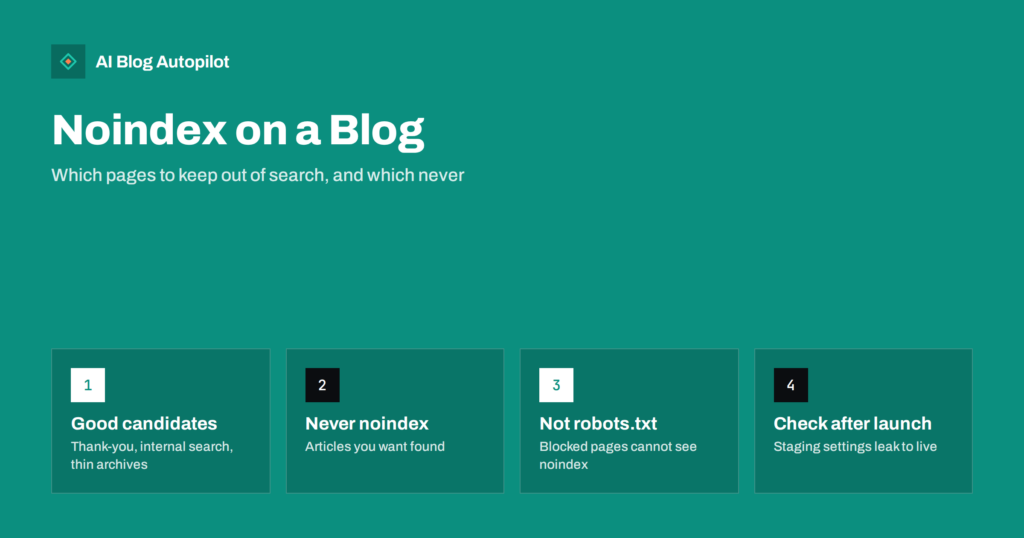
Noindex on a Blog: Which Pages to Keep Out of Search
Noindex keeps a page out of search results while leaving it open to visitors. Which blog pages should carry it, which should not, and…
 2026. okt. 1. · 8 perc olvasás
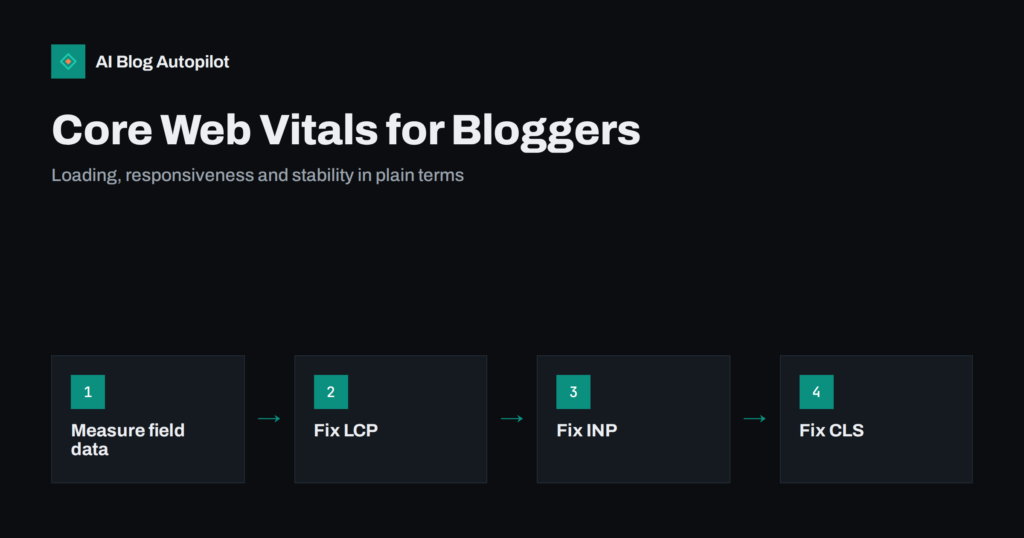
Core Web Vitals for Bloggers: LCP, INP and CLS Explained
Core Web Vitals measure loading, responsiveness and layout stability. What LCP, INP and CLS mean for a blog, the usual causes of poor scores,…
 2026. szept. 30. · 8 perc olvasás
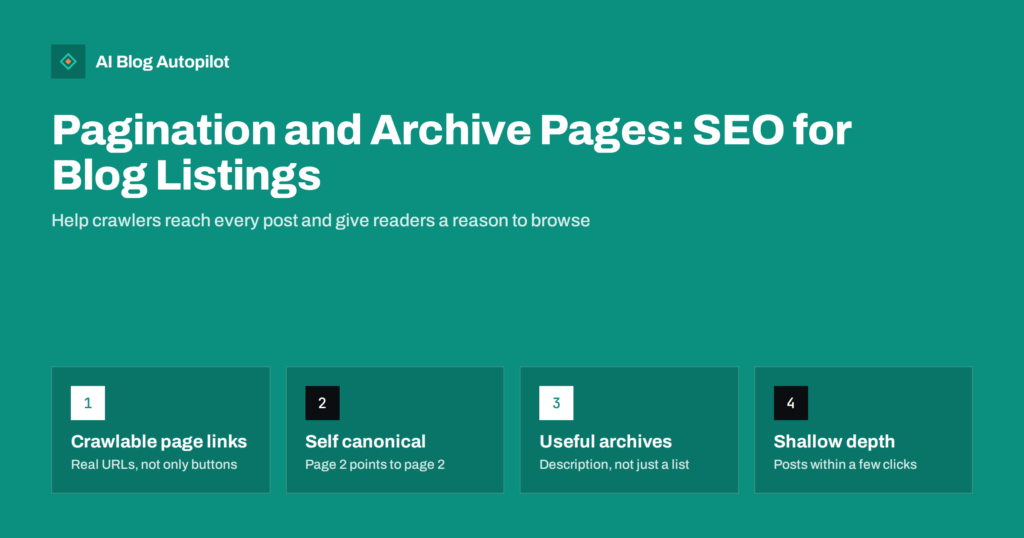
Pagination and Archive Pages: SEO for Blog Listings
How blog archives, category pages and pagination affect crawling and indexing, what to do with page 2 and beyond, and how to make listing…
 2026. szept. 30. · 8 perc olvasás
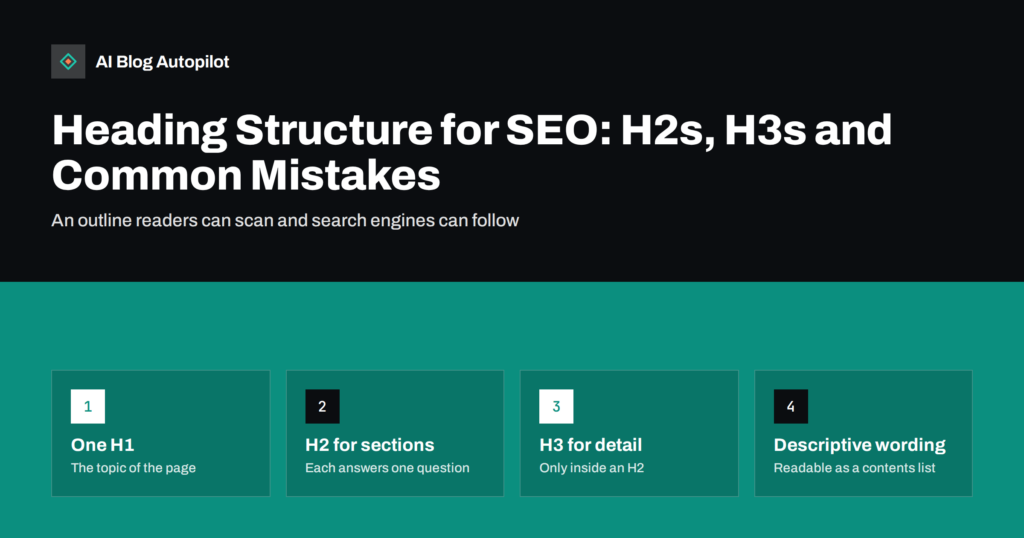
Heading Structure for SEO: H2s, H3s and Common Mistakes
How to structure H1, H2 and H3 headings in a blog post so readers can scan it, screen readers can navigate it and search…
 2026. szept. 30. · 8 perc olvasás
Image SEO for Blog Posts: File Names, Size and Formats
Image SEO for bloggers: descriptive file names, the right format and size, lazy loading, dimensions and captions, so images help pages load fast and…
 2026. szept. 30. · 8 perc olvasás
Broken Links on a Blog: How to Find and Fix Them
How broken internal and external links appear on a blog, the free ways to find them, and how to decide between updating, redirecting or…
 2026. szept. 30. · 8 perc olvasás
Title Tag vs H1: Should They Match on a Blog Post?
The title tag and the H1 do different jobs. When they should match, when they should differ, and how to write both so search…
 2026. szept. 30. · 8 perc olvasás
Crawled but Not Indexed: Why Some Blog Posts Stay Out
What "Crawled, currently not indexed" and "Discovered, currently not indexed" mean in Search Console, the usual causes on a blog and the fixes that…
 2026. szept. 30. · 9 perc olvasás
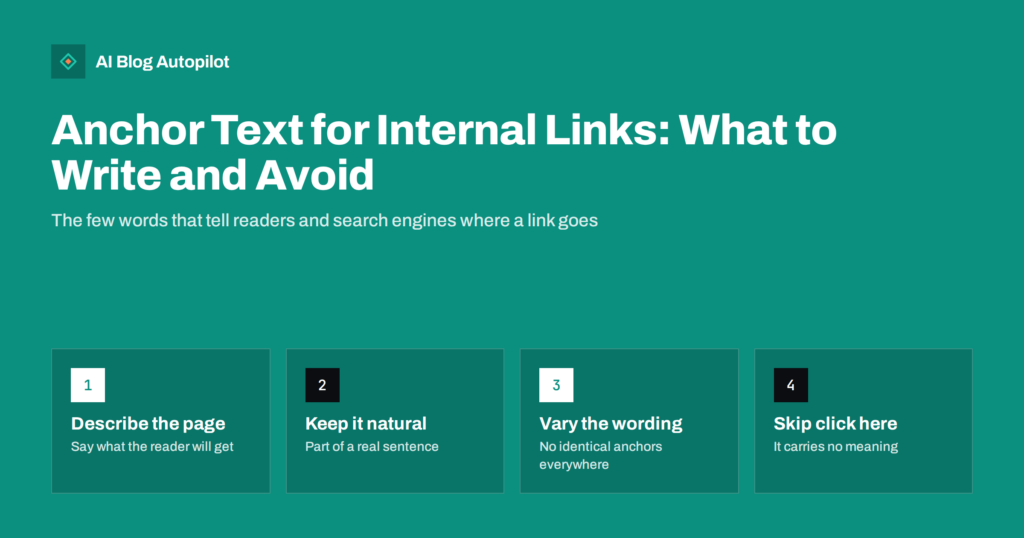
Anchor Text for Internal Links: What to Write and Avoid
How to write anchor text for internal links on a blog: descriptive, varied and honest. Examples, the mistakes to avoid, and a quick way…
 2026. szept. 30. · 8 perc olvasás
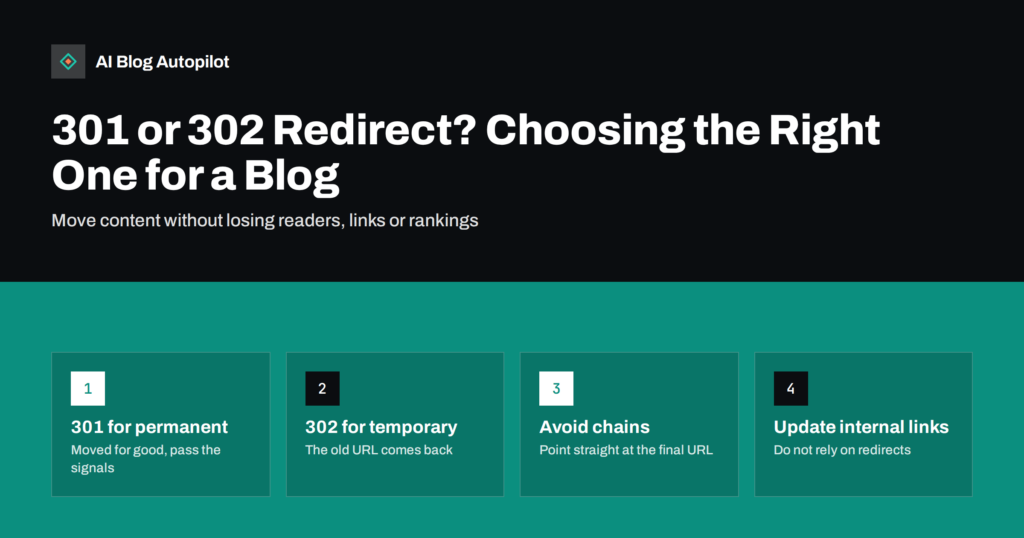
301 or 302 Redirect? Choosing the Right One for a Blog
When a blog needs a 301 redirect, when a 302 is right, how 307 and 308 fit in, and how to avoid the chains,…
 2026. szept. 30. · 8 perc olvasás
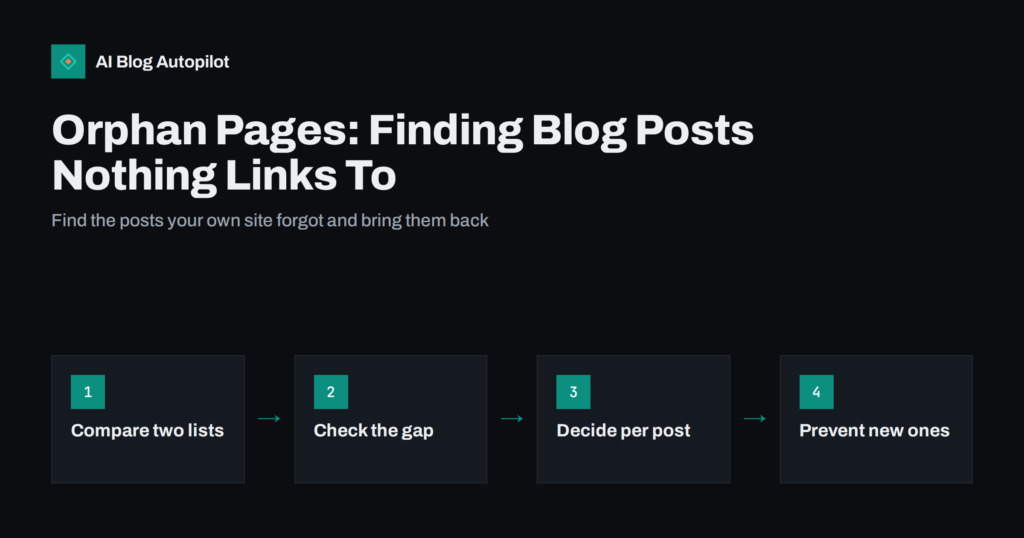
Orphan Pages: Finding Blog Posts Nothing Links To
Orphan pages are posts no other page links to. How they happen on blogs, how to find them with free tools, and whether to…
 2026. szept. 30. · 9 perc olvasás
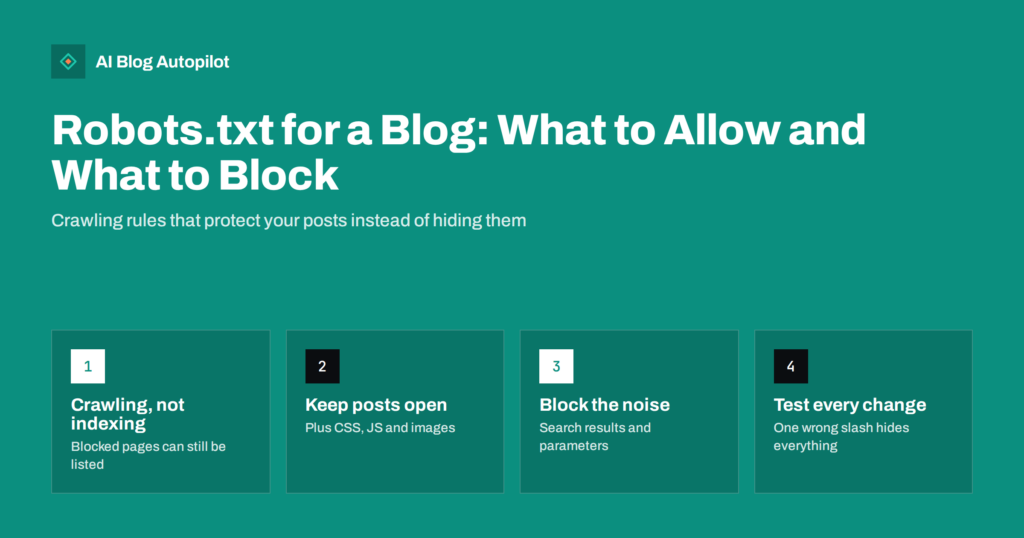
Robots.txt for a Blog: What to Allow and What to Block
What robots.txt does on a blog, which paths are worth blocking, which must stay open, and the mistakes that quietly hide posts from search…