ENEnglish
 LTLietuviškai
 DEDeutsch
 FRFrançais
 RUРусский
 ESEspañol
 PLPolski
 ITItaliano
 UKУкраїнська
 CSČeština
 PTPortuguês
 JA日本語
JA日本語 LVLatviešu valoda
 ETEesti
 HUMagyar
 IDBahasa Indonesia
 TRTürkçe
 HIहिन्दी
 ELΕλληνικά
 ARالعربية
 THไทย
THไทย VITiếng Việt
 RORomână
 MSBahasa Melayu
 BNবাংলা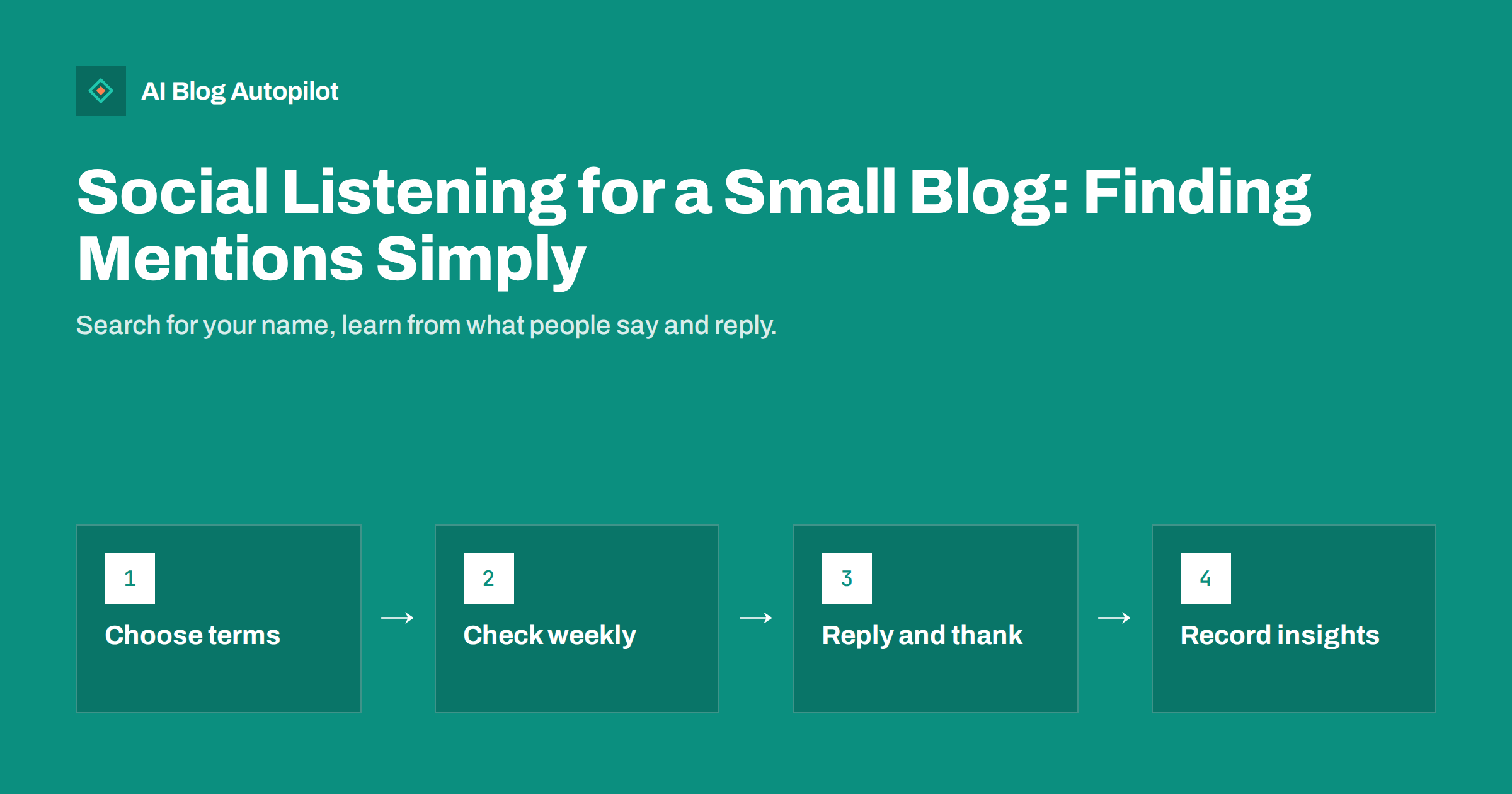
Short answer: social listening means looking for what people say about your brand, your blog and your topics, and then using it. A small blog can do this with free methods: save searches for your name, your site address and your main topics, check them for a few minutes each week, reply helpfully to the people you find and write down what you learn for your content plan. You do not need expensive software to begin. A short routine and a simple log will take you a long way.
When a blog shares articles on social networks, most of the conversation happens elsewhere: someone mentions your post in a reply, a reader asks a question about a topic you covered, a peer recommends you to a friend or a customer complains. If you never look, you miss thanks you could give, questions you could answer and ideas you could use. Large companies pay for monitoring platforms. A small blog does not need them, and a lighter approach may suit it better. This guide shows what to listen for, where to look, how to build a routine, how to respond well and how to turn what you find into better articles.
What social listening is, and what it is not
Listening is two things: finding relevant conversations, and learning from them. It is not the same as monitoring your own post statistics, and it is not about collecting data on individuals.
- Mentions of you. Posts that name your blog, your brand or the people behind it, with or without a tag.
- Links to your site. People who share your articles, with or without a comment.
- Topic conversations. Questions and discussions about the subjects you write on, even when they do not name you.
- Competitors and peers. What people say about similar blogs, which can reveal what readers like and miss.
Respect people’s privacy. Public posts are public, but treat them with care: do not collect personal details, do not follow people around the network and do not quote someone’s words in an article without permission.
What to search for
Start with a short list. A list that is too long becomes a chore, and you will stop checking.
- Your brand and blog name, including common misspellings and short forms.
- Your domain name, because many shares carry a link and not a name.
- Your own name or the author names, if people tend to refer to the writers.
- Two or three topic phrases that match your main subjects, in the words your readers use.
- Hashtags you use, and any branded tag you have created.
Write these in a note with the networks to check for each. If your name is common, add words that narrow the search, such as your industry. If your blog covers several languages, include the main terms in each.
Where to look, for free
Most networks have a search box that finds public posts. A few simple approaches cover most of what a small blog needs.
- Each network’s own search. Search for your terms and sort by the latest posts. Some networks let you save a search so you can repeat it quickly.
- Notifications and mentions tab. Check what the network collects for you, and look at both replies and tags.
- Web search. Search for your domain or brand and filter results to the past week, to catch posts, forums and articles outside the networks.
- Email alerts. Free alert services can notify you when new pages mention your brand. Check the settings so that the alerts are not too noisy.
- Your analytics. Look at referral sources to find networks and posts that sent readers. The referrer list sometimes reveals a conversation you did not know existed.
- Your link tracking. If you tag links when you share, clicks from outside your own posts show where else the links went.
Terms of use differ between networks, and some limit automated collection of posts. Do searches by hand or with the network’s own features, and read the rules before using any tool that gathers data.
A routine that takes twenty minutes a week
A routine matters more than the tools. Pick a fixed time, set a timer and work through a short checklist.
- Check notifications on the networks where you are active. Reply to anything that needs it.
- Run your saved searches for brand, domain and names. Note new mentions and who made them.
- Scan topic searches for questions that you could answer, and for complaints or confusion that suggest a gap in your content.
- Look at the referral report in your analytics for new social sources.
- Write down two or three things you learned, in a shared document.
Stop when the timer ends. If something deserves more time, schedule it. Over weeks, the routine becomes quick, and you will know what normal looks like.
How to respond
Listening is useful only if you respond sensibly. Different kinds of mention need different replies.
- Thanks and shares. A short, human thank-you is usually enough. Do not paste the same line each time.
- Questions about a topic. Answer briefly in the thread, and link to an article only if it truly helps. If you do not have an article, say so, and consider writing one.
- Corrections. If someone points out an error in your article, thank them, check it and fix the article. Mention the update, if appropriate.
- Complaints. Reply calmly, in public if the matter is general and in private if it involves details. Never argue.
- Negative or hostile posts. Decide whether replying helps. Many do not deserve an answer. Use the network’s tools to report abuse.
- Posts from people you do not know, in topic threads. Be helpful first. Do not drop links into every conversation, because that looks like spam and breaks the rules of many communities.
Set a target for response time that you can keep, for instance within two working days, and tell colleagues who answers what. A quick, polite reply from a real person shows that the blog is active and cared for. If you need to check a fact before answering, say that you will come back, and then do so. Silence after a promise is worse than no reply at all, and a reader who is helped once is likely to return and to recommend you to others.
Turn what you hear into content
The greatest value of listening is the information it gives you. Look for patterns, not single posts.
- Repeated questions become articles, FAQ entries or updates to existing posts.
- Wording that readers use shows the phrases to use in titles and headings.
- Misunderstandings show where your explanation is unclear.
- Praise shows which of your strengths readers notice, and which should lead your next posts.
- Complaints about other sources show gaps that you could fill.
Keep a simple table with the date, the network, a one-line summary, the category and the action you took. A monthly look at the table is enough to see what is repeating.
Review the setup every quarter. Remove terms that only bring noise, add new product names or topics, and check whether the networks you watch are still the ones your readers use. A listening plan is a living document, and a small amount of pruning keeps the routine short enough to survive busy weeks.
A worked example
A small blog about home energy saving sets up its listening in an afternoon. It writes down six terms: the blog name, its domain, the two author names and two topic phrases, “heat pump running costs” and “draught proofing”. It saves the brand searches on the two networks where it is most active and puts a twenty-minute slot in the calendar every Friday.
In the first month it finds three useful things. A reader thanked the blog for a checklist and asked whether it covered older houses, which led to a new article. A local group had shared a post with an incorrect claim about the content, so the author replied politely and linked to the exact paragraph. And two people in a topic thread asked the same question about insulation grants, which showed a gap. The team added a short FAQ entry within a week and later wrote a full guide.
None of this took special software. It took a list, a timer and the habit of writing down what was learned. After three months the log showed which topics kept coming up, and the content plan for the next quarter drew on it directly.
Mistakes to avoid
- Setting up so many searches that the results become noise.
- Replying only to praise and ignoring questions or criticism.
- Turning every reply into a sales message.
- Treating one loud post as a trend.
- Collecting personal data about the people who mention you.
- Giving up after two weeks because nothing dramatic happened. Most weeks are quiet, and that is fine.
How AI Blog Autopilot helps
AI Blog Autopilot publishes each article to your blog and shares it to your connected social networks with its own text for each one, so there is regular material for people to react to. It does not monitor mentions or replies for you, so keep your weekly check as a human task. The content map shows what was shared and where, which tells you which posts to look for. See the pricing page for plans.
Related reading
- Unlinked Brand Mentions: Turning Them Into Real Links
- Handling Negative Comments on Your Blog’s Social Posts
- Social Media Metrics for Bloggers: What Is Worth Measuring
- UTM Tags for Social Shares: Tracking Which Posts Bring Readers
The bottom line
Social listening does not need a large budget. Choose a short list of search terms, check them on a fixed schedule, reply helpfully and keep a log of what you learn. The conversations you find show you what readers ask, what they misunderstand and what they like, which is exactly what a blog needs to plan its next articles. A small, steady habit gives you most of the benefit.
FAQ
Do I need a paid tool for social listening?
Not at first. Each network’s search, saved searches, web search alerts and your analytics reports can cover the needs of a small blog.
How often should I check for mentions?
Once a week is enough for most small blogs. Choose a fixed time and a short checklist, so that it stays manageable.
Should I reply to every mention?
Reply to thanks, questions and corrections. Choose carefully with hostile posts, and avoid putting links into conversations where they do not help.
Is it acceptable to collect data on people who mention me?
Keep it minimal. Note the mention, the network and the topic, not personal details, and respect each network’s rules on collecting data.
How do I use what I learn?
Look for repeated questions, wording and misunderstandings, and turn them into new articles, FAQ entries or improvements to existing posts.