ENEnglish
 LTLietuviškai
 DEDeutsch
 FRFrançais
 RUРусский
 ESEspañol
 PLPolski
 ITItaliano
 UKУкраїнська
 CSČeština
 PTPortuguês
 JA日本語
 LVLatviešu valoda
 ETEesti
 HUMagyar
 IDBahasa Indonesia
 TRTürkçe
 HIहिन्दी
 ELΕλληνικά
 ARالعربية
 THไทย
 VITiếng Việt
 RORomână
 MSBahasa Melayu
 BNবাংলা
Short answer: a sale or offer post works best when it explains who the offer suits and why, states the dates, the price and every condition plainly, and keeps the page useful after the offer ends. Lead with the reader’s need rather than the discount, avoid false urgency, and never claim a saving you cannot prove.
Most readers have seen too many shouting banners. They have learned to distrust countdown clocks, huge percentages and words like last chance. A blog post about an offer can do better, since it has room to explain the reason for the offer, the value behind it and who should skip it. That honesty is rare enough to stand out.
This guide shows how to plan, write and maintain posts about sales, discounts, bundles and seasonal offers, so that they help the reader decide and do not damage the trust you have built with the rest of your blog. The advice suits online stores, local businesses, service providers and software companies.
Start with the reader’s need, not the discount
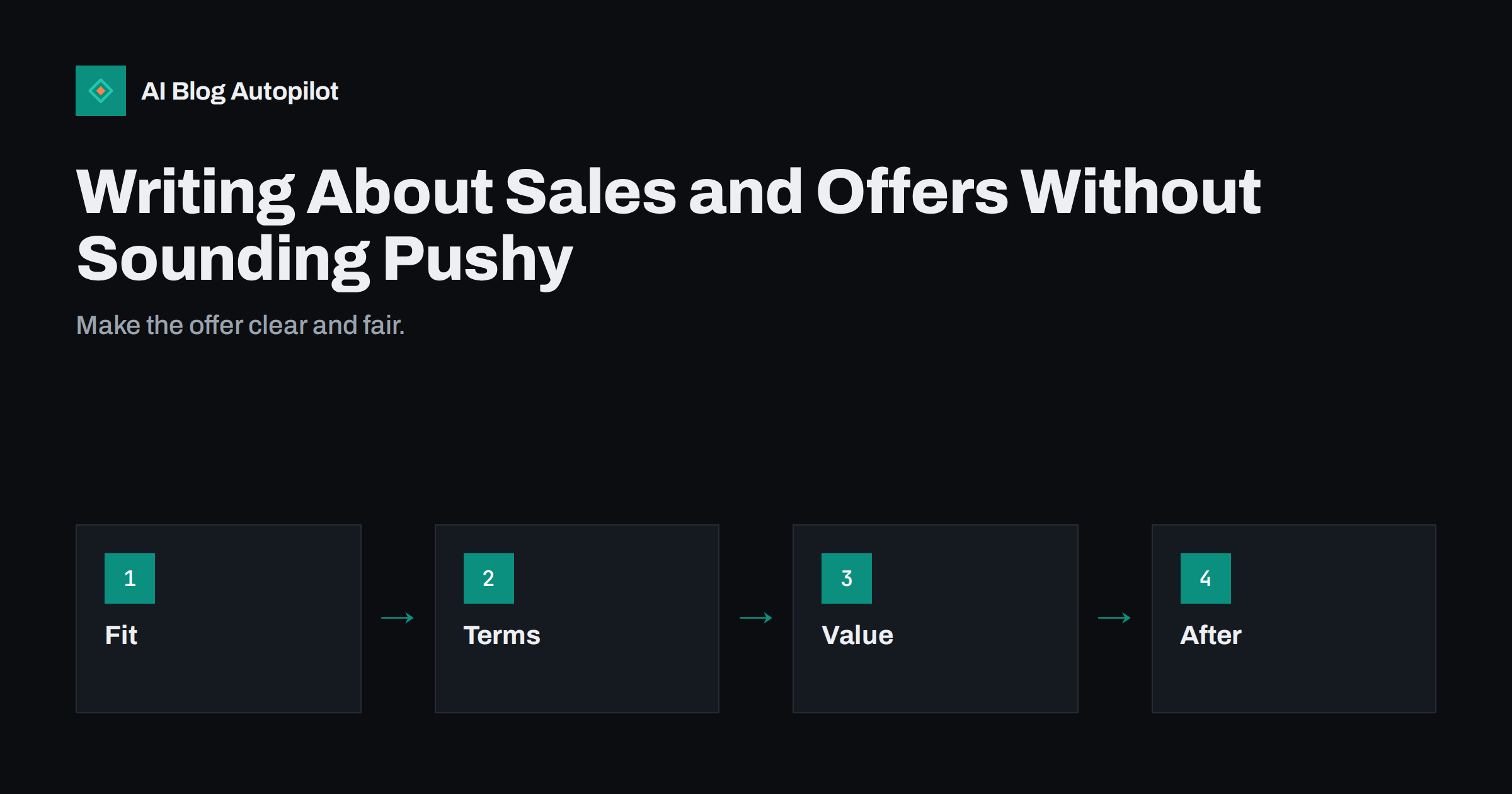
Begin with the problem the offer solves. If a bakery offers a box of pastries for a team meeting, the post should start with the difficulty of feeding a group at short notice, not with the percentage off. When the reader recognises their situation, the price becomes a pleasant detail and not the whole message.
Say clearly who the offer is for, and who it is not for. A sentence such as this suits small teams and is less useful for large events helps the right people act and prevents disappointed customers. Readers trust a business that tells them when something is not a good fit, and they often return for something else.
Put the key facts in the first paragraph: what is offered, the price or saving, the dates and where to get it. Many readers will not scroll further, and AI assistants that summarise your page will take their answer from the opening lines. If the facts are buried, they will be missed or misquoted.
Use plain language for the headline. A title such as a spring service offer for boilers, with dates, is better than a long line of capital letters. It tells search engines what the page is about and tells readers what to expect before they click.
State the terms plainly
List every condition in one place: start and end dates, quantities, locations, exclusions, whether the offer can be combined with others and how to claim it. Use a short list or table, not small print. If the reader must find a condition after they have decided, they will feel misled, whether or not you meant it that way.
Show prices clearly. If you quote a saving, say what it is compared with. A reference price must be real: many countries have rules about how a previous price is shown, and a claim of a discount from a price that was never charged can be treated as misleading. Check the consumer rules that apply to you before you publish. The guide on using evidence in marketing content explains how to back up each claim.
Say what happens at the end. If the offer will not return, say so only if it is true. If it may return, say that dates may vary. Avoid inventing deadlines to create pressure, since customers who discover the trick will not forget it, and search engines and reviewers may mention it.
Keep the language of the terms simple. Write we will refund the difference within fourteen days rather than a long sentence that uses legal words. If your terms must include formal wording, put a plain summary above it and link to the full text.
Explain the value and the reason
Explain why the offer exists. A clearance of last season’s stock, a thank-you for loyal customers, a launch week or a quiet period all make sense and sound honest. A reader who understands the reason is less likely to wonder what is wrong with the product.
Describe what the reader gets, not only what they save. Include details such as sizes, features, lengths of service and what is included. A comparison of the offer with the normal purchase, shown fairly, helps buyers see whether it suits them. Use real photographs and avoid images that suggest more than the offer includes.
Add proof where you have it. A short quote from a customer, a number of orders or a note from the person who made the product adds weight, provided it is true and current. The guide to testimonials in blog posts explains how to use them fairly.
Answer the questions people will ask. How long will delivery take, can I return it, is there a warranty, what if I change my mind? A short set of questions at the end of the post saves support time and helps the page appear in answers to specific questions.
Avoid pressure tactics
False urgency is the most common mistake. Countdown clocks that reset, only three left messages that never change and claims that everyone is buying are all easy to spot and easy to dislike. Use real limits, such as an end date or a true stock level, and only when they exist.
Avoid shaming or fear. Lines that suggest the reader is foolish for waiting, or that something terrible will happen if they do not buy, damage the tone of the whole blog. A friendly, direct invitation works better and keeps the door open for readers who need time.
Be careful with words such as free, guaranteed and best. If the offer is free with conditions, say so near the word. If you use a guarantee, explain exactly what it covers. If you say best, say best for what and compared with what, or leave the word out.
Respect the reader’s attention. One clear call to action, repeated once at the end, is enough. A post that asks the reader to buy, subscribe, follow, share and comment all at once makes none of those things easy. Choose the action that matters and make it simple.
Consider what the post teaches you about your customers. The questions they ask, the objections they raise and the products they choose are all useful material for your next articles. A short review a week after the offer ends, with notes on what readers asked, often produces three or four ideas for guides that will bring traffic all year.
Be careful with automated sharing of offers. A scheduled social post that goes out after the offer has ended is worse than no post. Check the dates on every scheduled item, and remove or update anything that points to an expired page before the end date arrives.
Keep the page useful after the offer ends
An offer post that vanishes leaves broken links and lost traffic. Decide in advance what will happen when it ends. You can keep the page and add a clear note at the top saying that the offer has ended, with a link to the current one or to the regular product page. Do not leave an expired offer looking live.
For regular events, such as a yearly sale, use one address and update it each time, keeping the dates clear. The guide on how to refresh old blog posts shows how to update a page without losing its history. This builds authority on one page and avoids a pile of old, competing posts.
If the page has attracted links, redirect it with care. Send visitors to the closest useful page, not simply to the home page. Update your sitemap and internal links, and remove the offer from newsletters and social profiles so that nobody follows a link to a dead end.
Keep a record of past offers: dates, terms, results and what you would change. After a few campaigns, you will see which reasons and formats work for your audience. Next year’s post will be faster to write and more likely to succeed.
Think about the post as part of a series. Offers repeat through the year, such as spring, back to school, autumn and the end of year, and each one can build on the last. Link each post to the previous ones and to the regular product pages, so that readers and search engines see a consistent record of how you treat customers.
Train everyone who answers customers on the details of the offer. A reader who calls to ask about a condition should hear the same answer as the page says. If staff are unsure, update the page or add a short question to the FAQ, and keep the two in step for the whole period of the offer.
Share and measure the post
Plan where the post will appear: the blog, a short email, your social profiles and your business profile. Write a version for each place, since a long explanation suits the blog and a single clear line suits a social post. Use tracking tags on links so that you know which channel brought buyers.
Measure more than clicks. Look at orders, enquiries, refunds and complaints. An offer that brings many sales and many returns may have promised too much. An offer that brings few clicks but loyal customers may be worth repeating. Review the results with the team and write down the lessons.
Finally, keep the offer consistent across your site. The price, dates and conditions on the blog must match the product page, the checkout and any email. A mismatch is the fastest way to lose a sale and to receive an angry message, and it is easy to prevent with a short checklist before you publish.
How AI Blog Autopilot helps
AI Blog Autopilot can write and publish articles on your chosen topics, with FAQ sections, tags and SEO meta, and share them to your social networks. Give it the facts of your offer and check every date, price and condition before each article goes live. See the pricing page for plans and monthly credits.
Related reading
- Price Change Announcements: How to Write Them
- Using Evidence in Marketing Content
- Calls to Action That Fit a Blog Post
The bottom line
Lead with the reader’s need, state every term plainly, avoid false urgency and decide in advance what the page will do when the offer ends.
FAQ
How do I announce an offer without sounding pushy?
Start with the reader’s need, explain who the offer suits and state the terms plainly, with one clear call to action.
Should I use countdown timers?
Only if the deadline is real and does not reset. False urgency damages trust more than it helps sales.
What conditions should I list?
Dates, quantities, locations, exclusions, whether it can be combined with other offers and how to claim it.
What should I do with the page after the offer ends?
Keep it, add a clear note that the offer has ended and link to the current offer or the regular product page.
Can I mention the old price?
Only if it is a real price you charged, and check the consumer rules for how reference prices must be shown.