ENEnglish
 LTLietuviškai
 DEDeutsch
 FRFrançais
 RUРусский
 ESEspañol
 PLPolski
 ITItaliano
 UKУкраїнська
 CSČeština
 PTPortuguês
 JA日本語
 LVLatviešu valoda
 ETEesti
 HUMagyar
 IDBahasa Indonesia
 TRTürkçe
 HIहिन्दी
 ELΕλληνικά
 ARالعربية
 THไทย
 VITiếng Việt
 RORomână
 MSBahasa Melayu
 BNবাংলা
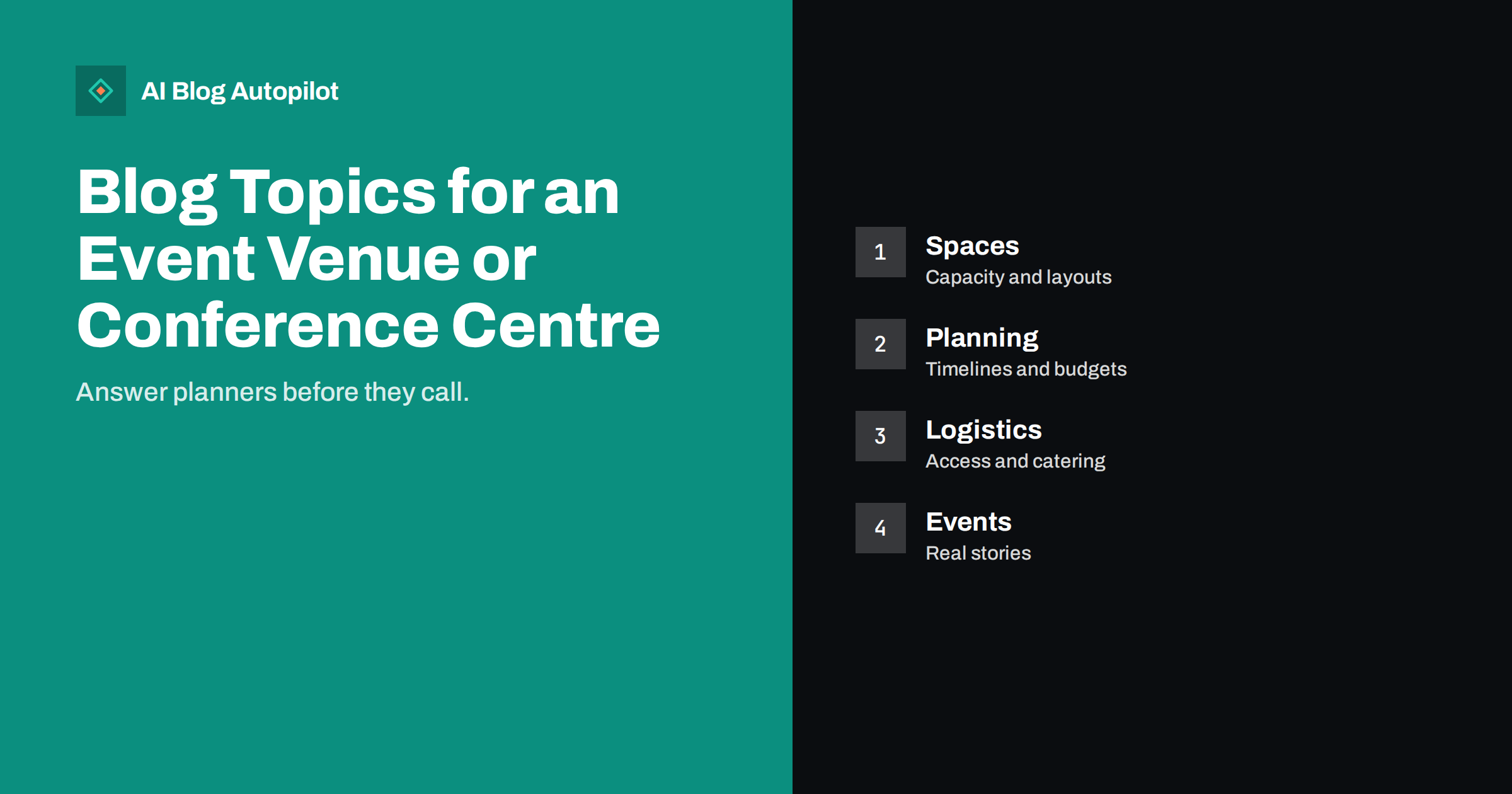
Short answer: an event venue or conference centre blog works best when it answers the questions planners ask before they send an enquiry: how many people fit, what layouts are possible, what is included, how access and catering work and how far ahead to book. Write for the planner, be exact about facts and show real events with permission.
Planners compare many venues, often in a hurry and under pressure from a budget and a date. They scan websites for clear facts, then shortlist two or three places to visit. A blog that explains the practical side of events makes a venue easy to understand and easy to trust.
This guide gives topic ideas for halls, conference centres, hotels with function rooms, barns, galleries, clubs and other venues that host weddings, meetings, parties and corporate events. It focuses on content that brings enquiries from the right people.
Add a short note on how a room feels, not only how big it is: bright and airy, intimate and warm, or formal and traditional. Planners imagine their event as they read. A few honest sentences about atmosphere, supported by real photographs, help them decide whether to visit. Avoid inflated adjectives, and let the details speak.
Describe each space and its capacity
Write a page for every room or area, with exact capacities for different layouts: theatre, classroom, cabaret, banquet, boardroom and standing reception. Explain how the figures were calculated, and whether they include staging, dance floors or buffet tables. A planner who finds precise numbers is more likely to trust the rest of the page.
Add measurements, ceiling height, natural light, power points, loading access, stage options and any limits such as noise or finishing times. Include clear floor plans and photographs of the room set up in different ways. Use real events, not only empty rooms, and give images useful alt text so they work for everyone.
Write a comparison page for planners who are unsure which room to choose. Explain which room suits a quiet meeting, a lively party or a presentation with a break-out area, in plain language. The guide to writing a fair comparison article offers a structure.
Cover the types of event you host with a dedicated guide each, because the questions differ. A wedding planner asks about ceremonies, dancing and accommodation. A conference organiser asks about breakout rooms, registration and streaming. A party host asks about music, decorations and finishing times. A dedicated page lets each reader see their own event in your venue.
Include a section on how far ahead to book at different times of the year, and what to do when a date is taken. Offering alternatives, such as a weekday or an off-peak month, keeps the conversation going and may save the booking.
Guides to planning an event
Many visitors are first-time organisers. Write practical guides on planning a wedding reception, a company away day, a conference, a charity dinner or a milestone birthday. Walk through the timeline from setting a date to the day itself, including when to book the venue, caterers, speakers and entertainment.
Explain what to ask a venue: what is included in the price, what extras cost, what the cancellation terms are, who the contact person will be and what happens if the numbers change. Offering readers a checklist they can use with any venue shows confidence and generosity.
Produce printable tools, such as a simple planning timeline, a floor plan template or a questions list for site visits. These are shared and bookmarked, and they bring links. The guide to templates and checklists that earn subscribers explains how to offer them well.
Explain the deposit and payment schedule in plain words, along with what happens when numbers change or an event is postponed. Many disputes begin with unclear terms, and a plain summary on the page, with a link to the full terms, prevents them. Make sure the blog and the contract agree exactly, and update both together when rules change.
Budgets and what affects the cost
Cost is the question that planners ask first and venues often hide. Write an honest guide to how pricing works: hire fees, minimum spends, catering, equipment, staffing, overtime, cleaning and service charges. You need not publish a price list, but explaining what drives the total helps readers prepare a realistic budget.
Suggest ways to save money without damaging the event, such as choosing a quieter day or time, simplifying the menu or reducing the guest list. Advice that helps a planner stay in budget builds goodwill, even if it leads to a smaller booking.
Be careful with statements about value. Explain what is included and why, rather than calling the venue the cheapest or best. The article on writing honest articles about what things cost shows how to keep that tone.
Offer seasonal menu ideas for different kinds of event, with a note that availability changes. Explain how far ahead final numbers and dietary details are needed, and what happens to late changes. A table of deadlines, such as numbers confirmed two weeks before, is easy to scan, provided it matches your terms exactly.
Catering, drinks and dietary needs
Food is central to most events. Describe your catering options: in-house team, approved caterers or bring your own, if allowed. Explain menus in general terms, how choices are made, how far ahead numbers must be confirmed and how dietary needs and allergies are handled. State licensing hours and any rules on alcohol.
Write a guide to feeding a mixed group, with advice on vegetarian, vegan, halal, kosher, gluten-free and allergy requirements. Explain how your kitchen handles them and what information you need from the organiser. Be exact: allergy information must be accurate, so involve the catering team and follow the rules where you operate.
Describe options for coffee breaks, working lunches, evening receptions and late snacks. Planners often forget these details, and a helpful article makes you the venue that thought of everything.
Explain the day of the event from a guest’s view: where to arrive, where to leave coats, where to find toilets, how to reach the room and what to do in bad weather. A short guest information page that organisers can send to attendees is a very practical piece of content, and organisers will link to it.
Add local information that helps out-of-town guests, such as late-night transport, nearby pharmacies and cash machines. These small details show care and also give you pages that can rank for local searches.
Access, parking and accommodation
Practical facts decide many bookings. Write a clear page on how to reach the venue by car, rail, bus and air, with parking numbers and charges, drop-off points and taxi information. Add a map and walking directions from the nearest station. Update the page when roads, services or charges change.
Describe accessibility honestly: step-free routes, lifts, accessible toilets, hearing loops, quiet rooms, seating and assistance dogs. Planners need this information to decide, and a page that gives it plainly helps guests as well. If something is not available, say so and explain the alternatives.
List nearby hotels, with distances, and explain whether you have partnerships. Be transparent about any arrangement. Provide tips for out-of-town guests, such as local restaurants and sights, which can turn into regular local guides that bring visitors in all year.
Explain what happens on the day of a technical rehearsal: when speakers can test slides, how microphones are set, who to ask for help and how long setup needs. Planners who know this schedule in advance plan their programme better, and a clear guide reduces last-minute stress for your own team.
Mention backup arrangements in general terms, such as spare equipment or a plan for a power or network problem, if you have them. Honest information about how problems are handled is more reassuring than a claim that nothing ever goes wrong.
Technology, sound and safety
Corporate planners ask about technical details. Write about screens, projectors, microphones, recording, streaming, internet capacity, power and technical support. Explain what is included and what must be hired, and how far ahead a technician needs a brief. A page like this reassures planners who fear technical failure.
Explain rules on noise, music, decorations, candles, confetti and suppliers. Venues have rules for good reasons, and explaining the reasons makes them easier to accept. Include the process for bringing in external suppliers, such as florists, photographers and bands, and the insurance documents they may need to provide.
Say a word about safety: capacity limits, fire procedures, first aid and security. Keep it factual and calm, and follow your official procedures.
Ask suppliers who work in your venue to share their tips: photographers on the best spots for pictures, caterers on how to choose a menu, florists on what suits the space. A guest article with their name and link adds expertise and spreads your content through their networks. Check their facts, and be open about any arrangement with them.
Review each year’s events at the end of the season. Which rooms were used most, what questions came up again and again, and what feedback did clients give? These notes are a rich source of next year’s articles and of improvements to the venue itself.
Real events and testimonials
Stories of real events are your best material. With permission from clients, write about a wedding, conference or party: the brief, the layout, the schedule and what the client said afterwards. Add photographs and a short list of suppliers, who may link back to you. Avoid identifying private guests or sharing personal details.
Collect testimonials with care. Ask clients for a few honest sentences soon after the event, and show the name and type of event with their approval. The guide to testimonials in blog posts explains how to use them fairly.
Report on seasonal trends and local events, such as the busy wedding season or conference calendar, to help planners book early. Keep a calendar of dates when the venue is typically in demand, and update it each year.
How AI Blog Autopilot helps
AI Blog Autopilot can write and publish articles on your chosen topics, with FAQ sections, tags and SEO meta, and share them to your social networks. Check capacities, prices, rules and dates against your own records before each article goes live. See the pricing page for plans.
Related reading
- A Blog for a Wedding or Event Business
- A Blog for a Restaurant, Café or Hotel
- Blog Strategy for a Local Business
The bottom line
Give planners exact capacities, honest cost guidance, clear access and catering information, and real stories of events held in your spaces.
FAQ
What should a venue blog write about first?
Room-by-room capacities and layouts, a planning checklist, and how pricing and catering work.
Should I publish prices?
Prefer explaining what drives the total and inviting an enquiry, unless you can keep prices current.
How do I handle allergy information?
Be exact, involve your catering team and follow the rules where you operate.
Can I show photos of past events?
Yes, with client permission and without identifying private guests.
How often should I update access pages?
Whenever parking, transport or accessibility details change, and check them at least once a year.