ENEnglish
 LTLietuviškai
 DEDeutsch
 FRFrançais
 RUРусский
 ESEspañol
 PLPolski
 ITItaliano
 UKУкраїнська
 CSČeština
 PTPortuguês
 JA日本語
 LVLatviešu valoda
 ETEesti
 HUMagyar
 IDBahasa Indonesia
 TRTürkçe
 HIहिन्दी
 ELΕλληνικά
 ARالعربية
 THไทย
 VITiếng Việt
 RORomână
 MSBahasa Melayu
 BNবাংলা
Short answer: a guesthouse, small hotel or tour operator can use AI Blog Autopilot to publish local guides, visitor answers and seasonal articles, shared on the networks where travellers browse. Plan the year around the seasons, supply accurate facts about rooms, tours and policies, keep prices and availability out of articles, and consider a plan with more languages if your guests come from abroad.
Hospitality and tourism live by the calendar. Demand rises and falls with seasons, school holidays, events and weather, and travellers research long before they book. A blog that answers their questions about the area, the journey, the weather and what to do builds trust and brings visitors who might never have found a booking page on its own.
The problem is time. In the busy season, the owner is working all hours, and in the quiet season, the budget is thin. A blog that runs on a schedule, with content planned ahead, suits the cycle. This guide explains how to do it with the product, using plan facts from the pricing and home pages. Details about your own business and area are yours to supply.
Why travellers read blogs
People planning a trip ask many questions before they book. What is the best time to visit? How do I get there without a car? What can we do if it rains? Is the area good for children, for walking or for couples? Which village has the best food? Pages that answer such questions appear in search results long before a booking page does.
A local business has an advantage here. You live in the place, and you know what visitors ask. A guesthouse owner can explain a walking route better than a distant travel site, and a tour operator can describe the practical details of a trip. The article on a travel agency or tour operator blog lists topic families that work.
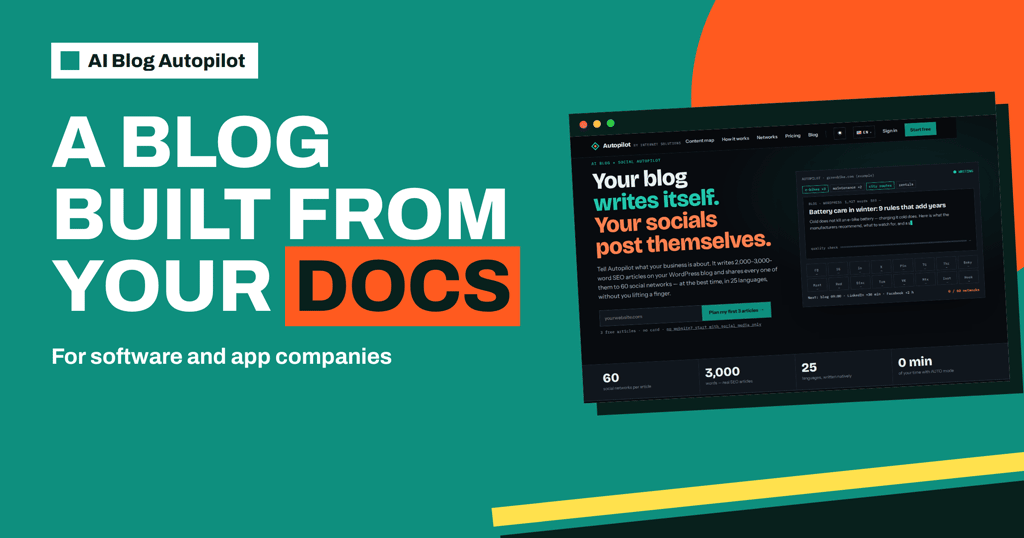
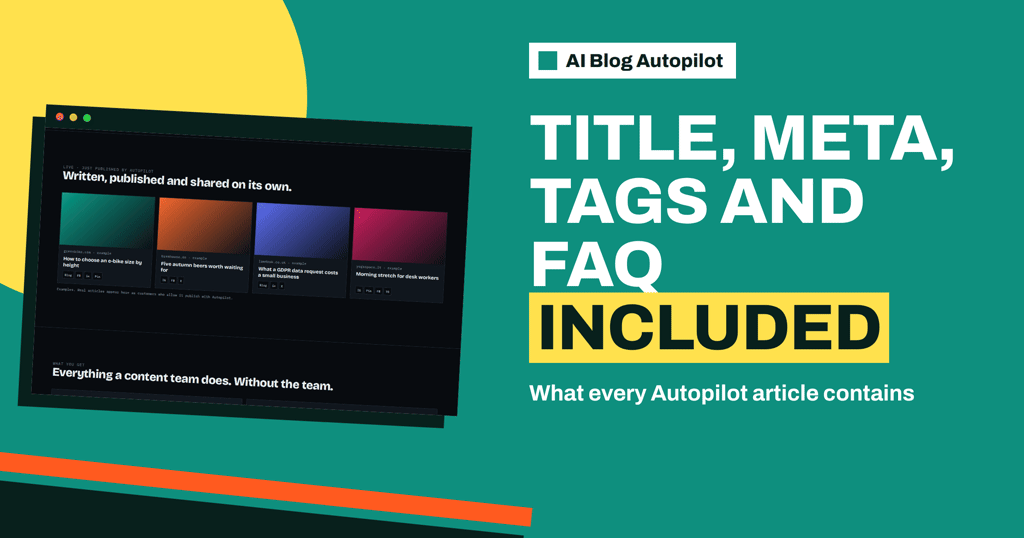
The home page describes what the product writes: 2,000 to 3,000 word articles, planned around real search queries, with an FAQ, tags and SEO meta, published on your WordPress blog and shared on each connected network. For a travel business, that is a steady supply of useful pages and posts.
Plan the year by seasons
Start with a calendar. Mark your high season, shoulder seasons and quiet months. Add school holidays in your main source markets, local festivals, sporting events, harvests, markets and any changes in access or opening times. Content should appear before demand does, since travellers plan weeks or months ahead, and search engines need time to index new pages.
Give each season its own topic family. Spring might bring walking routes and what to pack. Summer might bring beaches, family activities and festivals. Autumn might bring food, colour and quieter trips. Winter might bring cosy stays, events and gift vouchers. Use the weights in the topic settings to raise the share of a season’s topics as it approaches, and lower it afterwards.
Prepare evergreen content too. Guides about getting to the area, local customs and family-friendly places stay useful across years. The Growth plan lists evergreen reshares, which can bring such articles back to the networks. The article on planning your blog for the year-end holiday season shows how to work backwards from a date.
Which plan fits
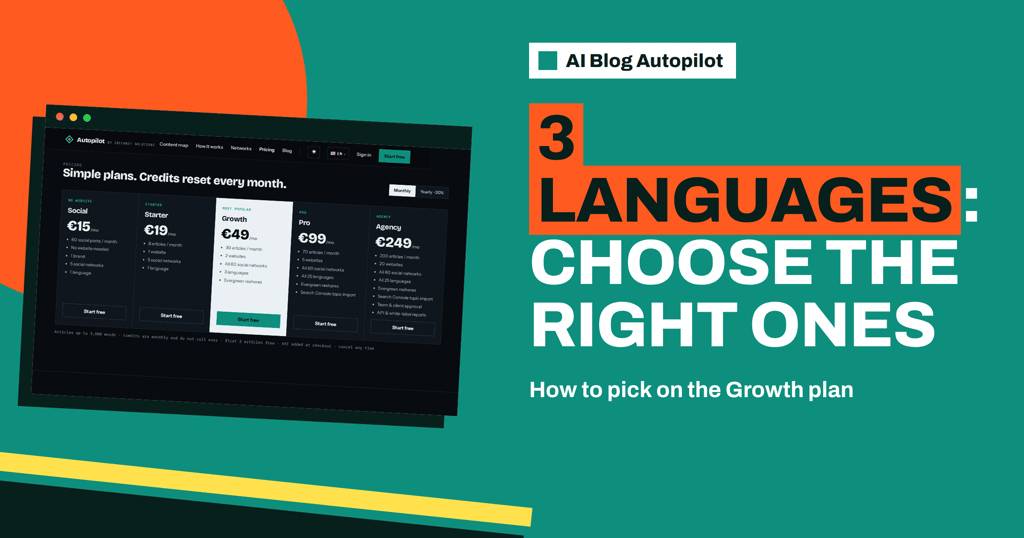
For a single guesthouse with one website, the Starter plan lists 8 articles a month, 1 website, 5 networks and 1 language for 19 euros. That is enough for a steady blog. If your guests come from several countries, the Growth plan lists 3 languages, 30 articles and 2 websites for 49 euros, and it lists all 60 networks and evergreen reshares.
A business with several properties or several brands might look at Pro, which lists 5 websites and all 25 languages. Count the markets that matter and choose from there. Credits are monthly and do not roll over, so a seasonal business may prefer monthly billing, as the pricing page lets you cancel at any time.
Think about when you need the product. Some operators want more articles in the months before their season and fewer afterwards. Plan the use of credits month by month, using only what you can review. The article on planning your monthly credits helps with this.
Languages for guests
If many guests come from abroad, language matters. The home page says each article is written directly in its language, not translated from English. For a guesthouse near a border, a hotel that hosts international groups or a tour operator selling to a foreign market, a blog in the visitors’ language can make the difference between being found and being invisible.
Choose languages by guest data. Look at the nationalities in your bookings and enquiries, and at which languages your staff can handle. Publishing in a language in which you cannot answer messages creates frustration. Start with one additional language, and add more when the first works. The article on choosing which languages to publish in gives a method.
Ask a native speaker to read samples, especially for place names, local terms and anything about customs. Provide a short glossary of names that should stay unchanged, such as the names of your rooms, tours and nearby places.
Facts that must stay accurate
Travel content carries risk if the facts are wrong. A guest who arrives expecting a restaurant that closed or a route that is not safe in winter will be unhappy, and may write a review about it. Keep a fact sheet with your opening dates, room types, policies, check-in times, access details, nearby services and tours. Update it whenever something changes.
Keep prices, availability and offers out of articles. They change often, and an article may stay online for years. Send readers to the booking page or contact page for current details. The home page says the writer is instructed never to make up statistics, quotes or sources, but it cannot know your current rates or whether a place is open.
Be careful with safety, health and legal topics such as hiking conditions, water quality, visa rules or health advice. Link to official sources and say that readers should check current conditions. If you cannot verify a statement, remove it. The article on conflicting facts across your pages explains why consistency matters.
Posts on the right networks
Travel is visual, and networks with strong images suit it. The home page’s example mentions Facebook, Instagram and Pinterest among the networks, and shows Pinterest posting the day after the blog. The networks page explains that each network receives its own text and timing. Choose the places where your guests browse, which for many travellers includes a photo network, a general social network and perhaps a messaging channel for returning guests.
Watch the first posts to see how the product writes for each network, and compare them with your brand voice. A warm, local tone usually works best for hospitality. If the posts sound generic, describe your tone in more specific terms in the topic settings.
Respond to comments and messages promptly, since travellers often ask practical questions. A quick, friendly answer can win a booking. Use the content map to see which posts went out and when, so that you know what a person is replying to.
A year in the life of a small guesthouse
Picture a six-room guesthouse in a hill town. In January, the owner fills the fact sheet for the year: opening dates, room descriptions, breakfast arrangements, the nearest station and the local events. In February and March, the blog publishes articles for the spring walking season, such as which paths dry out first and what to pack. In May, family activities and rainy-day ideas appear, ahead of the summer holidays.
In September, the focus turns to food, harvests and quieter weekends away. In October and November, the blog publishes guides for winter stays and gift vouchers, timed before the holiday season. Each month, the owner spends half an hour reading the new articles with the fact sheet beside them, answers comments on the networks and notes the questions guests asked at the desk. Those notes become next month’s topic changes.
The same rhythm works for a tour operator, with departures, group sizes and itineraries in place of rooms. The point is that content leads demand by a few weeks, and the owner’s real knowledge of the place is the source of the best topics.
Measuring what matters
Do not judge the blog only by direct bookings. Travellers read several pages before they decide, and a booking may arrive weeks after the first visit. Look at visits to guides, enquiries that mention an article, returning visitors and the share of bookings from search. Ask guests how they found you, and record the answer.
Review the topics after each season. Which articles brought readers? Which questions did guests ask that the blog did not answer? Add them to the brief for next year. Over several seasons, the library of articles grows into a reliable source of visitors.
One more habit pays off in this trade: read the reviews your guests leave on travel sites and note the recurring praise and complaints. If many guests mention the view, the breakfast or the difficulty of finding the entrance, those are topics your readers care about. Add them to the brief with a clear description, so that articles speak to what real visitors value and answer the practical worries that otherwise reach you as questions before booking.
Finally, keep the website itself in good order. Articles bring readers to your pages, so the booking route, the photos, the contact details and the page speed matter as much as the content. Check them on a phone before each season, and fix anything that makes a first-time visitor hesitate.
How AI Blog Autopilot helps
The product writes, publishes and shares seasonal content on a schedule, in the languages your plan lists, and shows the output on a content map. Try the three free articles on AI Blog Autopilot, no card needed, and compare plans on the pricing page.
Related reading
- A Travel Agency or Tour Operator Blog: Topics That Sell Trips
- Planning Your Blog for the Year-End Holiday Season
- A Museum or Visitor Attraction Blog
The bottom line
Plan content around the seasons, answer visitors’ real questions, keep prices and availability out of articles, publish in your guests’ languages and check facts before every busy season.
FAQ
Which plan suits a single guesthouse?
Starter lists 8 articles, 1 website, 5 networks and 1 language for 19 euros a month. Growth lists 3 languages if guests come from several countries.
Can articles include current prices?
It is safer not to. Prices and availability change, so link to your booking page for current details.
Can I publish in my guests’ languages?
Growth lists 3 languages and Pro lists all 25. Each article is written directly in its language.
How do I plan for seasons?
Mark the seasons and events in a calendar, give each season a topic family and raise its weight before it begins.
Do unused credits carry over to the busy season?
No. Credits are monthly and do not roll over.