ENEnglish
 LTLietuviškai
 DEDeutsch
 FRFrançais
 RUРусский
 ESEspañol
 PLPolski
 ITItaliano
 UKУкраїнська
 CSČeština
 PTPortuguês
 JA日本語
 LVLatviešu valoda
 ETEesti
 HUMagyar
 IDBahasa Indonesia
 TRTürkçe
 HIहिन्दी
 ELΕλληνικά
 ARالعربية
 THไทย
 VITiếng Việt
 RORomână
 MSBahasa Melayu
 BNবাংলা
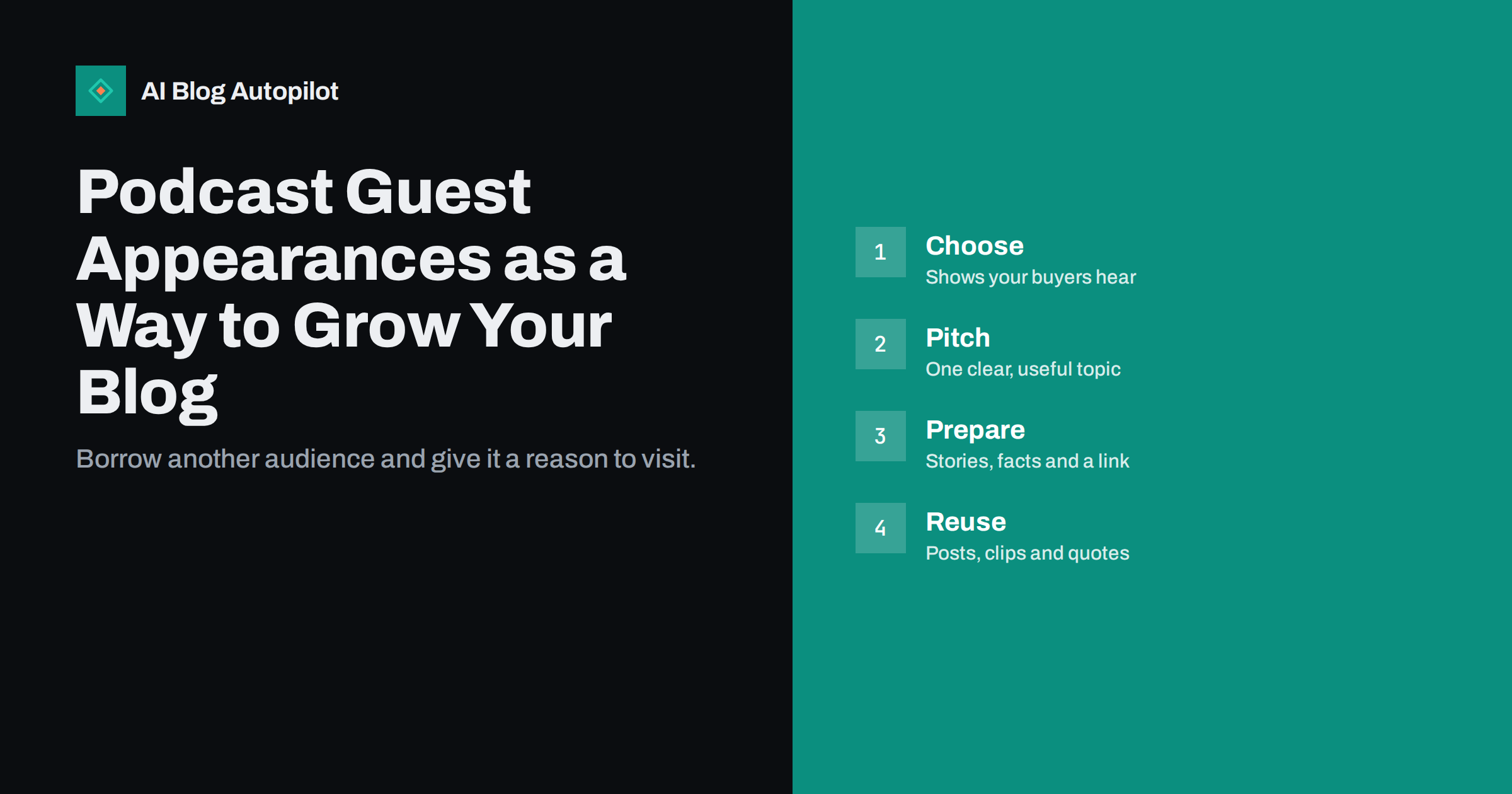
Short answer: being a guest on a podcast puts you in front of an audience that already trusts the host. For a business blog, the benefits are new readers, links from show notes, mentions that help brand recognition and material for articles. Choose shows that your buyers actually hear, pitch one useful topic, prepare short stories and a page worth visiting, and reuse the episode in several formats. Expect gradual results, not a sudden spike.
Podcast hosts need guests every week, and many welcome experts who can talk about a practical subject. For you, an appearance is a way to explain what you know in your own voice, to people who may never have seen your website. It also produces a lasting link, since most shows publish a page for each episode with the guest’s name and website.
This guide explains how to choose shows, how to approach hosts, how to prepare, what to do after the recording and how to measure whether it paid off. It suits a consultant, a small agency, a local expert or a company founder who wants to grow a blog without a large budget.
What an appearance can and cannot do
A single episode rarely sends a flood of visitors. Listeners are often driving, walking or working, and few stop to type a web address. The value comes from several smaller effects: a handful of direct visits, a link from the show’s page, social mentions, recognition of your name and the chance to build a relationship with the host.
It also gives you content. An hour of talk contains answers to real questions, stories and phrases that can become articles, social posts and short video clips. A guest who treats each episode as a source of material gets far more from it than one who just shows up and talks.
It will not fix a weak website. If listeners arrive and find no clear next step, they leave. Prepare the destination before the episode goes live, as described below. The guide to how to promote a blog post shows other channels that work with this one.
Choose the right shows
Start with your buyers. Ask customers which podcasts they follow, look at the shows that your competitors and partners have appeared on and search for your topic in podcast directories. Make a list of 20 shows that cover your field or the problems your customers have.
Size is not everything. A show with a few thousand loyal listeners in your niche can be worth more than a large general show. Check the recent episodes: are they published regularly, are the guests experts like you and does the host ask good questions? A show that stopped a year ago is not worth a pitch.
Look at the show page for each episode. If it has detailed notes with guest links, the SEO value is higher. The article on podcast show notes that rank explains what good notes look like, which you can also suggest to a host who has thin pages.
Think about what makes you different from other guests on the same topic. It may be a certain type of customer you serve, a rare combination of skills, a case where things went wrong or an unusual method. Hosts are looking for an angle that their audience has not heard a dozen times, so offer one. A clear and specific angle makes your pitch easier to say yes to.
Pitch with something useful
Hosts receive many requests that begin with “I would love to be on your show” and say nothing about the audience. Make yours specific. Name the show, mention an episode you liked, state the topic you can cover and say why it helps those listeners. Keep the message short, with one proposed topic and two or three questions you could answer.
Show that you can talk. Link to a past interview, a talk or a clear article, and give a one-line description of who you are and your experience. Avoid self-promotion in the pitch and never ask for a fee or a link in the first message. Hosts want a good conversation, not an advert.
Be honest about your experience. If you are new to podcasts, say so and offer an example of your work. Follow up once after a week or two, politely, and then move on. Keep a simple tracker with the show, date, contact, status and result.
Prepare for the recording
Ask the host for the format, the length and the likely questions. Prepare three or four short stories from real work that illustrate your main points, with a number, a place or a result. Stories are easier to follow in audio than lists, and they are more memorable.
Plan one clear call to action. Do not read out a long web address. Choose a short, easy page, such as a resource or a guide made for listeners, and give the host the address and a short description to put in the notes. A page created for the episode lets you see how many visitors came and what they wanted.
Check the practical points: a quiet room, a good headset, a stable internet connection and a glass of water. Test your sound before the call. Poor audio makes even good advice hard to enjoy, and hosts remember guests who sound clear.
If you are nervous about speaking, practise. Record yourself answering your main questions and listen back for filler words, long pauses and jargon. Ask a colleague to ask you unexpected questions. Most guests improve a lot after two or three practice runs, and the host will notice the difference. Remember that you are there to help the listeners, not to impress them.
Be careful with claims. In a live conversation it is easy to say that a method always works, or to quote a number from memory. Say only what you can support, and if you are unsure about a figure, say that you will check it and add it to the show notes. Accurate statements protect your reputation and the host’s.
During and after the episode
Answer the question first, then add a story, then give the reader something to do. Do not pitch your service during the conversation. If the talk is useful, listeners will look you up. Mention your resource page once, near the end, when the host asks where people can learn more.
After the recording, thank the host and ask for the publication date. Send the details they need: your name as you want it shown, a short biography, a photo and the link. When the episode goes live, share it on your own channels, tag the host and thank them in public. This helps the show too, and hosts remember it.
Check the show page after publication. Make sure your name, link and description are correct. If a link is missing or wrong, ask politely for a correction. The article on digital PR on a small budget covers more ways to earn mentions like this.
Turn the episode into articles
Listen to the recording and mark the questions and answers that could stand alone. Each one can become an article, a section in an existing post or a social post. Write them in your own words and add detail that did not fit in a conversation, such as steps, examples and links.
If a transcript is available, use it as a starting point but do not publish it unedited. A tidied summary with the main points, a few quotes and a link to the episode is more useful to readers. The guide on video transcripts and AI search explains how readable text helps spoken content to be found.
Add a post on your blog that announces the episode. Include a short summary, three takeaways, the link and a note on who might enjoy it. Link to related articles on your site, so that listeners who arrive can move on to the next useful page.
Keep a record of every appearance in your content inventory: the show, the date, the link, the topic and the result. Over time you will see which episodes gave the most return, and the record also serves as a list of credentials you can mention in new pitches. If a host asks for a list of previous appearances, you will have it ready.
Do not forget the relationship side. Hosts talk to other hosts, and a guest who is prepared, generous and easy to work with is often recommended. Send a short thank-you note after the episode, share their work occasionally and offer to return with fresh material when you have something new to say.
Measure what happens
Track visits to the special page you created, plus changes in direct and branded traffic in the days after publication. Note any new links, mentions and enquiries, and ask new contacts how they found you. A simple question on a contact form is enough.
Judge the results over a quarter and not over a week. Podcasts have a long tail, because episodes remain available and are discovered later. Count the cost of your time, too, since a recording, preparation and follow-up may take half a day. If an appearance brings a good link, a client or a useful relationship, it was worth it.
Repeat what worked. If a certain type of show or topic gave better results, pitch more of the same. If a show brought nothing, drop it without regret. After six to ten appearances you will know which kind suits you.
How AI Blog Autopilot helps
AI Blog Autopilot keeps your blog supplied with articles on your chosen topics, with FAQ sections, tags and SEO meta, so listeners who arrive after an episode find a site that is active and well organised. It also shares each article to your social networks. See the pricing page for plans and monthly credits.
Related reading
- Podcast Show Notes That Rank: SEO for Episode Pages
- Digital PR on a Small Budget
- Interviewing Experts for Your Articles
The bottom line
Choose shows your buyers hear, pitch one useful topic, prepare a destination page and reuse the episode in articles. Judge the result over months.
KKK
Do podcast appearances help SEO?
They can, mainly through links from the show page and increased brand searches. The effect is gradual and depends on the show.
How do I find podcasts to pitch?
Ask customers what they listen to, check where competitors appeared and search podcast directories for your topic.
Should I ask the host for a link?
Ask for your website to be included in the notes, politely and after the episode is agreed. Do not make it a condition.
What should I send to the host after recording?
Your name as you want it shown, a short biography, a photo and the link to the page you want listeners to visit.
How long before I see results?
Expect a few weeks for direct visits and a few months for wider effects, since episodes stay online and are found later.