ENEnglish
 LTLietuviškai
 DEDeutsch
 FRFrançais
 RUРусский
 ESEspañol
 PLPolski
 ITItaliano
 UKУкраїнська
 CSČeština
 PTPortuguês
 JA日本語
 LVLatviešu valoda
 ETEesti
 HUMagyar
 IDBahasa Indonesia
 TRTürkçe
 HIहिन्दी
 ELΕλληνικά
 ARالعربية
 THไทย
 VITiếng Việt
 RORomână
 MSBahasa Melayu
 BNবাংলা
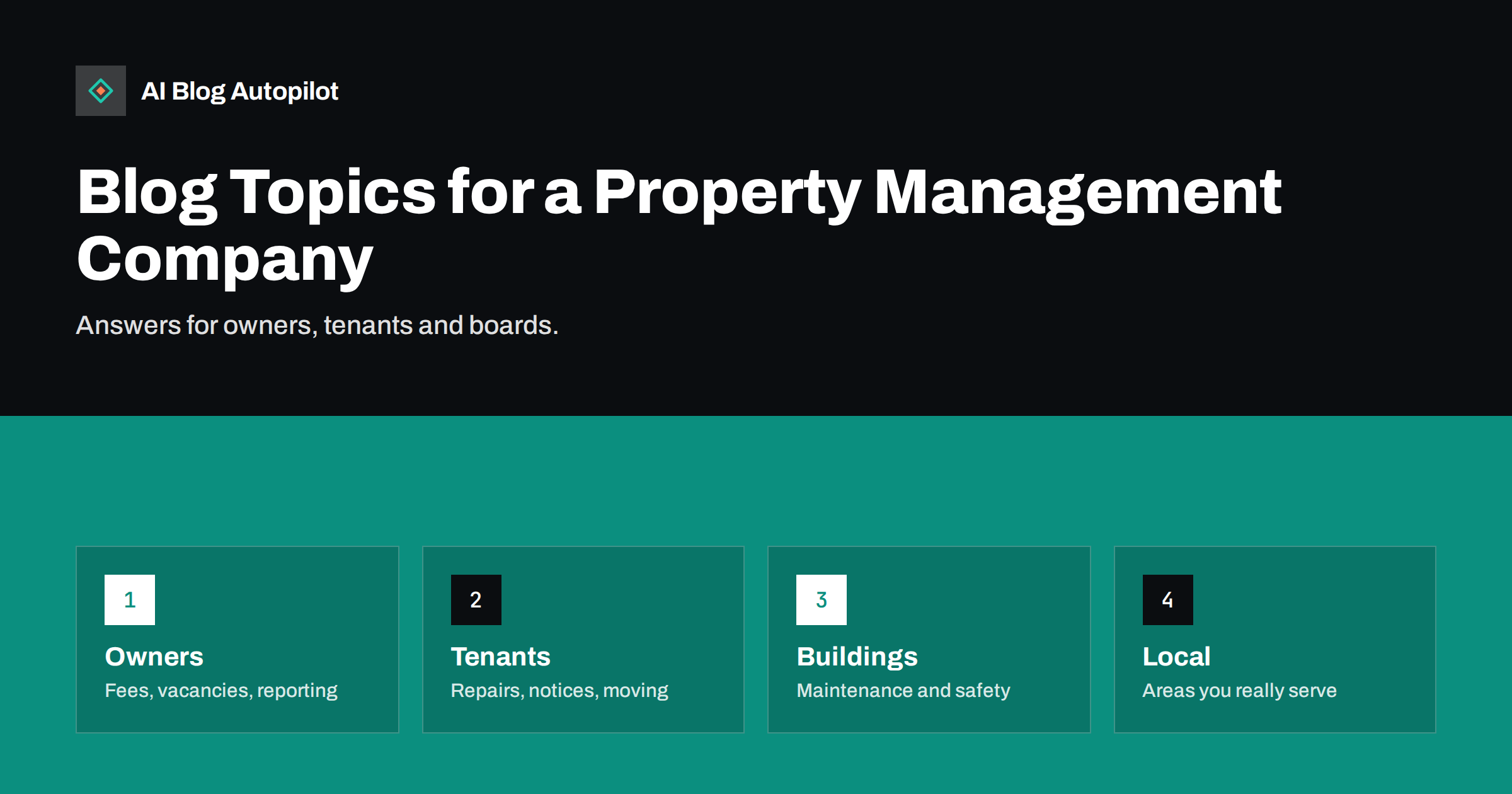
Short answer: a property management company should blog for three readers: owners who want to know how management works and what it costs, tenants who want to know how repairs, notices and moving work, and boards or residents of managed buildings. Write plain guides on fees, maintenance, inspections, rent and deposit rules, seasonal tasks and communication, date every page, point to the official rules in your area and make the next step easy to find.
Property management is a service built on trust. An owner hands over a valuable asset, and a tenant hands over a monthly payment and a home. Both groups worry about what happens when something goes wrong. A company that has already explained its process in clear language appears reliable before anyone picks up the phone.
This guide lists topic groups, shows how to turn calls and emails into pages, and explains how to keep legal and financial details correct, because rules for rent, deposits and notices differ by country and sometimes by city.
Write for owners first
Owners search before they sign. They ask what a manager actually does, what is included in the fee, how rent is collected and passed on, how vacancies are filled and how often they will hear from you. Write one page for each question, using real examples of what the work involves in a typical month.
Explain the fee structure in words. List what the monthly charge covers and what is billed separately, such as letting fees, repairs, inspections or legal steps, so that nobody feels surprised later. If you cannot publish exact figures, explain what influences them and how to get a written quote. The article on writing honest articles about what things cost offers a structure that fits this topic well.
Add a page about what owners remain responsible for, such as insurance, taxes, major works and decisions about tenants, in general terms and with a note that rules vary. Owners respect honesty about limits more than a promise to handle everything.
Explain how you screen and select tenants, in general terms. Owners want to know what checks you run, how long it takes and what happens when an applicant does not qualify. Describe the process without promising results: no manager can guarantee that a tenant will always pay on time. Say what you do when payments slip, from the first reminder to the point where the owner decides on further steps.
Write about vacancies too. How is a property prepared for the market, how are photographs and descriptions produced, how are viewings arranged and how is the rent set? Describe the thinking behind a rent suggestion, such as comparable listings, condition and demand, and be clear that the owner makes the final decision. A page like this helps owners understand why a fair price fills a flat faster than an optimistic one.
Help tenants with the everyday questions
Tenants write far more often than owners, and their questions repeat. How do I report a repair? How quickly will it be handled? What counts as an emergency? Who pays for what? How do I give notice? What happens to my deposit? Answer each in a short page with steps, contact details and typical timescales, and link to the official rules for your area.
Describe the repair process from start to finish: reporting, triage, contractor visit, follow-up and closing the request. Give response time targets only if you can meet them consistently, and say what happens outside office hours. A clear page for urgent issues, such as no heating in winter or a leak, is worth placing in the main menu or the footer.
Include practical moving content. Move-in and move-out checklists, how inspections work, how to record the condition of a property with photos, and how to return keys are the kind of pages tenants save and share. They reduce disputes and calls, and they show how the company works.
Cover buildings, maintenance and safety
If you manage blocks or shared buildings, write for residents and boards too. Topics include how service charges are set, how maintenance plans are prepared, how common repairs are approved, how meetings and votes work and what residents can expect from a manager. Explain terms the first time they appear, and keep a short glossary page.
Seasonal maintenance makes steady, useful content. Autumn checks of gutters and heating, winter pipe protection, spring inspections of roofs and balconies, and summer advice on ventilation and pests can be repeated every year with updated dates. The guide on planning seasonal content without scrambling shows how to schedule them in advance.
Safety pages deserve care. State only requirements you can verify, name the country and the year, link to the authority and say that the reader should ask a qualified professional about a specific building. Never publish information that could identify a resident or reveal the security arrangements of a particular property.
Write about records and reporting. Owners often ask for photographs, invoices, inspection notes and a history of repairs. Explain what you keep, how long you keep it and how an owner can ask for a copy. For managed buildings, explain how minutes of meetings, budgets and service charge accounts are shared with boards and residents, and how decisions are recorded.
Describe your approach to contractors. How do you choose and check them, how are quotes compared, what happens when a job exceeds the estimate and who approves the extra cost? Owners and boards usually care about this more than any other part of the service, and a clear page on the subject shows that costs are controlled rather than hidden.
Show how you communicate and handle problems
People judge a manager by what happens in a bad week. Write about how you communicate: channels, response times, what is reported to owners and when, how tenants are informed about works, and how complaints are handled. A complaint procedure that is visible and fair makes the company look confident.
Consider an honest post about a typical difficult situation, such as a late payment, a noisy neighbour or a repair that takes longer than expected. Describe the steps you usually take, the limits of what a manager can do and when a matter goes to the owner, the board or a legal adviser. Use anonymous composite cases and say so. The article on writing an incident or outage post readers can trust offers ideas for tone when something has gone wrong.
Add a page for owners that explains the reports they receive: what is in a monthly statement, how to read income and costs, and how year-end documents are prepared. Readers who understand the paperwork tend to stay longer.
Think about the questions that come before a decision to hire a manager at all. Should a landlord manage a single flat alone? When does a portfolio become too large for that? What are the risks of a friend or relative handling it informally? A balanced page on self-management versus professional management attracts owners at the right moment, and an honest answer that says some owners are fine on their own builds more trust than a hard sell.
Be local and specific
Property is local. List the areas, districts or buildings you really cover, and write about them with care: typical rents described in general terms, types of property, transport, schools and regulations that affect landlords in that place. Avoid copying one page and changing the town name, because it adds nothing for readers.
Use your own knowledge. Which streets have older buildings with specific maintenance needs? Which seasons are busiest for moves? What do new landlords in this city often miss? These details make a page distinctive and useful. If you operate in several towns, location pages for several branches explains how to give each its own substance.
Check that your business profile, contact page and local listings show the same name, address, phone number and opening hours. Mismatched details confuse customers and search tools alike. Compare your plans with the topics in a real estate agency blog, which serves buyers and sellers, and keep the two audiences clearly separate.
Keep an eye on accessibility and tone. Tenants may read your pages on a phone, in a second language or under stress. Use short sentences, clear headings and plain words, and offer more than one way to get in touch, including phone for urgent issues. If many of your tenants speak another language, consider publishing the most important guides in that language, written natively rather than machine-translated without review.
Respect privacy, fairness and the rules
Property management involves personal and financial data. Do not publish names, addresses, photographs of homes with identifiable details or stories that a tenant or an owner could recognise. Ask for written consent for any testimonial, and never quote a private message.
Be careful with legal statements. Rules on rent increases, deposits, notice periods, evictions, inspections and fees differ widely and change. Name the place and date, link to the official text and recommend that readers seek advice for their own situation. Review every legal page at least once a year. Where fairness is involved, describe both sides: owners need dependable income and a cared-for property, tenants need a safe home and respectful treatment.
Add a short notice that the content is general information. The guide to disclaimers and notices on a blog helps with the wording, and the advice in turning customer questions into topics shows how to keep the list of pages grounded in real enquiries.
How AI Blog Autopilot helps
AI Blog Autopilot can write and publish articles on your chosen topics, with FAQ sections, tags and SEO meta, and share them to your social networks. Give it your services and your real areas, and check local rules, fees and response times before each article goes live. See the pricing page for plans and monthly credits.
Related reading
- Blog Strategy for a Local Business
- A Real Estate Agency Blog: Topics That Bring Local Buyers
- Writing Honest Articles About What Things Cost
The bottom line
Write for owners, tenants and residents, explain fees and repairs honestly, stay local and accurate and give every guide one clear next step.
FAQ
What should a property manager blog about first?
Start with what the service includes, how fees work, how repairs are reported and what tenants and owners can expect each month.
Should I publish management fees?
You can, with conditions and a date. If not, explain what affects the fee and how to request a written quote.
Can I write about legal rules for rent and deposits?
Yes, if you name the place and year, link to the official text and say that readers should seek advice for their own case.
Is it safe to share stories about tenants?
Only anonymous composite examples. Never publish details that could identify a tenant, an owner or a property.
How often should local pages be updated?
At least once a year, and whenever rules, fees or services change, with the review date shown.