 ENEnglish
 LTLietuviškai
 DEDeutsch
 FRFrançais
 RUРусский
 ESEspañol
 PLPolski
 ITItaliano
 UKУкраїнська
 CSČeština
 PTPortuguês
 JA日本語
JA日本語 LVLatviešu valoda
 ETEesti
 HUMagyar
 IDBahasa Indonesia
 TRTürkçe
 HIहिन्दी
 ELΕλληνικά
 ARالعربية
 THไทย
THไทย VITiếng Việt
 RORomână
 MSBahasa Melayu
 BNবাংলা
SEO y marketing de contenidos
Practical guides on writing articles that rank: search intent, article length, structure, internal links and steady publishing. Everything we learn while AI writes thousands of long-form articles for real websites.
 26 sept 2026 · 8 min de lectura
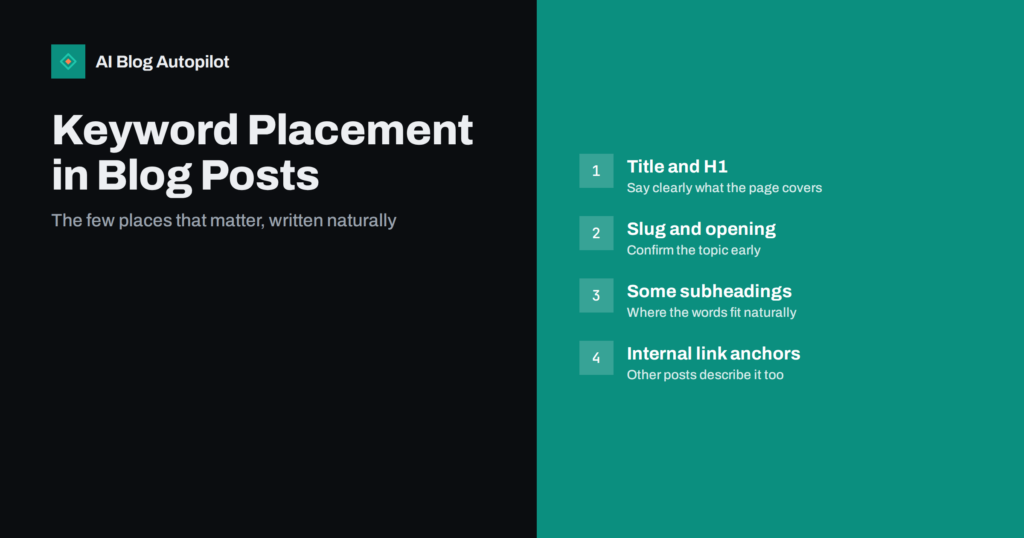
Keyword Placement: Where the Main Phrase Belongs in a Post
Where to use an article's main search phrase: title, H1, slug, opening, headings and links, and where not to force it. A practical guide…
 26 sept 2026 · 8 min de lectura
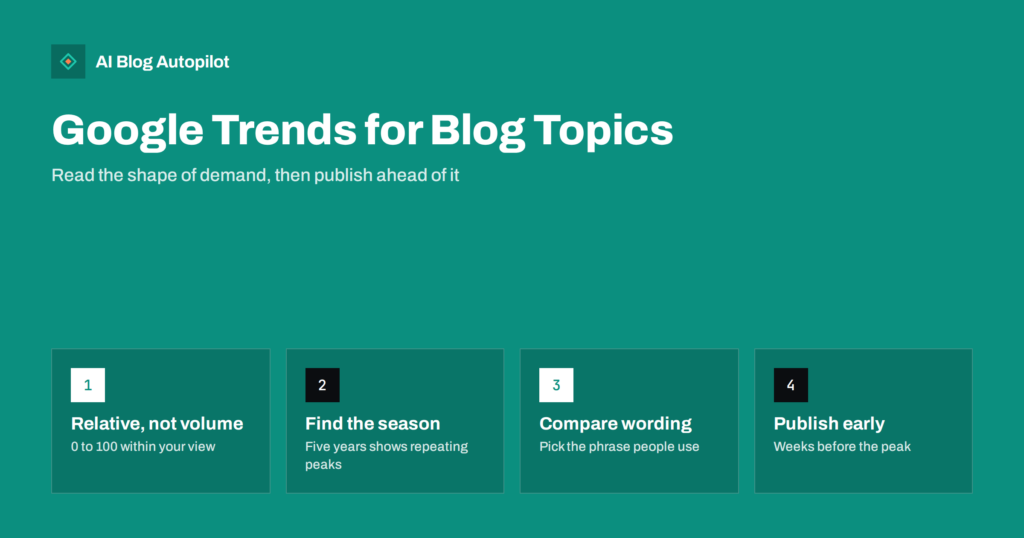
Using Google Trends to Choose and Time Blog Topics
Google Trends shows how interest in a topic rises, falls and repeats. How to read its relative scale, spot seasonal peaks and time blog…
 26 sept 2026 · 8 min de lectura
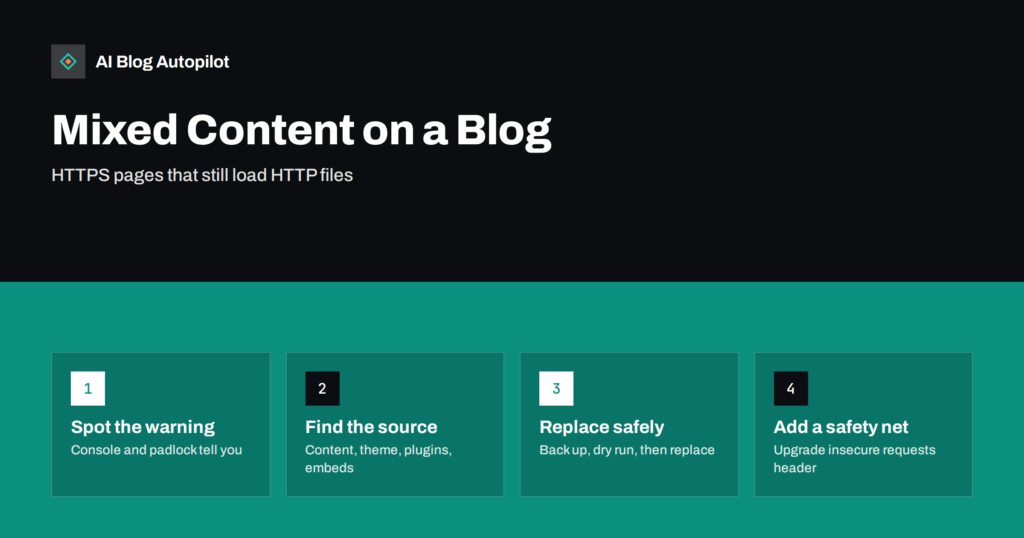
Mixed Content Warnings on a Blog: Finding and Fixing Them
Mixed content means an HTTPS page loads files over plain HTTP. Why browsers warn or block it, how to find the insecure links on…
 26 sept 2026 · 8 min de lectura
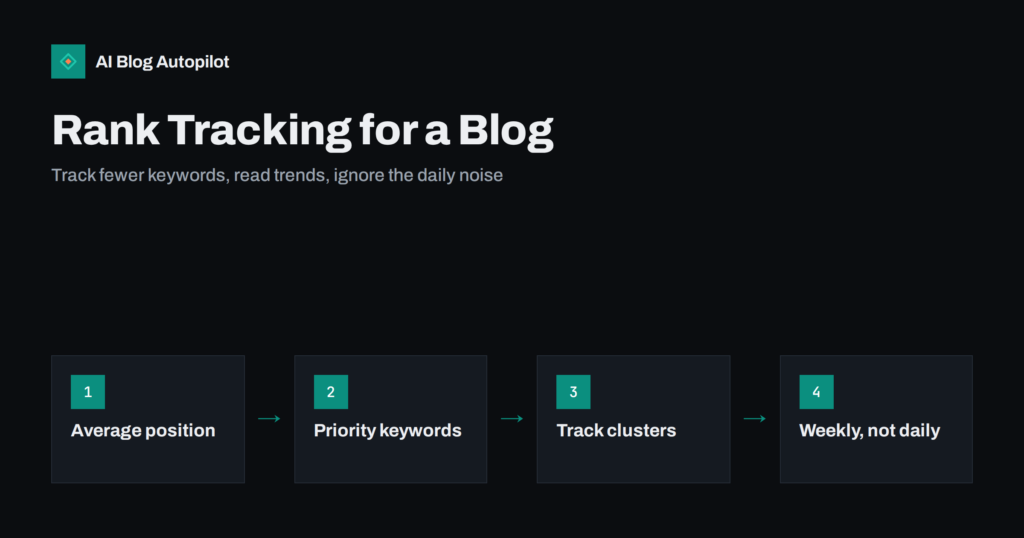
Rank Tracking for a Blog: What to Track and What to Ignore
Rankings move daily and differ by place and device. What rank tracking can tell a blogger, how to read average position, and which numbers…
 26 sept 2026 · 9 min de lectura
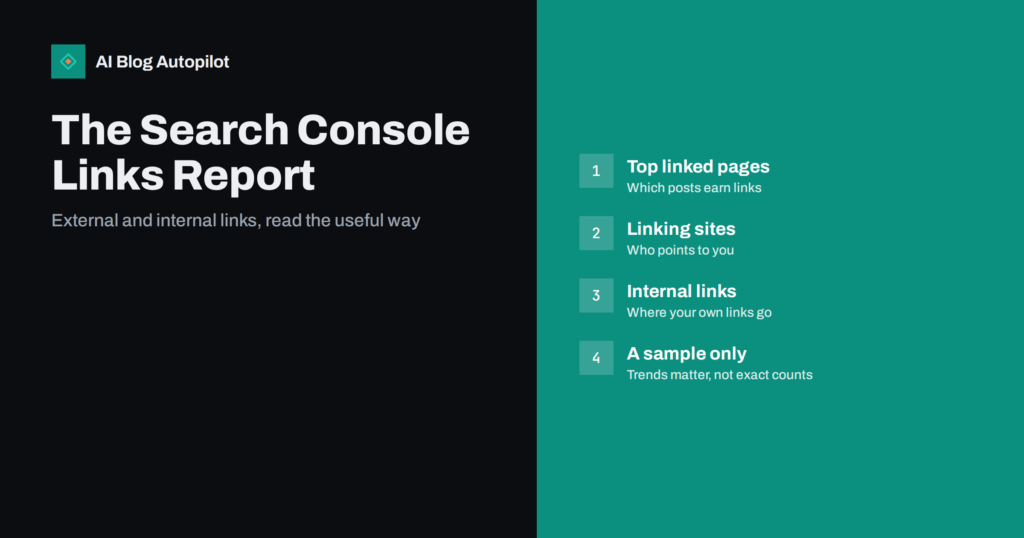
The Search Console Links Report: What to Read in It
The Links report shows which pages earn links, who links to you and how your blog links internally. What each table means, its limits…
 26 sept 2026 · 9 min de lectura
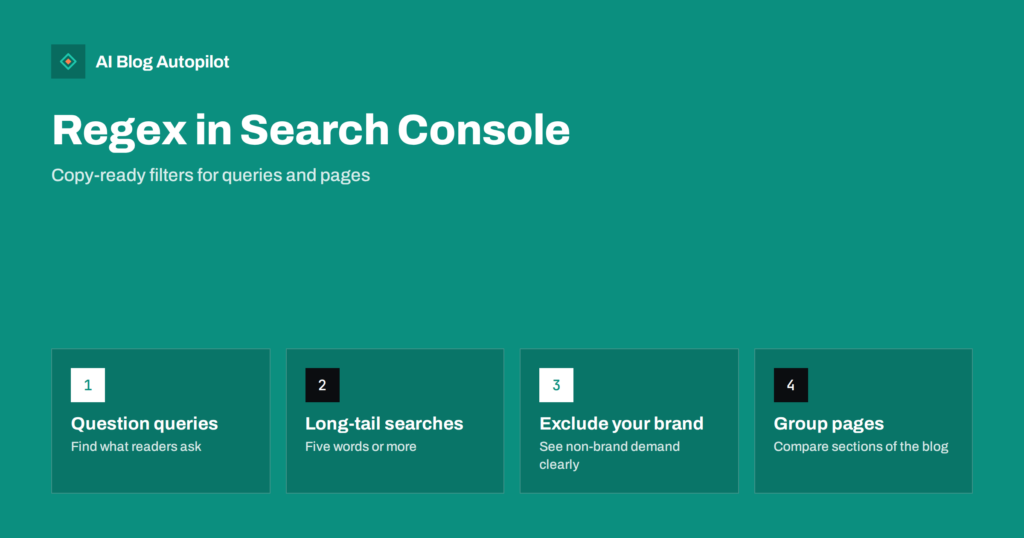
Regex Filters in Search Console: Practical Recipes for Blogs
Regex filters in Search Console find question queries, long-tail searches and page groups in seconds. Copy-ready patterns for bloggers and how to adapt them.
 26 sept 2026 · 9 min de lectura
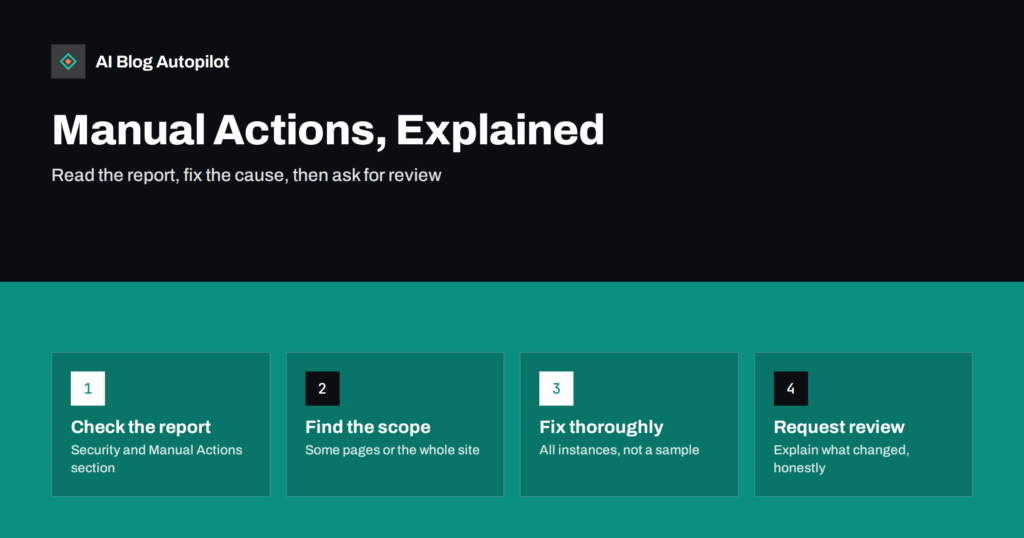
Manual Actions in Search Console: What They Mean for a Blog
A manual action means a Google reviewer found spam-policy violations on your site. How to read the report, fix the cause and write a…
 26 sept 2026 · 8 min de lectura
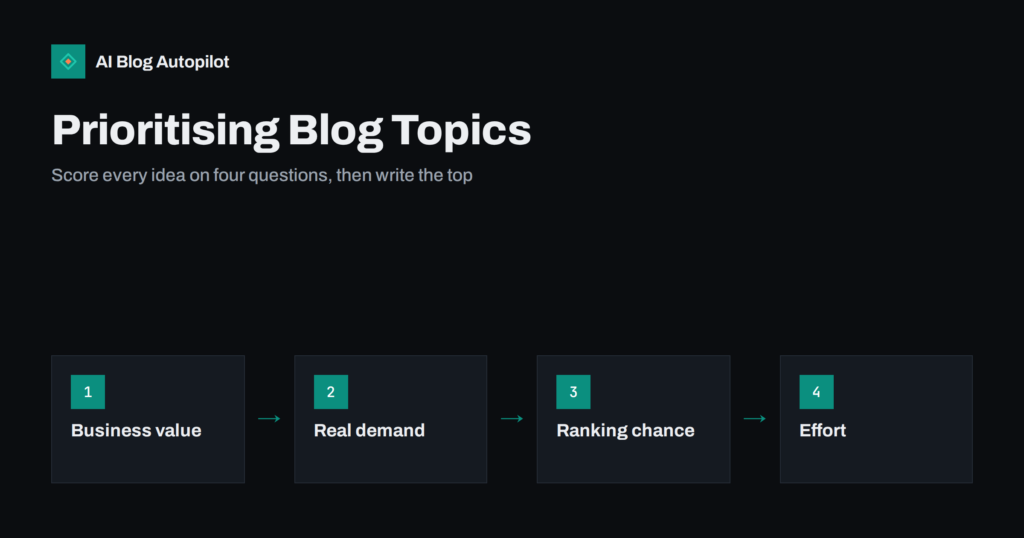
Prioritising Blog Topics: A Simple Scoring Method
A long list of blog ideas needs an order. A simple scoring method that weighs business value, demand, ranking chances and effort so the…
 26 sept 2026 · 8 min de lectura
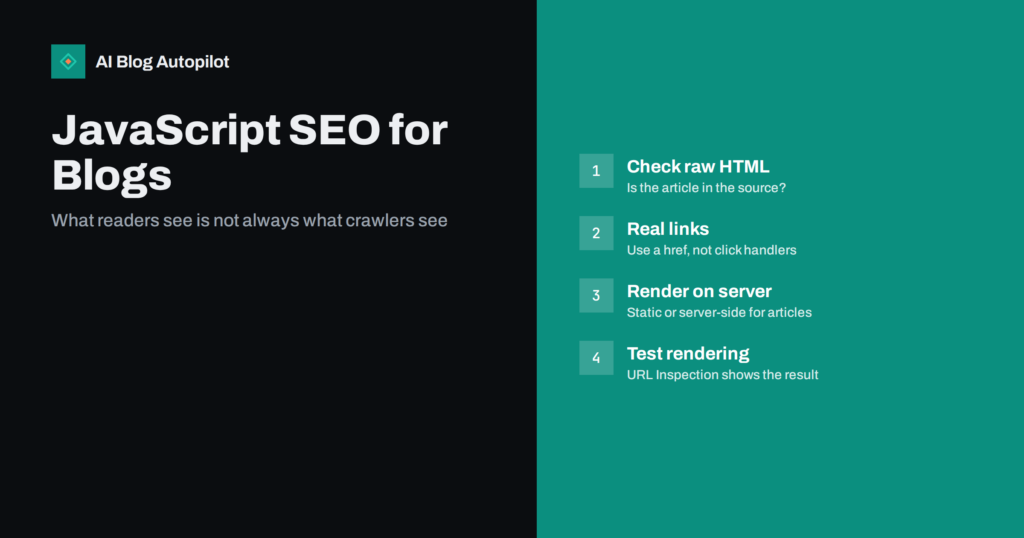
JavaScript SEO for Blogs: When Rendering Hides Your Content
If a blog builds its pages with JavaScript, crawlers may see less than readers do. How to test what search engines render and fix…
 26 sept 2026 · 9 min de lectura
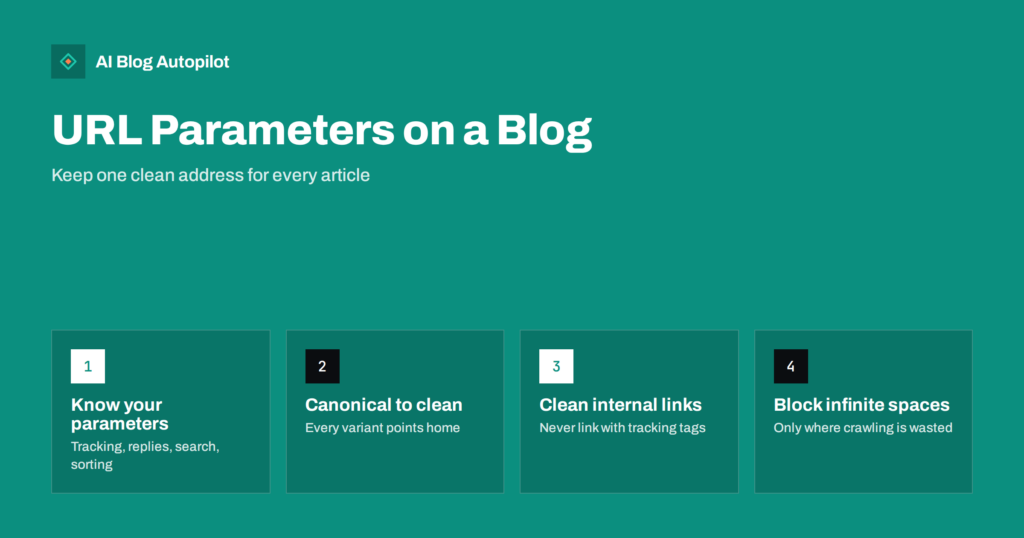
URL Parameters on a Blog: Duplicates, Tracking and Crawling
Tracking tags, comment replies and search pages add parameters to blog URLs. When they cause duplicate content or wasted crawling, and how to keep…
 26 sept 2026 · 8 min de lectura
Google Discover for Blogs: What Gets Articles Shown
Google Discover can send bursts of mobile readers to a blog without a search. What decides which articles appear, the image rules and why…
 26 sept 2026 · 9 min de lectura
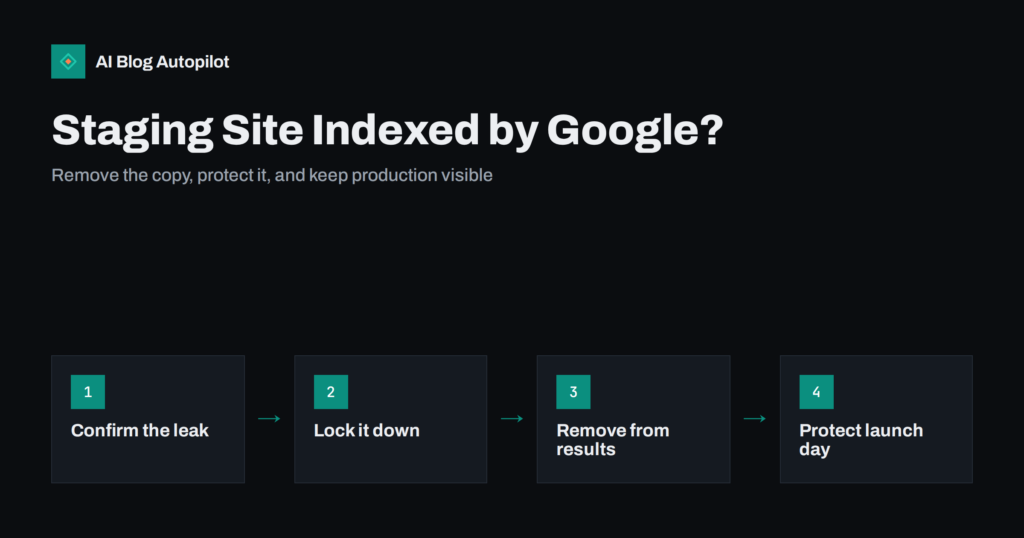
Staging Site Indexed by Google? How to Clean It Up
A staging or test copy of your blog showing up in search results causes duplicate content and confusion. How to remove it safely and…