 ENEnglish
 LTLietuviškai
 DEDeutsch
 FRFrançais
 RUРусский
 ESEspañol
 PLPolski
 ITItaliano
 UKУкраїнська
 CSČeština
 PTPortuguês
 JA日本語
 LVLatviešu valoda
 ETEesti
 HUMagyar
 IDBahasa Indonesia
 TRTürkçe
 HIहिन्दी
 ELΕλληνικά
 ARالعربية
 THไทย
 VITiếng Việt
 RORomână
 MSBahasa Melayu
 BNবাংলা
#Eeat
Experience, expertise, authoritativeness and trust: what the published guidance actually asks for and what it does not. We cover the signals a site can genuinely provide — named authors, checkable claims, contact details, a real organisation behind the page — and separate them from the folklore. You will find what this means for a blog that publishes on a schedule rather than one article a month. We are clear that none of it is a score you can see or a switch you can flip. The advice here also makes pages better for readers, which is the point.
 16.09.2026 · 7 Min. Lesezeit
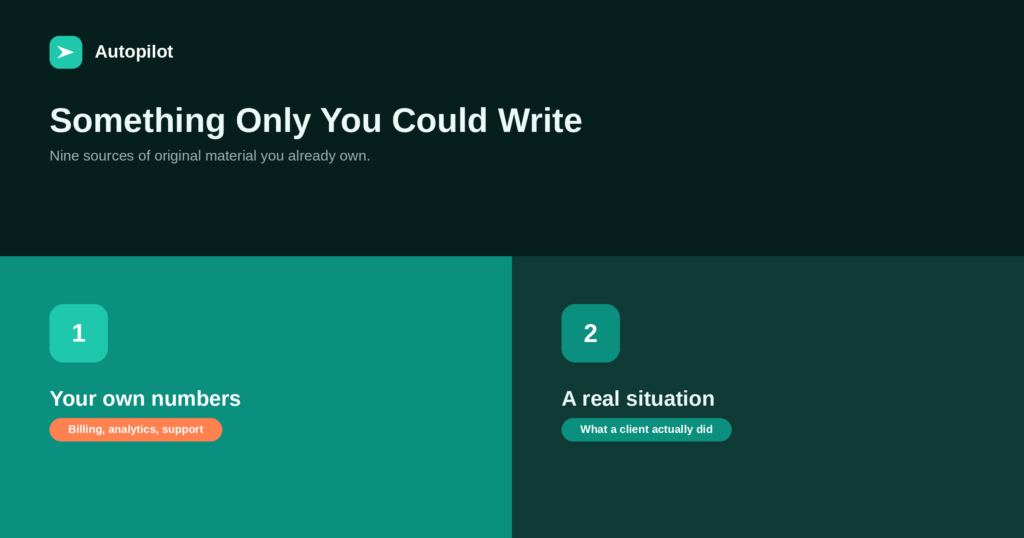
How to Put Something Original in an Article You Automated
Research is not experience. Nine kinds of original material you already have, and how to get one or two of them into every article…
 13.09.2026 · 6 Min. Lesezeit
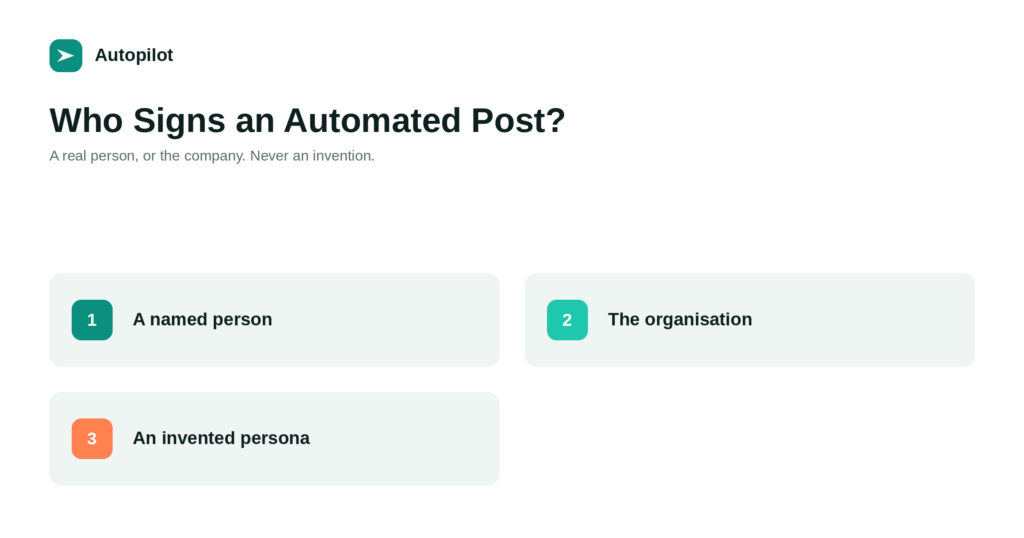
Bylines and Author Bios: Who Signs an Automated Post
Who should be named as the author of a post produced with automation, what belongs in the bio, and why an invented persona with…
 13.09.2026 · 6 Min. Lesezeit
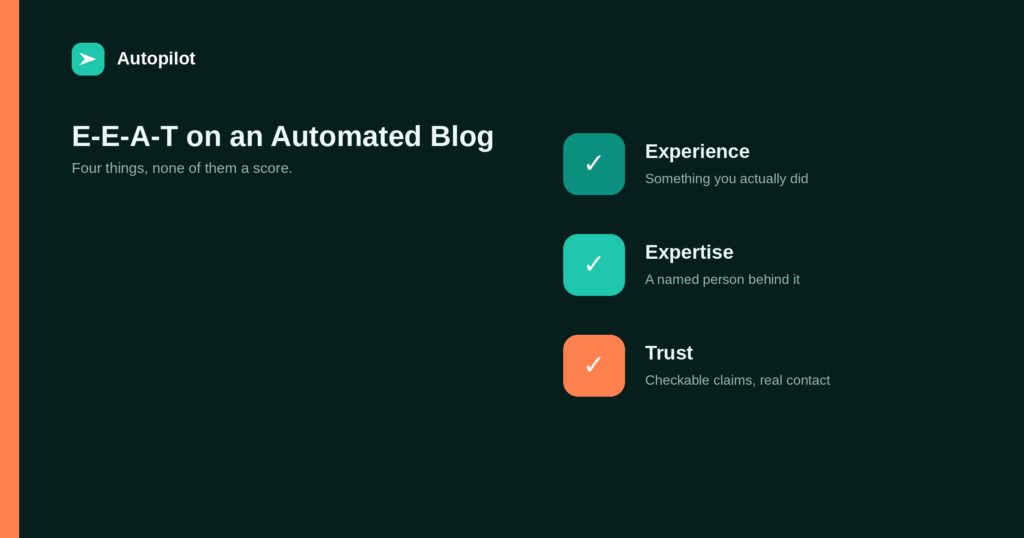
E-E-A-T on a Blog That Publishes Automatically
Experience, expertise, authoritativeness and trust are not a score you can set. Here is what a blog publishing on a schedule can genuinely do…
 28.08.2026 · 6 Min. Lesezeit
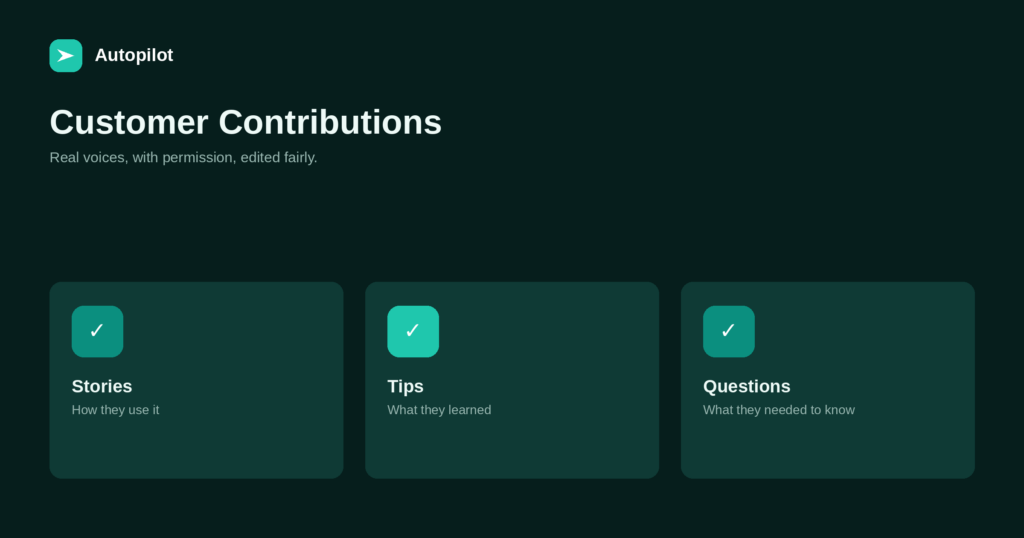
Customer Stories and Contributions on a Business Blog
Customers can contribute stories, tips and questions that make a blog more credible. How to invite them, edit fairly, get permission, and avoid the…
 27.08.2026 · 6 Min. Lesezeit
Interviewing Experts for Your Articles
A short interview with someone who knows the subject adds experience no research can. Who to ask, how to prepare, what to ask, and…
 25.08.2026 · 6 Min. Lesezeit
How to Handle Corrections on a Blog
Every blog publishes mistakes eventually. How to make reporting easy, decide what needs a visible correction, fix related articles, and stop an error recurring.
 24.08.2026 · 6 Min. Lesezeit
Writing an Editorial Policy Page for a Business Blog
An editorial policy tells readers how your content is chosen, produced, checked and corrected. What to include, how open to be about automation, and…
 24.08.2026 · 6 Min. Lesezeit
The About Page a Business Blog Needs
Readers who doubt an article go to the about page. What it should say about who you are, why you know the subject, how…
 22.08.2026 · 6 Min. Lesezeit
Topical Authority: What It Means in Practice
Topical authority is shorthand for covering a subject so well that you become a trusted source on it. What that looks like in practice,…
 17.08.2026 · 6 Min. Lesezeit
Should You Tell Readers How Your Content Is Produced?
Search guidelines do not require it; some rules and audiences do. How to decide what to disclose about automated content, without a label on…
 14.08.2026 · 6 Min. Lesezeit
Article Structured Data: What Every Post Should Carry
Article markup tells search engines the headline, dates, author, publisher and image of each post. What to include, how to keep dates honest, and…
 11.08.2026 · 6 Min. Lesezeit
How to Write an Opinion Piece for a Business Blog
A reasoned opinion is the one thing nobody else can publish for you. How to state a position, support it, handle the objections, and…