ENEnglish
 LTLietuviškai
 DEDeutsch
 FRFrançais
 RUРусский
 ESEspañol
 PLPolski
 ITItaliano
 UKУкраїнська
 CSČeština
 PTPortuguês
 JA日本語
 LVLatviešu valoda
 ETEesti
 HUMagyar
 IDBahasa Indonesia
 TRTürkçe
 HIहिन्दी
 ELΕλληνικά
 ARالعربية
 THไทย
 VITiếng Việt
 RORomână
 MSBahasa Melayu
 BNবাংলা
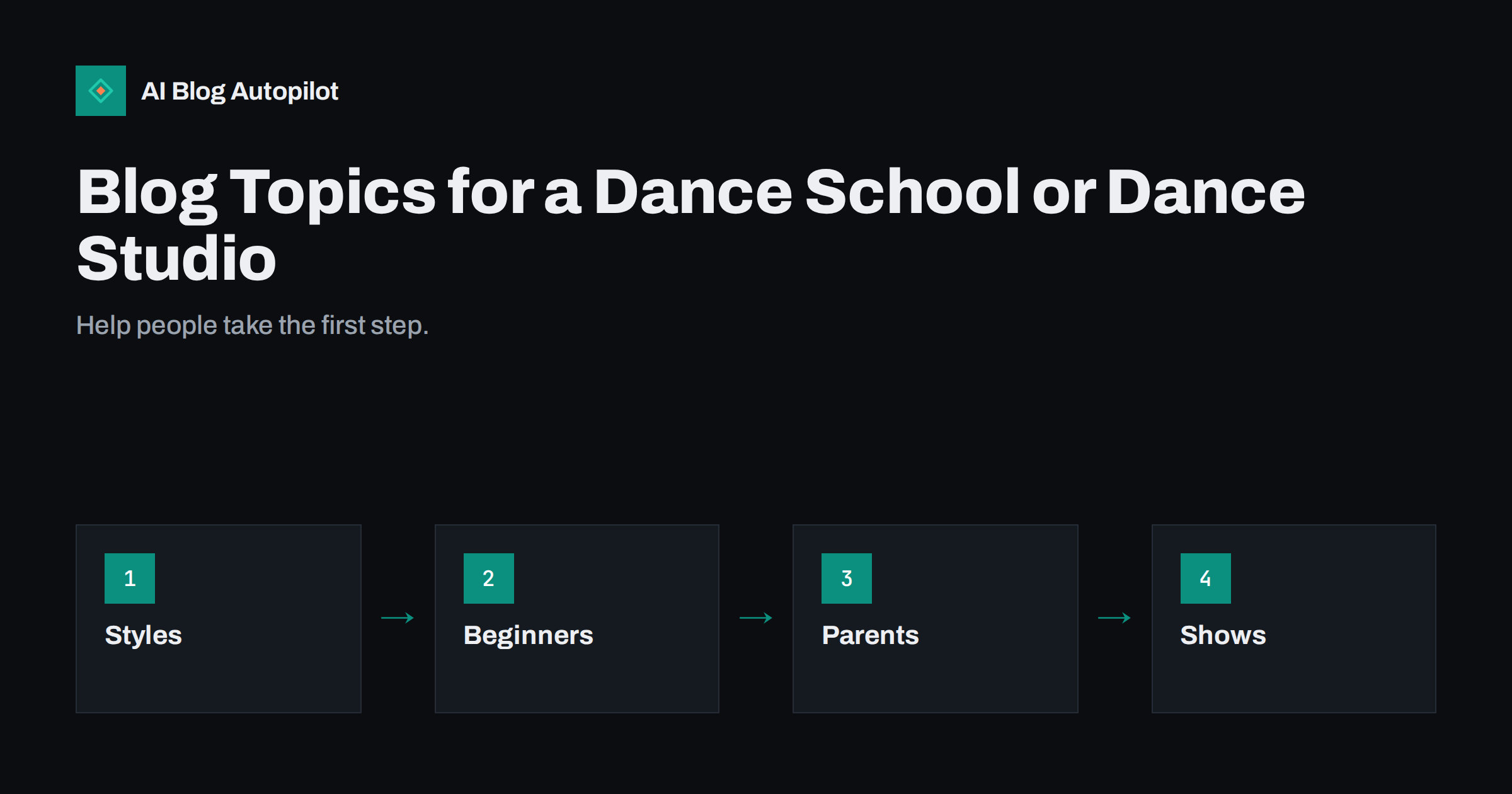
Short answer: a dance school blog works best when it explains each style and level, calms the nerves of first-time students and parents, answers practical questions about timetables, costs and clothing, and shares performances and community stories. Write for the person deciding whether to try a first class, and keep the dates and prices accurate.
Most people who think about dancing hesitate before they book. Adults worry about being too old or too clumsy, parents want to know that a class is safe and well taught, and beginners cannot tell the difference between styles. A blog can answer these worries before anyone walks through the door.
This guide offers topic ideas for dance schools, studios and independent teachers. It covers class descriptions, beginner guides, family information, shows, teachers, health and the local searches that bring new students to your timetable.
Keep a short glossary of dance terms linked from class pages. Words such as plié, pirouette, salsa basics or choreography can put off newcomers, and a plain definition with a photograph removes that barrier without making experienced dancers feel patronised.
Explain each style and level
Write a page for each style you teach, such as ballet, contemporary, jazz, hip hop, ballroom, Latin, folk or tap. Explain what the style is, what a class looks like, the music, the clothing and who it suits. Use plain words and avoid assuming that readers know terms like barre or choreography.
Describe levels clearly. Say what a beginner, improver and advanced class involves, what students can do at each stage and how you decide when someone moves up. Include the age groups, class lengths and class sizes, because these are the details parents and adults compare.
Add photographs and, with permission, short video clips that show the atmosphere. Many people choose a studio because the class looks friendly. Give each page a clear way to book a trial or to ask a question. The advice on near-me searches explains why local details matter on these pages.
Guides for nervous beginners
Write a warm article for adults who have never danced. Say that no experience is needed, describe what happens in the first ten minutes, explain what to wear and tell readers that everyone started somewhere. Mention that mistakes are normal and that teachers are used to people of every shape, age and background.
Answer the questions people are too shy to ask: do I need a partner, will I be asked to dance alone, what if I cannot keep up, is there a mirror, do I need special shoes. A frank answer can decide whether a reader books.
Offer a short “first class checklist”: arrive early, bring water, wear comfortable clothes, tell the teacher about injuries. For adult beginners, add a page on starting at different ages, written with respect and without claims about health or fitness that you cannot support.
Answers for parents
Parents choose a school for their child with care. Write pages on the age at which children can start, how classes are organised, how teachers are qualified, how you handle safeguarding and what to do if a child is shy. State clearly what checks your staff have and what policies exist, in accurate and factual words.
Cover practical matters: uniform or dress code, hair, shoes, how to label belongings, where parents wait, whether they can watch and how to contact the school. Add a page on exams and grades if you enter students for them, with what is involved and what it costs.
Explain how children progress without pressure. Many parents worry about competition and long hours. Say how you balance fun and discipline, how you support children who want to do more and how you let others dance for pleasure. The guide to blog topics for schools and tutoring has similar family-focused ideas.
Explain how a trial class works. Say whether it is free or paid, whether booking is required, what to bring and what happens afterwards. Invite readers to ask about anything unclear before they book. The easier the first step looks, the more people will take it.
State your policies on cancellations, missed classes, holidays and weather closures in simple words. If you offer make-up classes, explain the rules. Families appreciate knowing the answers before there is a problem, and fewer disputes arise.
Timetables, prices and policies
Keep one clear page with the current timetable, prices, term dates and trial class policy. Check it at the start of every term. Out-of-date timetables frustrate visitors and waste your time on enquiries about classes that no longer run.
Explain how payment works: per term, per month or per class, how to pay, what happens when a student misses a lesson and what the notice period is to leave. Be honest about extra costs such as costumes, exam fees and show tickets. Clear information builds trust and avoids misunderstandings.
Link to this page from every article that mentions classes. Do not repeat prices in many places, because they will drift. Answer the question in one place and send readers there. The advice in FAQ pages versus FAQ sections explains the approach.
Prepare a guide for audiences. Explain how long a show lasts, whether there is an interval, where to park, how to behave, whether photographs are allowed and how to buy refreshments. Visitors who feel welcome and informed leave with a good impression, and many become future students or ambassadors.
Performances, shows and results
Shows are the highlight of the year for students and families. Announce them early, with date, place, ticket details, access information and how to take part. After the show, publish a report with photographs, thanks to the audience and a note on what comes next. Get consent for images of children, and follow your safeguarding rules.
Create a lasting page for each production or event. It becomes an archive of your school’s story and a useful page for people checking your reputation. The guide to event announcement posts gives structure for the before, during and after.
Share achievements with care. Exam results, competition places and scholarships are worth celebrating, but avoid comparing students or naming children without permission. Focus on effort, progress and the pleasure of dancing.
Write about your studio’s story, too. Explain when and why the school started, how it has grown, what it values and what students say about it, with their permission. A genuine story helps families feel that they are joining a community, not buying a product, and it gives local journalists and partners something to quote.
Share a typical week or term in the life of a student. A calm, day-by-day description of classes, rehearsals and breaks helps parents plan their time, and it shows prospective adult students how a class fits around work.
Meet the teachers
People follow teachers as much as styles. Write a short profile for each teacher: background, training, what they teach, what they love about it and a photograph. Keep a friendly tone and include qualifications and experience that are relevant and true.
Interview teachers on practical subjects such as warming up, choosing shoes, practising at home or preparing for an audition. These pages show expertise and are likely to be shared. They also give new students a sense of who will be in front of them.
Include guest teachers and visiting workshops, with dates and booking details. Keep a clear page for each and mark it as past when it ends. See meet-the-team posts for a model.
Cover costumes and equipment in a practical way. Explain what to buy and when, where to find second-hand items, how much typical costs are and what the school provides. A guide that helps families save money earns good will, and it prevents the unpleasant surprise of an unexpected bill before a show.
Include a short guide to practising at home. Suggest simple routines, safe space requirements and how often to practise, and remind readers to follow the teacher’s advice. Parents are often unsure how to help, and a page with clear tips makes them feel included.
Health, safety and wellbeing
Dance is physical, so safety matters. Write about warming up, stretching, hydration, listening to your body and returning after injury. Make clear that you offer general information, not medical advice, and encourage readers to consult a doctor or physiotherapist where needed.
Describe your studio: the floor, the temperature, the changing rooms and accessibility. Say how you support students with disabilities or additional needs, and ask readers to contact you to discuss. Honest, specific statements are better than broad claims.
A page on the wider benefits of dance, such as enjoyment, friendship and confidence, can attract readers, but keep claims modest and avoid promises about health outcomes. The guide to YMYL topics explains why caution matters when writing about wellbeing.
Local searches and word of mouth
Most students come from the surrounding area, so local search matters. Make sure that your business profile shows the right address, opening hours, photos and class types, and that your website names the areas you serve. Pages with specific local details, such as nearby transport or parking, are more helpful than general ones.
Encourage reviews from satisfied students and parents, and respond politely to every one. A school with recent, honest reviews feels safer to a newcomer. Do not offer rewards for positive reviews, and never write them yourself.
Word of mouth remains the strongest source of new students. Make it easy to share: a bring-a-friend class, a page that summarises the school for those who recommend it and a newsletter that families enjoy reading. Your blog supports all this by being the place where the answers live.
How AI Blog Autopilot helps
AI Blog Autopilot can write articles on topics like these and share them to your social networks, even if you have little time between classes. See the pricing page and try the three free articles.
Related reading
The bottom line
Explain each style and level, calm the first-class nerves, answer parents plainly, keep timetables accurate and share shows and teachers, so new students feel ready to start.
FAQ
What should a dance school blog write about?
Style and level guides, beginner advice, parent information, timetables and prices, shows, teacher profiles and safety.
How can a blog help nervous beginners?
By describing the first class in detail, answering shy questions about clothing and mistakes, and showing a friendly atmosphere.
Can I show children on my blog?
Only with clear consent from parents and in line with your safeguarding rules. When in doubt, leave the image out.
How often should I update the timetable page?
At the start of every term and whenever a class changes, so visitors never see outdated information.
Should I publish prices?
Yes, in one clear place. Explain what is included and any extra costs such as costumes or exam fees.