ENEnglish
 LTLietuviškai
 DEDeutsch
 FRFrançais
 RUРусский
 ESEspañol
 PLPolski
 ITItaliano
 UKУкраїнська
 CSČeština
 PTPortuguês
 JA日本語
 LVLatviešu valoda
 ETEesti
 HUMagyar
 IDBahasa Indonesia
 TRTürkçe
 HIहिन्दी
 ELΕλληνικά
 ARالعربية
 THไทย
 VITiếng Việt
 RORomână
 MSBahasa Melayu
 BNবাংলা
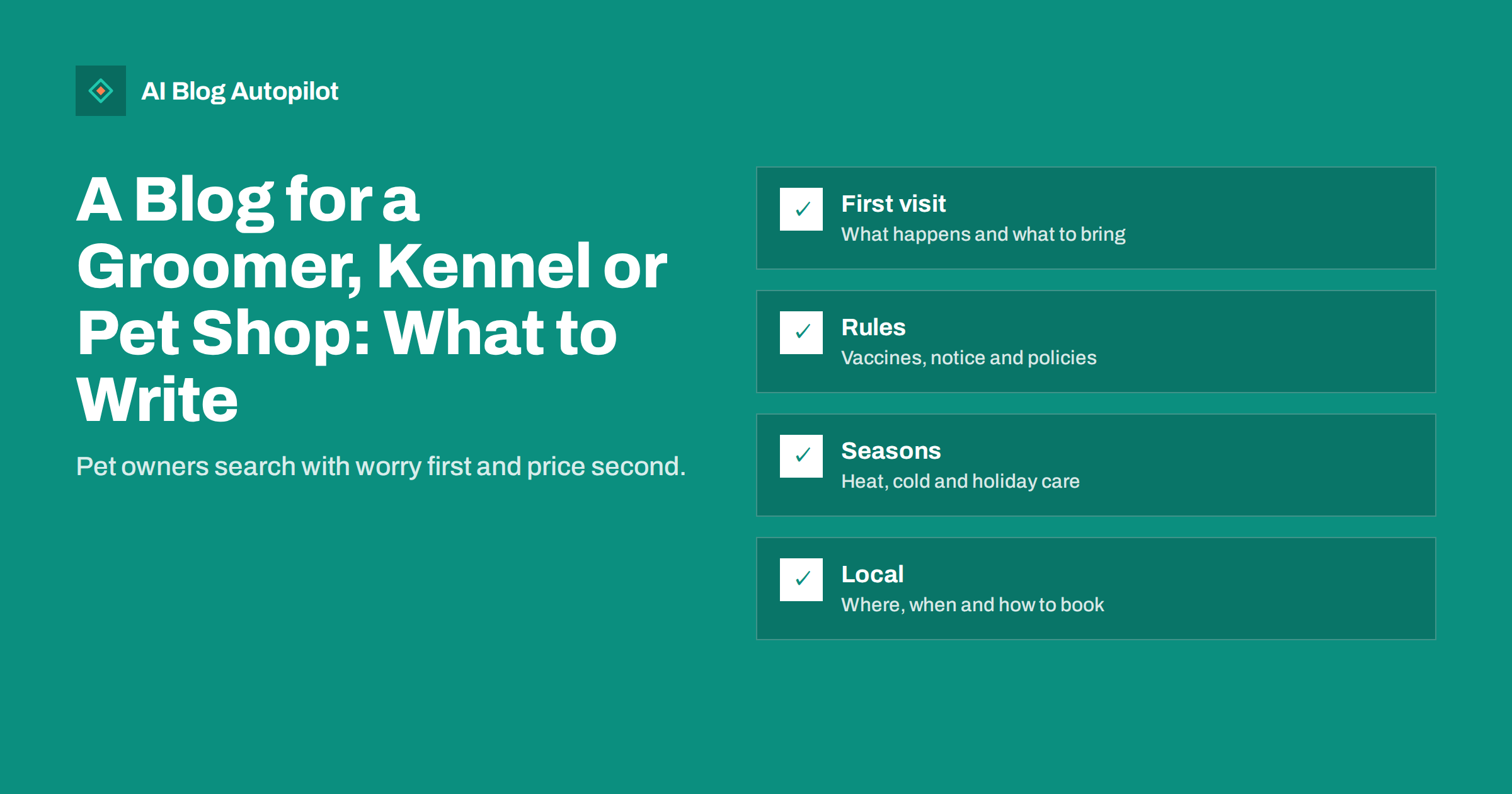
Short answer: a pet business should publish pages that calm an owner’s worries: what a first visit involves, what to bring, which documents or vaccinations are needed, how animals are handled, what the service costs and how to reach you in an emergency. Add seasonal care notes and local details. Leave veterinary judgement to veterinarians, avoid medical promises and show real animals only with the owner’s permission.
People treat their pets as family, and they are cautious about who looks after them. Before booking a groomer, a boarding kennel, a day-care service or a dog walker, they read the website for signs of care, cleanliness and honesty. A blog gives you room to show how you work, which is the best answer to the unspoken question, “Will my animal be safe and happy with you?”
Explain the first visit in detail
Write a page that follows a new customer from enquiry to collection. Explain how to book, what information you ask for, how the first meeting works, what happens on arrival, how long a session takes and how you handle an animal that is nervous or unwell. State what the owner should bring, such as vaccination records, food, bedding, medication and emergency contacts. Describe how you keep animals apart or together, and what the space looks like.
Specific detail beats reassurance. Saying “we care deeply” persuades nobody, but explaining that every dog has a short settling period, that staff check on boarders at set times and that owners receive a photo message each day tells the reader exactly what to expect. Where a policy depends on the animal, the season or the size of the group, say so clearly.
Staff deserve a place on the page as well. Introduce the people who will handle the animals, with their experience, any first-aid or animal-care training and the breeds or species they are most comfortable with. Owners feel better when they can picture a named person looking after their pet, and staff feel recognised. Keep each profile short and factual, and ask each person to approve what is written about them.
Policies, health rules and what you will not do
Pet owners notice policies when something goes wrong, so state them before it does. Publish vaccination requirements, flea and tick rules, behaviour rules, cancellation and no-show terms, what happens if an animal falls ill and how you contact a veterinarian. Name the practice you work with if you have an arrangement, and explain how costs are handled. Add a plain statement of what you do not do, for example sedation, or accepting animals that have shown aggression.
Keep a dated version of each policy, and check that the website matches what is in your booking terms. If your area has licensing rules for boarding, grooming or breeding, mention the licence and link to the official register where one exists. A trust page of this kind is described in our article about contact, privacy and terms pages.
Grooming, boarding and shop guides
Give each service its own page. For grooming, explain the stages, the tools, how long each breed takes and how often a coat needs attention. For boarding, describe accommodation, exercise, feeding, play and what you do with senior or anxious animals. For a shop, write buying guides about food types, equipment and first-time owners’ lists, and be careful not to claim medical benefits that products cannot prove. Link each guide to the product or booking page that fits.
Write for beginners as well as experts. A first-time puppy owner needs a different page from someone with an elderly cat. Use simple headings that match the questions people type, such as “how often should a dog be groomed” or “what to pack for a kennel stay”. Update the pages whenever suppliers or prices change.
Add a short page for special cases, because they decide many bookings. Explain how you handle puppies, kittens, senior animals, animals with medication, animals that are afraid of other animals and owners who need flexible collection. Describe what you can do and what you cannot. A candid page saying that you do not take animals that have not completed their vaccinations, or that you need a trial visit before a long stay, prevents disappointment and shows that the rules exist for the safety of every animal.
Seasonal care tips that people search for
Pet care follows the calendar. People search for hot-weather safety in summer, cold and salt on paws in winter, fireworks and noise in autumn, travel and holiday boarding in the spring and ticks in the warm months. Write a short, careful page for each topic about six weeks before the season, and update the same page each year so that it keeps its address and builds authority. A guide to booking boarding for school holidays can be one of your most useful pages, because it brings reservations before the rush.
Keep the advice general and responsible. Point owners to a veterinarian for symptoms, medication or diagnosis, and say so clearly. Avoid suggesting home remedies for medical problems. Mention practical points where your own experience adds value, such as how you keep a kennel cool or how you handle animals that dislike dryers. The planning method is the same as in our guide to planning seasonal content without scrambling every year.
Show real animals, with permission
Pictures of happy pets are the best advertising a pet business has, but they need care. Ask the owner before you publish a photograph, say where it will appear and avoid showing names, addresses or anything that reveals when a home is empty. Before-and-after images of grooming should be honest, with the same lighting, and never show an animal in distress. Add a short caption describing the breed and service, which also helps people who use screen readers.
If you collect reviews or stories, quote them accurately and with consent. A short story about an anxious rescue dog that gradually settled in, told with the owner’s agreement, will do more for your business than a page of adjectives. Remember that photographs of animals at your premises also show your premises, so check what is visible in the background.
Mention what you do for exceptional weather and emergencies. If the power fails, the heating breaks or a storm is forecast, what is your plan? Owners will not ask in advance, but a brief paragraph describing how you protect animals in such events can tip a decision. Be truthful, avoid dramatic promises and describe measures that you actually practise, such as backup heating, a monitored alarm or an agreement with a nearby veterinary practice.
Local pages and practical details
Customers want to know where you are, how to arrive, where to park, when you are open and how drop-off and collection work. Describe your area as a local would, mention nearby parks or landmarks and add directions for people who arrive by car or on foot. State holiday opening hours well ahead of time, and update them before every bank holiday. If you offer collection and delivery, describe the area and times.
Make sure your name, address and phone number match across the website and your business profile. A clear contact page with an emergency number for boarders is a strong trust signal. For a local routine that keeps pages and listings aligned, see our guide to reusing blog posts in a local profile.
Reviewing and updating
Set a reminder to read your pages each quarter. Check prices, opening times, vaccination rules and contact details, and ask staff whether anything they say at the counter differs from the site. Replace photographs that show old premises or equipment. Add new questions that customers have raised. A blog that is accurate and slightly plain will earn more trust than one that is polished but out of date.
Track which pages bring enquiries. Ask new customers how they found you and watch which guides they mention. Use that information to decide which pages deserve more depth, such as a longer boarding guide or a puppy-grooming introduction, and which can be left alone.
Finally, share the small moments that make the business human, with permission: a regular customer’s birthday, a rescue animal finding a home, a staff member completing a course. These short posts will not rank for competitive searches, but they show who you are, and they give your social profiles something genuine to share. Link them back to the service pages, so that a reader who is moved by a story can easily see how to book.
Keep an eye on reviews that mention your website, whether good or bad. If several customers say that a page was clear or confusing, treat it as feedback and revise the page. A short reply to each review that thanks the writer and, where useful, points to the relevant guide shows that you read what people say. Never argue in public, and never publish details about an animal or its owner in a reply.
If you sell products online as well, give each product a short explanation of who it suits and how to use it safely, and link the product to the relevant guide. Avoid copying supplier descriptions word for word, because the same text appears on many other sites and adds nothing for readers. A few honest lines from your own experience with the product are worth more than a long copied description.
How AI Blog Autopilot helps
AI Blog Autopilot writes full SEO articles for your WordPress blog from the topics, keywords, audience and tone you set, with FAQ sections, tags and SEO meta included, and it shares each one to your social networks. For a pet business, it can keep seasonal guides and care basics coming while you are busy with animals. Approval mode lets you read each article before it goes live, which is the moment to check policies, remove any medical claim and add details from your own premises. See the pricing page for plans.
Related reading
- Blog Strategy for a Local Business
- Contact, Privacy and Terms Pages: Trust Signals for a Blog
- Planning Seasonal Content Without Scrambling Every Year
- Alt Text: How to Write It and Why It Matters
The bottom line
Pet owners want proof that their animal will be safe and understood. Explain the first visit, publish your policies, write honest service and seasonal guides, show real animals with permission and keep contact details accurate. Leave medical advice to veterinarians, and the blog becomes a calm, reliable introduction to your business.
FAQ
Can a pet business give health advice on its blog?
Keep it general and point owners to a veterinarian for symptoms, medication or diagnosis. Do not claim that products or treatments cure or prevent medical conditions.
What should a boarding kennel publish before anything else?
A first-visit guide, vaccination and health rules, cancellation terms, daily routine and how owners are contacted in an emergency.
May I post photos of customers’ pets?
Yes, with the owner’s permission. Avoid names, addresses and details that show when a home is empty, and never publish images of animals in distress.
How often should a small pet business post?
One useful page every week or two is enough, with a quarterly review of policies, prices and opening hours.
Should I publish prices?
Yes, at least a range with the factors that change it, such as breed, coat condition, size and length of stay.