ENEnglish
 LTLietuviškai
 DEDeutsch
 FRFrançais
 RUРусский
 ESEspañol
 PLPolski
 ITItaliano
 UKУкраїнська
 CSČeština
 PTPortuguês
 JA日本語
 LVLatviešu valoda
 ETEesti
 HUMagyar
 IDBahasa Indonesia
 TRTürkçe
 HIहिन्दी
 ELΕλληνικά
 ARالعربية
 THไทย
 VITiếng Việt
 RORomână
 MSBahasa Melayu
 BNবাংলা
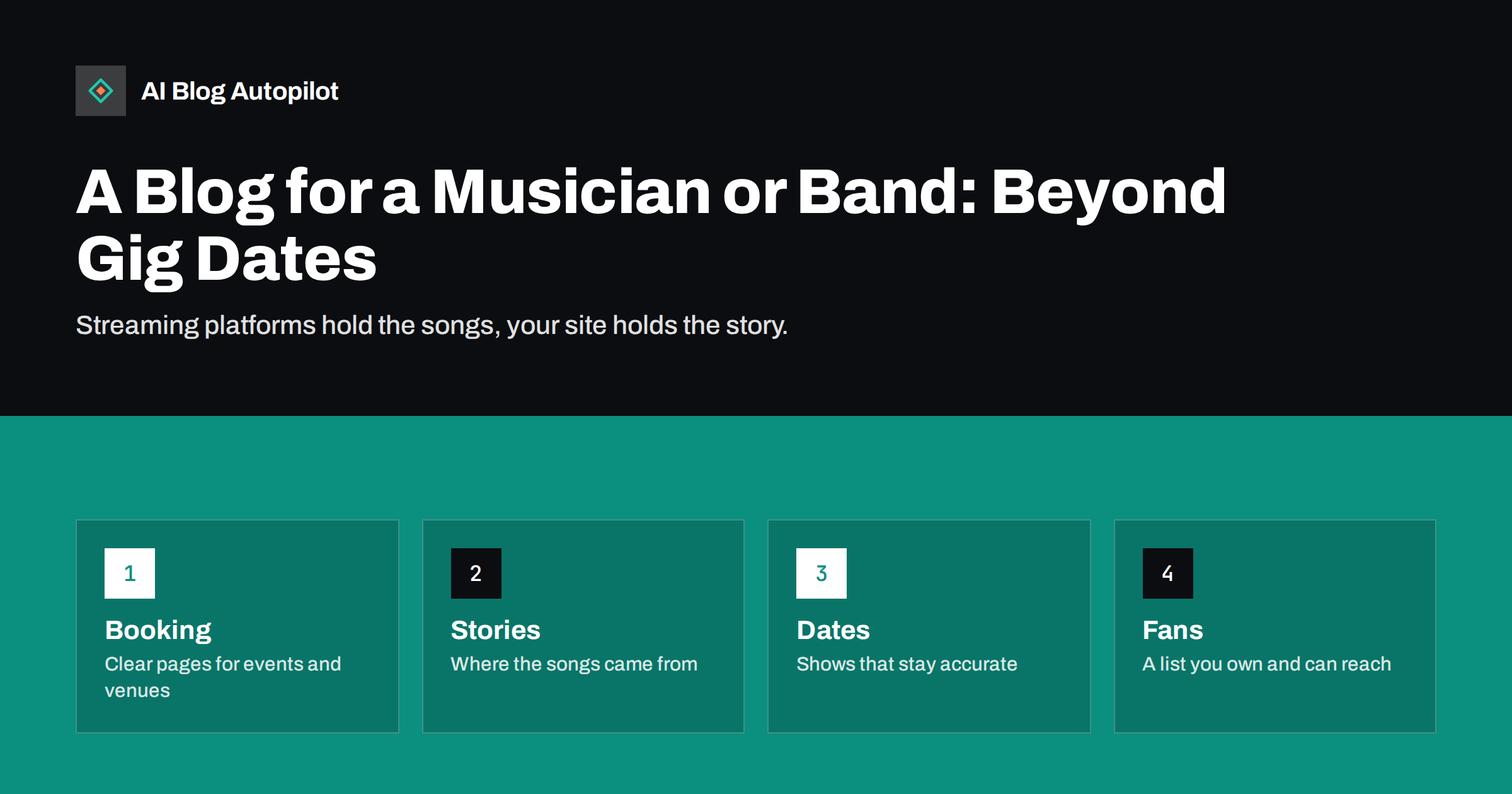
Short answer: a musician or band blog earns attention when it goes beyond a list of gig dates. Publish a clear booking page for promoters and private clients, short stories about songs and rehearsals, accurate pages for shows and releases, and a simple way for fans to follow you by email. Keep everything on a site you own, because social platforms change their rules and their reach.
Most musicians already post on social networks and streaming services, and that is useful. But those places belong to someone else, and a post disappears from view in a day. A website with a blog gives you a permanent address, a place that search engines can read and a page you can hand to a venue, a journalist or a wedding client. It also lets you say more than a caption allows.
Make it easy to book you
If you play at weddings, private parties, corporate events or festivals, the booking page is the most valuable page on your site. Explain what you play, how long a set lasts, what equipment you bring, how much space and power you need, the areas where you travel and how far ahead people should ask. Add a short video or audio sample and a contact form that reaches a real person. State prices only if you are comfortable keeping them current, and otherwise explain what affects a quote.
Write different pages for different clients when the needs differ. A wedding couple wants to know about the ceremony, the first dance and the evening set. A venue manager wants to know about sound levels, set-up time and insurance. A festival organiser wants a stage plot and a short biography. Answer each audience in its own words, and link the pages from your main menu. Our guide to choosing between a landing page and a blog post explains when a dedicated page works better than an article.
Keep show and release pages accurate
A list of shows is only useful if it is correct. Give every show its own page or a clear entry with the date, the venue, the town, the start time, the price and a link to tickets from the organiser. When a show is cancelled or moved, update it immediately and say so. After the date has passed, keep the page as a short record, perhaps with a photograph and a thank-you, instead of deleting it, or redirect it to a sensible page, as described in our guide to expired content on blogs.
The same applies to releases. A page for each album, single or video should contain the title, the date, the credits, the lyrics if you have the right to publish them, and links to the places where people can listen. Describe the release in your own words, and add a short note about what it means to you. Search engines and fans will find a real page more easily than a bare link.
Tell the story of the songs
People enjoy knowing how a song came to be. Write a short post about a track: where the idea started, what changed in the studio, which instrument you added late and what the words are about. Add a photograph of the rehearsal room or the notebook, and a link to listen. These stories do not need to be long. Three or four paragraphs with real details are better than a long essay full of general statements.
Behind-the-scenes posts work for the same reason. A day in the studio, a practice routine before a tour or the story of a broken string at a festival shows the human side of the band. Our article on storytelling in business blog posts offers ideas on structure that apply to artists as well. Keep the tone natural, and do not claim anything about sales, awards or reviews unless you can show the source.
Write for the listener who does not know you yet
New listeners search for sounds and moods, not only for names. A page that describes your style in plain words, mentions the artists or genres that you are close to and offers one or two tracks to start with helps a stranger decide whether to stay. Write a biography in the third person for press use and a shorter, friendlier first-person version for the about page, and keep both up to date.
Think about the questions fans ask: where to buy a record, whether you teach, when the next tour is, which instrument you play in a certain song. Write short answers and link them from a single page. Our guide to turning customer questions into topics shows how to collect them and turn them into posts. If you give lessons, a clear page about prices, location and levels is worth as much as a gig.
Collaboration is another source of material. When you play with a guest, record in a studio or support another act, write a short post that thanks them and links to their work, with their permission. This brings readers from another audience, builds goodwill and gives you a reason to publish on a quiet week. Keep the tone generous and factual, and do not repeat private conversations or details that the other person has not agreed to share.
Keep a simple press kit page as well. Include a short and a long biography, a few high-resolution photographs that others may use, the names of the members, a list of notable shows or releases that you can verify, and a contact for press and bookings. Journalists, venue managers and bloggers often look for exactly this, and having it ready saves you from sending the same attachments again and again. Update it after every release and check that the links work.
Build a list that you own
An email list is the one audience that no platform can take away. Add a simple sign-up form to every page, explain what people will receive and how often, and keep your promise. A short message after each release or tour announcement, with a link to the relevant page on your site, brings more loyal visits than another social post. Our article on building a newsletter from your blog posts shows how to reuse your posts without extra work.
Respect the rules on consent and privacy where you live. Tell people how their address will be used, make unsubscribing easy and never add someone who did not ask to be on the list. If you collect addresses at gigs, use a clear form and confirm the sign-up by email.
Handle images, audio and rights carefully
Musicians work with material that belongs to several people: songs, recordings, photographs and artwork. Publish only what you have the right to publish. Use photographs by someone who has agreed to their use and credit them, and be careful with cover versions, samples and lyrics, which may have legal restrictions. Where you are not sure, link to a licensed source instead of copying the material, or ask for advice from a rights organisation in your country.
Make the pages usable as well. Add a plain description to images, a transcript or short summary for videos and clear labels on audio players. Our guide on video in blog posts covers speed and search issues, and it is worth reading before you embed several players on one page.
Use your site to support the music, not to replace it
The point of the site is to lead people to the music and to you. Put a listening link or an embedded player near the top of every page that is about a song, and a clear way to book, buy or follow at the bottom. Do not hide the important links in a menu that visitors have to explore. A person who arrives from a search for a song title wants to hear it first, read about it second and decide what to do next third.
Merchandise, lessons and recordings can all have a page of their own. Describe each item, give the price if you are sure of it, show a real photograph and explain how to order and how long it takes. If you sell through a third party, link directly to the product, and check the link from time to time, because shop addresses change. A few well-kept pages sell more than a long catalogue with broken links.
Keep a rhythm you can maintain
A band is busiest when it is playing, and the blog is often the first thing to stop. Choose a pace you can keep during a tour, perhaps one post a month with a short update after each important show. Keep a list of ideas in a shared document so that every member can add to it, and decide who is responsible for publishing. A consistent small blog is better than a burst of activity followed by a year of silence.
Look at what readers visit and what they ignore. If the booking page brings enquiries, improve it. If the song stories are popular, write more of them. If nobody reads the news posts, shorten them or merge them into a monthly update.
How AI Blog Autopilot helps
AI Blog Autopilot writes full SEO articles for your WordPress blog from the topics, keywords, audience and tone you set, with FAQ sections, tags and SEO meta included, and it shares each one to your social networks. For a musician who would rather write songs than posts, it can keep guides for clients and fans appearing at a steady pace. Approval mode lets you read each article first, so that dates, names and claims about your music stay exactly as you want them. See the pricing page for plans.
Related reading
- Landing Page or Blog Post: Which Does a Query Need?
- Storytelling in Business Blog Posts
- Building a Newsletter From Your Blog Posts
- Podcast Show Notes: Write Them for Search and for Listeners
The bottom line
A musician’s site should do three jobs: make booking easy, keep shows and releases accurate, and give fans a reason to come back through stories and an email list. Write in your own voice, respect the rights of others and keep the pages current.
FAQ
What is the most important page for a working band?
The booking page. It should explain what you play, what you need, where you travel, how far ahead to ask and how to contact you.
Should I delete pages for past shows?
Keep them as a short record or redirect them to a relevant page. Do not leave visitors with an error or a wrong date.
Can I publish lyrics on my site?
Only if you have the right to do so. For songs written by others, link to a licensed source or ask a rights organisation.
How often should a band publish?
One post a month, with a short update after important shows, is enough if you can keep it up while touring.
Why use an email list when I have social media?
A list belongs to you. Social platforms can change their reach and rules, but your subscribers stay reachable.