ENEnglish
 LTLietuviškai
 DEDeutsch
 FRFrançais
 RUРусский
 ESEspañol
 PLPolski
 ITItaliano
 UKУкраїнська
 CSČeština
 PTPortuguês
 JA日本語
JA日本語 LVLatviešu valoda
 ETEesti
 HUMagyar
 IDBahasa Indonesia
 TRTürkçe
 HIहिन्दी
 ELΕλληνικά
 ARالعربية
 THไทย
THไทย VITiếng Việt
 RORomână
 MSBahasa Melayu
 BNবাংলা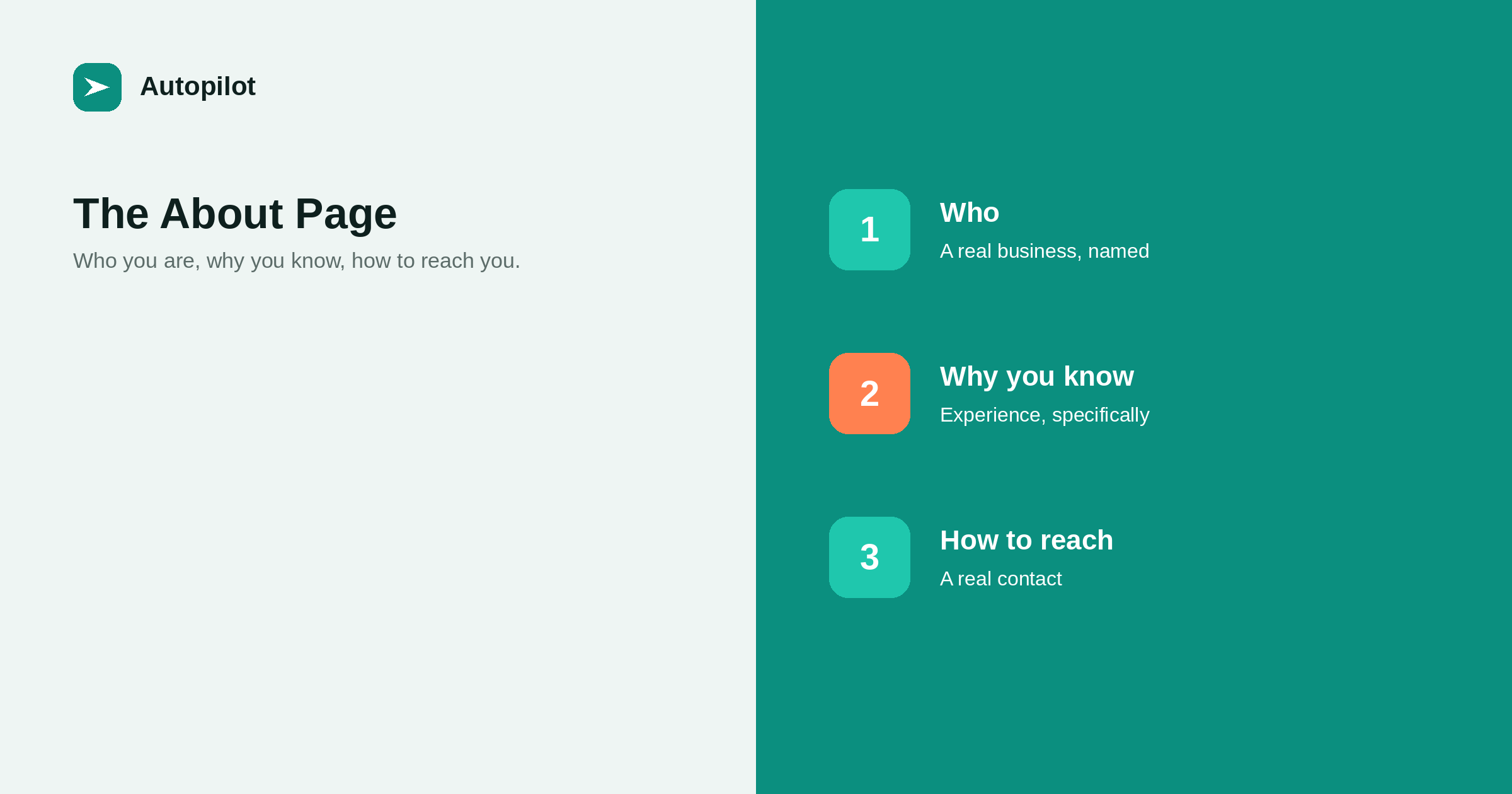
Short answer: an about page should answer the questions a sceptical reader has: who runs this blog, what the business does, why it knows the subject, who writes and reviews the content, and how to reach a real person. Name the company and the people, give specific evidence of experience rather than adjectives, link to the editorial policy, show real contact details and a physical location where appropriate, and keep it current. It is one of the most visited pages by people deciding whether to trust you.
When readers are unsure whether to trust an article, many go to the about page. It is where they check whether a real business with real knowledge stands behind what they read.
A vague about page full of mission statements answers none of their questions. A specific one answers all of them in a minute.
The questions readers bring
A reader arriving at the about page usually wants to know a few things.
- Is this a real business, and what does it do?
- Why should I trust what it says about this subject?
- Who writes the articles, and who checks them?
- How can I contact a person?
Answer each directly.
Who you are
Name the business, say what it does in plain words, where it is based, and how long it has operated. Name the people behind it, with their roles.
Registered company details, where appropriate, add credibility. So do real photographs of the team, if you use photographs at all — never stock images presented as staff.
Why you know the subject
Give specific evidence rather than adjectives.
| Weak | Stronger |
|---|---|
| Industry-leading experts | Twelve years running a bookkeeping practice |
| Passionate about the subject | We use the process we describe with our own clients |
| Trusted by many | Specific, verifiable facts you can stand behind |
| Cutting-edge approach | What you actually do, described plainly |
Do not claim customer numbers, results or awards you cannot substantiate. fact-checking before you publish applies here more than anywhere.
How content is produced
Say briefly who writes and reviews the content, how facts are checked and how errors are corrected, and link to a fuller editorial policy — an editorial policy page.
If automation is involved, the about page or policy is the natural place to explain it, honestly and without defensiveness — disclosing how content is produced.
How to reach you
Real contact details: an email address that reaches a person, a contact form that is answered, and where relevant a phone number and address.
A contact route that never replies undoes everything else on the page.
Structured data
Organization structured data, usually on the homepage, describes the business: name, logo, contact, profiles. It should match what the about page says. structured data for a blog covers it.
Author pages
If articles are signed by individuals, each should have an author page with a short bio, their articles, and why they can speak to the subject. The about page can link to them — bylines and author pages.
A short example
A good about page can be short. For a small firm, four paragraphs cover it: who we are and what we do, in two sentences; why we know the subject, with specific experience; how we produce this blog, with a link to the editorial policy; and how to reach us, with an email and address.
Length matters far less than specificity. A reader should finish it knowing exactly who is behind the blog and how to contact them.
Linking to it
Link the about page from the main menu or footer on every page, and from author bios. Readers checking credibility look for it in those places; hiding it makes the site look less trustworthy.
Link relevant articles from it too: the ones that best show what the business knows. They give a reader deciding whether to trust you something concrete to read next.
About pages for several languages
For multilingual blogs, each language should have its own about page, written for readers in that market, with local contact details where they exist. A reader who finds a blog in their language and then an about page only in English may wonder whether anyone can help them in their own language.
What not to include
Leave out anything you cannot stand behind: inflated figures, awards nobody can verify, logos of companies you have not worked with, and testimonials you cannot trace to real people. One unverifiable claim casts doubt on the rest of the page.
Also leave out long histories nobody reads. A sentence on when and why the business started is enough unless the history is genuinely relevant to readers.
The about page and sales
Prospects often read the about page just before contacting a business. Make the next step obvious: a clear line inviting them to get in touch, with the contact route right there, rather than making them hunt for it.
Ask new customers whether they read the about page and what persuaded them. Their answers show what to emphasise and what nobody cares about.
Consistency with other profiles
The business described on the about page should match its descriptions elsewhere: business profiles, social profiles, directory listings and structured data. Different names, addresses or descriptions across these create doubt about which is correct. Review them together once a year.
A test
Show the about page to someone who does not know the business and ask them three questions afterwards: who runs this, why should I trust them on this subject, and how would I contact them? If they cannot answer all three, the page needs work.
Keeping it current
About pages are written once and forgotten. People leave, the business changes, figures date. Review the page at least yearly and after any significant change.
A current, specific about page does not guarantee trust or rankings. It removes a common reason for doubt.
Related reading
If this was useful, these cover the questions that usually come next.
- Bylines and author pages — the individual version
- An editorial policy page — how content is produced
- Experience, expertise and trust — why this page matters
The bottom line
Answer the sceptical reader’s questions directly: who you are, what you do, why you know the subject, who writes and checks the content, and how to reach a person. Use specific, verifiable evidence rather than adjectives, link to your editorial policy and author pages, match your structured data, and review the page yearly.
FAQ
What should a business blog’s about page include?
Who runs the blog, what the business does, why it knows the subject, who writes and reviews content, and real contact details.
Does an about page help SEO?
Indirectly. It supports trust signals such as a real, accountable organisation, which guidance emphasises.
Should I include team photos?
Real photos help if you use them. Never use stock images presented as staff.
Should the about page mention automation?
If automation is part of how content is produced, a brief, honest explanation there or in an editorial policy is sensible.
How often should the about page be updated?
At least yearly, and after significant changes to the team or business.
What should I avoid on an about page?
Vague adjectives, unverifiable claims about customers or results, and contact routes nobody answers.