ENEnglish
 LTLietuviškai
 DEDeutsch
 FRFrançais
 RUРусский
 ESEspañol
 PLPolski
 ITItaliano
 UKУкраїнська
 CSČeština
 PTPortuguês
 JA日本語
 LVLatviešu valoda
 ETEesti
 HUMagyar
 IDBahasa Indonesia
 TRTürkçe
 HIहिन्दी
 ELΕλληνικά
 ARالعربية
 THไทย
 VITiếng Việt
 RORomână
 MSBahasa Melayu
 BNবাংলা
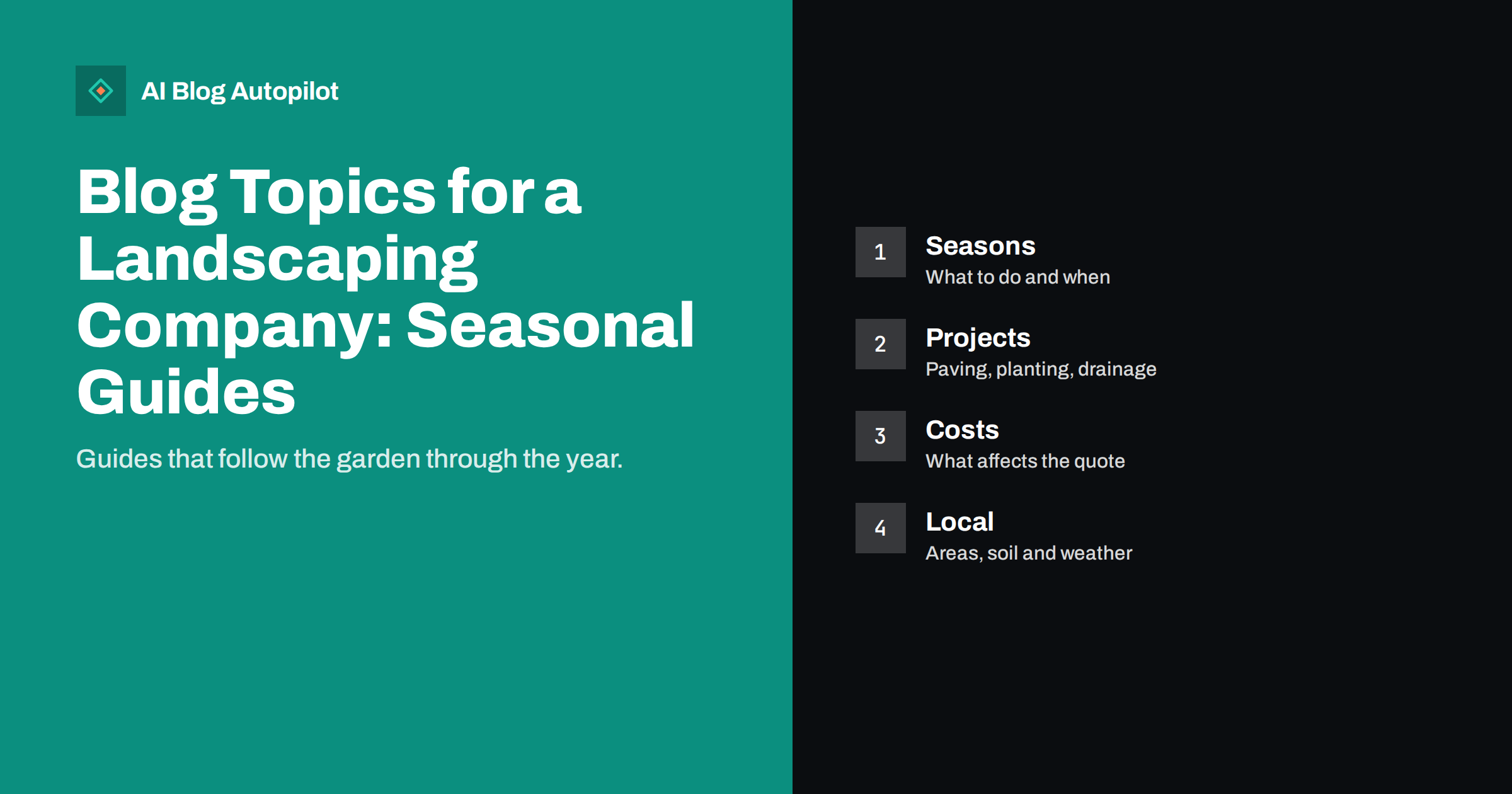
Short answer: a landscaping company should blog about the decisions homeowners and businesses face around a garden: what to do in each season, how to plan a project, which materials suit which use, what affects the price, how long work takes and how to look after the result. Show real projects with permission, name the areas you serve, keep advice honest about soil and weather, and end each guide with a simple way to ask for a visit or a quote.
Gardens change with the year, and so do the searches. In early spring people look for lawn repair and planting plans. In summer they search for patios, fences and shade. In autumn they want leaf clearance, drainage and tree work, and in winter they plan projects for next year. A blog that follows this rhythm is useful all year and brings steady local enquiries.
This guide lists topic groups for a landscaping or garden design company and shows how to turn daily experience into pages that attract the right clients. It also covers how to show your work without breaking privacy and how to keep advice accurate.
Add guides for weather events and sudden problems: heavy rain and flooding, a dry summer and watering limits, storm damage to trees and fences, frost damage to new plants and snow on paths. These searches come in bursts and are often urgent, so a clear, calm page that explains first steps and when to call a professional can bring enquiries from people who need help quickly. Keep a safety note on any task that involves ladders, chainsaws, power tools or electricity.
Seasonal guides that bring steady traffic
Build a calendar around the year. Write what a homeowner should do in each month: when to prepare soil, when to sow or lay turf, when to prune, when to clear drains and gutters, when to protect plants from frost and when to book larger projects. Keep the guides practical and name the typical weather of your region, since a rule that suits one climate may not suit another.
Publish early. Many people search weeks before they act, so a guide on patio planning should appear in late winter, not in the first warm weekend. The article on planning seasonal content without scrambling every year shows how to prepare ahead and how to reuse a page each year.
Update the same page each year instead of creating a new one, and put the review date on it. A guide that has stood for years and is kept current usually does better than a new page every spring. Add fresh photographs and new local details so that the page reflects the present, not the past.
Include short, practical checklists. A weekend list for autumn, a pre-winter list for pipes and plants and a spring list for tools and soil are easy to save and share. Each list can lead to a longer guide for readers who want more detail.
Add a guide on how to prepare a brief. Explain how a client can describe how they use the garden, who uses it, how much time they have for upkeep, what they like and dislike, the budget range and the timetable. A clear brief saves hours at the first visit and leads to a plan that fits. Offer a short form or a checklist that readers can download and bring to a meeting.
Explain the difference between design, build and maintenance, and say which of these you offer. Some clients need a drawing before they choose a builder, others want one company for everything, and some only need regular care. A page that clears up the options prevents confusion and shows where you can help best.
Project guides: planning before the digging
Many visitors are planning a project and do not know where to begin. Write guides for the main types of work: lawns, borders, patios, paths, decking, fencing, retaining walls, ponds, raised beds, lighting and drainage. Explain what the work involves, in what order it happens, what can go wrong and what the client needs to decide.
Describe materials with care. Compare common choices for surfaces and edges by look, upkeep, durability, comfort underfoot and general cost level, and say honestly which suits which situation. A resin surface, natural stone, concrete pavers and gravel all have strengths and limits, and a reader who understands them makes a better decision and trusts your advice.
Explain the invisible parts. Drainage, foundations and soil preparation decide whether a project lasts, yet they are rarely seen in photographs. A page that explains why a base needs depth and compaction, or why water must have somewhere to go, shows expertise and helps clients understand why a good quote costs what it does.
Mention permits and rules in general terms. Some projects need permission, especially near boundaries, trees or water, and rules differ by place. Say that readers should check with the local authority, and explain how you help with the process if you do.
Explain how to compare quotes fairly. A low quote may leave out groundwork, waste removal or a guarantee, and a high one may include extras that a client does not need. Suggest that readers ask each company for the same details: area, materials, preparation, labour, timing and what happens if conditions differ from the plan. This guidance builds trust even with readers who choose someone else.
Costs, quotes and timing
Cost is the question that most visitors have and most companies avoid. You do not have to publish fixed prices, but you can explain what changes them: size, access, ground conditions, materials, labour, waste removal, the season and the level of finish. A reader who understands the factors can compare quotes sensibly.
If you give example prices, date them and state what is included. A guide that says a small patio of a given size on easy ground usually costs within a certain range, and then lists the things that move it up or down, is more useful than an empty promise of low prices. The guide on writing honest articles about what things cost offers a clear structure.
Explain how a quote works. Describe the site visit, the plan, the written quote, the deposit, the schedule and the final check. State how long projects usually take and what delays them, such as weather, deliveries or hidden problems under the ground. Honest expectations prevent disputes later.
Write about maintenance contracts and ongoing care if you offer them. Explain what is included, how often visits happen and how clients can change the plan. Regular work is the steadiest part of many landscaping businesses, and a clear page makes it easy to say yes.
Local knowledge and trust
Your strongest advantage is knowing the area. Write about local soil types, common problems such as heavy clay or sandy ground, typical garden sizes, local wildlife, wind and shade patterns and plants that do well nearby. A guide that reflects real conditions beats generic advice from a national site.
List the towns and neighbourhoods you serve, and create a short page for the main ones if you have real projects there. Do not publish near-identical pages that only change the place name, because they add little and can be seen as thin content. The article on location pages for a business with several branches explains how to make each page distinct.
Show your credentials honestly: training, insurance, memberships and years of experience. State only what you can document. If you work with subcontractors or suppliers, say so plainly. Trust grows when a company is open about how work is done.
Keep your business profile and your site in line. Opening hours, service areas, phone numbers and photographs should match everywhere. The guide on Google Business Profile updates shows how to reuse blog posts locally.
Showing real projects
Photographs sell landscaping better than words. Build project pages with before and after pictures, a short description of the brief, the materials, the time taken and any problems solved. Take photographs in good light, from the same angle before and after, and add short captions.
Ask for permission before you show a client’s garden, and avoid details such as house numbers, car registrations, children’s faces or security features. Do not use photographs of work done by others. The article on original photos on a business blog shows a simple way to collect and organise real images.
Tell the story of the project. Explain what the client wanted, what you suggested, what changed on the way and how the garden looks months later. A visit after one growing season shows plants that have settled and builds credibility. Do not retouch images in ways that mislead.
Collect short, genuine comments from clients with their consent, and publish them near the project they refer to. Never invent testimonials or copy reviews from other businesses.
Think about different kinds of clients. A family with children wants safe surfaces and durable lawns, an older owner may want low upkeep and easy access, and a small business wants a tidy entrance that stays presentable. Write separate pages or sections for these needs, with examples from real projects, so that each reader sees their own situation in your work.
Looking after the result
Aftercare guides keep clients coming back and reduce complaints. Explain how to water new plants, when to feed a lawn, how to clean paving, how to treat timber, when to prune and what to expect in the first year. Many problems arise because clients do not know how a new garden behaves, and a simple guide prevents them.
Write about common problems and honest fixes: patchy turf, moss, standing water, weeds, plant failure and storm damage. Say which fixes a homeowner can do and which need a professional. Where you are not the right company for a job, say so.
Add guides on sustainable choices that are accurate: plants for pollinators, rainwater use, permeable surfaces and reducing waste. State only what is true, and avoid broad claims such as eco-friendly without detail. The article on using evidence in marketing content explains how to support such statements.
How AI Blog Autopilot helps
AI Blog Autopilot can write and publish articles on your chosen topics, with FAQ sections, tags and SEO meta, and share them to your social networks. Give it your services and your area, and check materials, prices, timings and local rules before each article goes live. See the pricing page for plans and monthly credits.
Related reading
- A Blog for a Construction or Home Services Company
- Blog Strategy for a Local Business
- A Blog for a Florist or Garden Centre: What to Publish
The bottom line
Follow the garden through the year, explain projects and costs honestly, show real work with permission and keep every guide local and current.
FAQ
When should a landscaping company publish seasonal guides?
Several weeks before the season starts, since people search and plan before they act.
Should I publish prices?
Give dated examples and explain what changes the price, or offer a fast way to get a quote.
How do I show projects without breaking privacy?
Ask for permission and avoid house numbers, faces, vehicle plates and security details.
Do I need a page for every town?
Only where you have real projects and local detail. Near-identical pages add little.
How often should guides be updated?
Once a year and whenever prices, materials or local rules change.