ENEnglish
 LTLietuviškai
 DEDeutsch
 FRFrançais
 RUРусский
 ESEspañol
 PLPolski
 ITItaliano
 UKУкраїнська
 CSČeština
 PTPortuguês
 JA日本語
 LVLatviešu valoda
 ETEesti
 HUMagyar
 IDBahasa Indonesia
 TRTürkçe
 HIहिन्दी
 ELΕλληνικά
 ARالعربية
 THไทย
 VITiếng Việt
 RORomână
 MSBahasa Melayu
 BNবাংলা
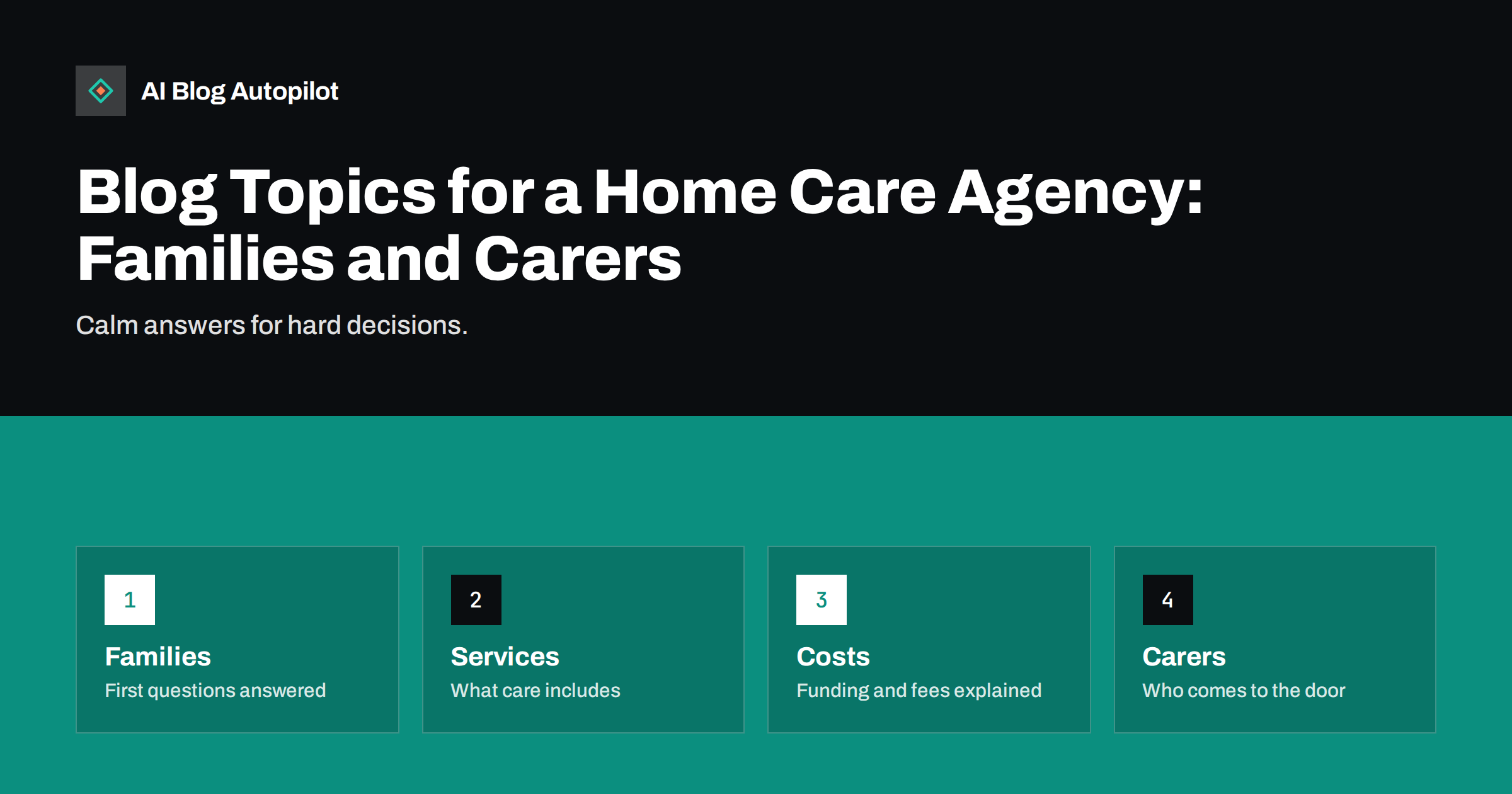
Short answer: a home care agency should blog about the questions families ask when they start to look for help: how to know when care is needed, what a visit includes, how the agency chooses and supervises carers, how costs and funding work and how to arrange a first assessment. Write calmly, name your area, avoid medical promises and show the date of the last review on every page.
People rarely look for home care in a calm moment. A parent has fallen, a hospital is discharging a relative or a partner is struggling and nobody wants to say so. The reader is often tired, worried and unfamiliar with the vocabulary. A blog that answers their questions gently, in plain words, is both a service and a way to be found at the moment it matters.
This guide lists topic groups for a small or mid-sized agency, explains how to turn real conversations into pages and describes how to keep sensitive content accurate and respectful. Care is regulated, and the rules about advertising and claims differ by country, so check them before you publish.
Start with the first questions families ask
The most useful pages are those that help a family decide. Write about the signs that a relative may need support: missed meals, unopened post, unsteady walking, forgotten medicines or growing loneliness. Present them gently, as things to notice and discuss, not as a diagnosis. Say that a conversation with the person and their doctor is the first step.
Explain the types of help in everyday words. Many readers do not know the difference between companionship visits, personal care, live-in care and nursing. A short page for each, with a typical day and what is and is not included, removes confusion and helps families ask for the right thing.
Write about starting the conversation. Adults often resist help, and families need words. A guide on how to talk to a parent about care, with sample sentences and a note about respecting their choices, is the kind of page that gets shared among relatives and remembered when the time comes.
Add a calm, practical page on what to do after a hospital stay. Describe who to ask about discharge plans, which questions to put to the ward and how fast an agency can usually begin. Be honest about what depends on funding, staffing and the person’s needs.
Think about the whole family, not only the person receiving care. Adult children who live far away want updates, and a spouse may need rest as much as the person supported. Write about respite care, about how to share news with relatives and about looking after your own health as a family carer. These pages reach readers who may later become clients.
Cover the practical side of the home as well. Explain what a carer will need, such as a safe place for keys, a list of medicines and clear access, and how you handle keys and alarms. Small details show that you have thought about safety and reduce the worries that families rarely say aloud.
Explain what a visit looks like
Families worry about strangers entering a home. Describe how the first visit works: who comes, how long they stay, what they ask and how the care plan is written. Explain how the person’s routines, likes and dislikes are recorded and how the plan changes when needs change.
Write about a typical visit in a respectful way. Mention help with washing and dressing, meals, medicines where permitted, mobility and company. Make clear what carers do not do, such as tasks that need a nurse. Clear limits reduce disappointment and protect both sides.
Use composite examples, clearly labelled, to show a morning visit or a week of support. Do not use real clients’ stories without written consent, and be careful even with anonymised details, since small facts can identify a person. A fictional but realistic day teaches more than a list of services.
Describe how you deal with changes: a missed visit, a carer who is unwell or a family request to alter the schedule. A page that explains how you communicate, whom to call and how quickly you respond shows organisation, which is what families are really looking for.
Be open about carers, training and safety
Trust is the heart of care, so write about people. Explain how you recruit carers, which checks you carry out, what training they receive and how you supervise them. Name the standards or registrations that apply in your country, and link to the official register where readers can verify them.
Introduce your team with short, honest profiles that include experience, languages and a sentence about how they work. Real photographs help, but ask for consent and respect privacy. Families like to know who will arrive, and a familiar face on the website makes the first visit less daunting.
Write about safety at home: preventing falls, managing medicines, safe use of equipment and what to do in an emergency. Keep the advice general and refer to professionals for individual cases. These pages attract searchers who are not ready to contact an agency yet and show your knowledge.
Explain how you handle complaints and concerns. A page that describes the steps, the timeline and the official body that can review a complaint is a mark of confidence. Agencies that welcome feedback tend to earn better reviews and more recommendations.
Explain what happens when needs grow. Families fear that a small package will turn into a large one without warning. Describe how and when care plans are reviewed, who decides on changes and how much notice you give. Honest answers here prevent painful conversations later and make a calm, long relationship more likely.
Write about alternatives too. If a day centre, a meal service or a technology aid would suit a reader better, say so. Readers notice when an agency offers advice that is not only in its own interest, and they remember it when the time comes to choose.
Write plainly about costs and funding
Cost is a major worry. Explain how you charge: hourly rates, minimum visit lengths, weekend and holiday rates, travel and live-in fees. Use examples with invented numbers, labelled as examples. The guide on writing honest articles about what things cost offers a structure that suits care fees.
Explain the routes to funding in your country: public support, assessments by a local authority or health service, insurance and private payment. Describe the steps in order, link to the official pages and avoid giving personal financial advice. Rules change, so show the date and review the page at least once a year.
Describe contracts in plain words: notice periods, how fees change, what happens if care is cancelled or if the person goes into hospital. A reader who has seen the terms in advance trusts you more than one who first meets them on a form.
Offer a short checklist of questions to ask any agency, including yours. It may feel odd to help readers compare you, but it shows confidence and attracts families who value careful choices. They are often the clients who stay for years.
Respect the rules and the reader
Care is a sensitive subject, and search engines treat it as one where accuracy matters. The guide to writing about money and health topics responsibly explains why. Name an author and a reviewer for each page, cite official sources and avoid claims that a service cures, prevents or guarantees a result.
Use dignified language. Write about people who receive care as adults with preferences, not as burdens or cases. Avoid fear, avoid pity and avoid stock photographs that show helplessness. Pictures and words that show independence, kindness and choice reflect good care and attract the right families.
Add a short notice that a page is general information and not medical or legal advice. The guide to disclaimers and notices on a blog helps with wording. Make sure the notice is simple, visible and consistent across your site.
Be careful with testimonials and reviews. Ask for written consent, avoid editing quotes in ways that change the meaning and do not publish health details. Follow the rules of your regulator about how reviews may be used in marketing, and keep proof of consent on file.
Measure what matters. Count first calls and assessments by page, and ask families how they found you. A calm guide that brings few visitors but many enquiries is worth more than a page with high traffic and no action. Review the results each quarter and write more of what helps.
Finally, keep the tone of the blog the same as the tone of the phone call. If a page sounds warm and the phone is answered abruptly, the effect is lost. Brief your team on the topics you publish, so that the person who answers a question knows what the page says and can build on it.
Make the next step simple
End every page with one clear step: a phone number, a call-back form or a request for a free assessment, if you offer one. Say what happens next, how soon someone will call and what information to have ready. Many families contact several agencies at once, and a quick, kind reply often decides who they choose.
Show your local reach. Create pages for the towns and districts you serve, with real details such as typical visit times and who in the team knows the area. Avoid copying the same text for every place. The guide to blog strategy for a local business explains how to keep such pages useful.
Keep the details identical to your business profile and other listings: name, address, phone, hours and registration number. Review the blog every quarter. Remove outdated pages, update funding information and add the questions that staff heard most often. Treat the blog as part of your service, and it will reflect the care you give.
How AI Blog Autopilot helps
AI Blog Autopilot can write and publish articles on your chosen topics, with FAQ sections, tags and SEO meta, and share them to your social networks. Give it your services and your area, and have a qualified person check every rule, fee and example before each article goes live. See the pricing page for plans and monthly credits.
Related reading
- A Blog for a Clinic or Health Practice: Safe Topics
- Writing About Money and Health Topics Responsibly
- Blog Strategy for a Local Business
The bottom line
Answer the first questions calmly, explain visits, carers and costs openly, respect the rules and the dignity of readers and end every page with one simple next step.
FAQ
What should a home care agency blog about first?
Start with how to know when help is needed, what types of care exist, what a first visit involves and how fees work.
Can a care blog give medical advice?
Keep it general, cite official sources, add a short notice and refer readers to a doctor or nurse for personal questions.
Should I publish prices?
You can, with conditions and a date. If not, explain what affects cost and how to get a written quote.
Can I use client stories?
Only with written consent and without details that could identify the person. Composite examples are safer.
How often should care pages be reviewed?
At least once a year and whenever funding rules, fees or regulations change, with the date shown on the page.